
Why Do Sensitive Facilities Need Entrance Protection?
Facility entrances are among the most important areas to protect, particularly where vehicle movement must be controlled and unauthorized access prevented.
Modern vehicle security does not rely only on conventional gates. Specialized vehicle barriers can provide physical protection at controlled entrances while allowing authorized vehicles to pass.
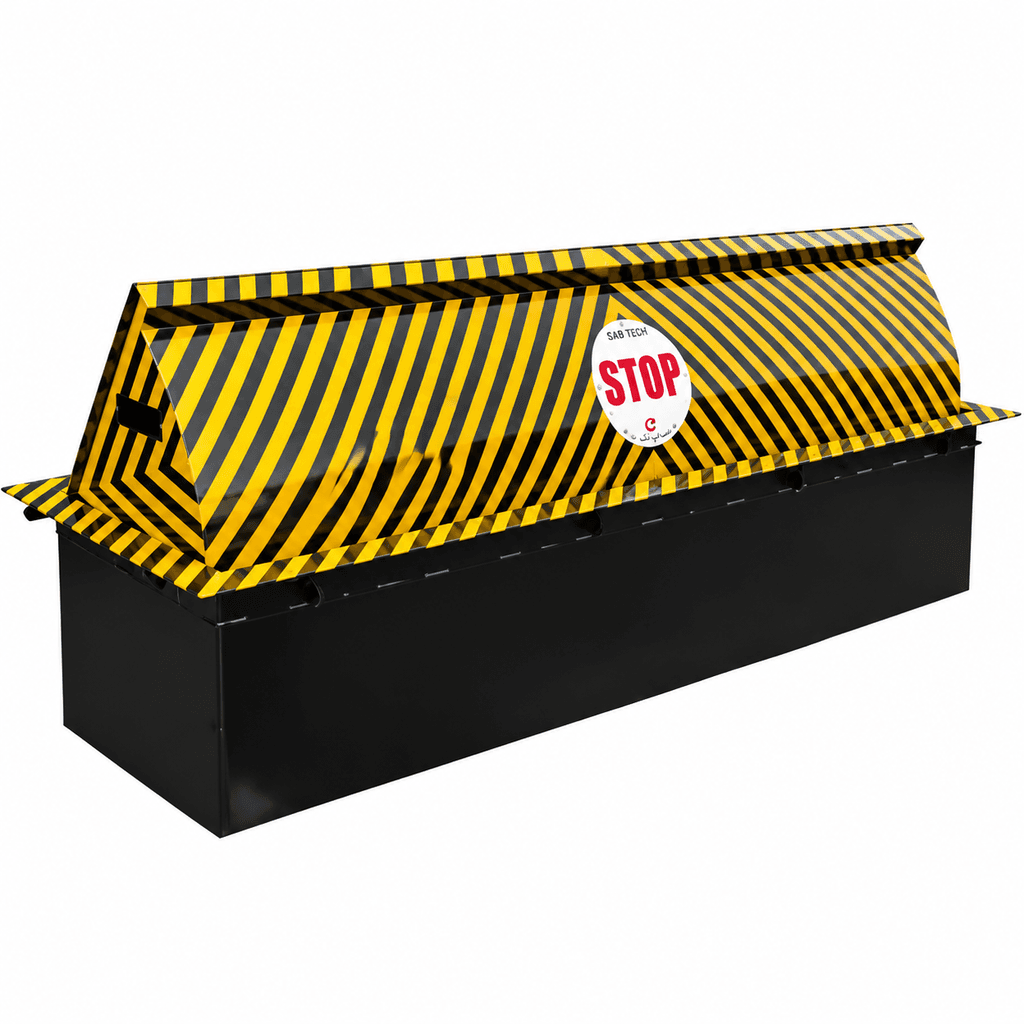
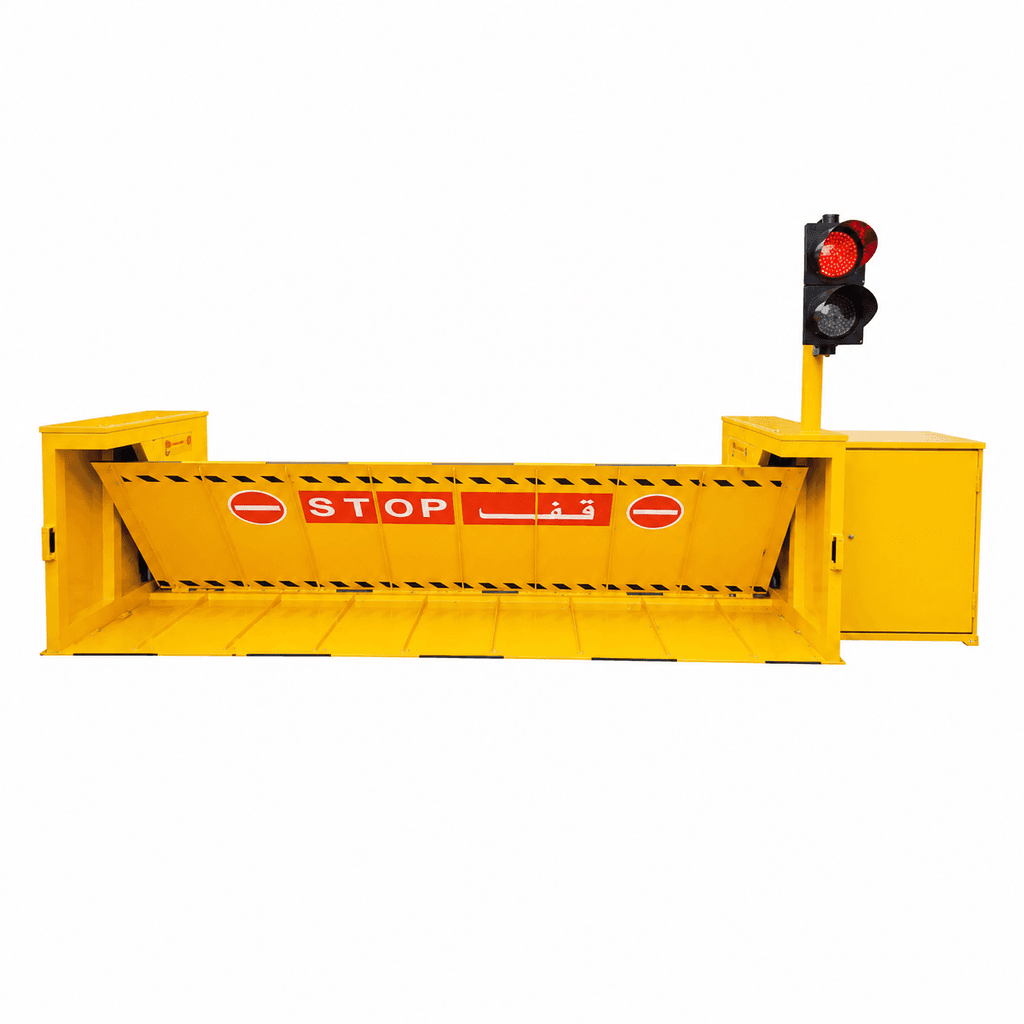
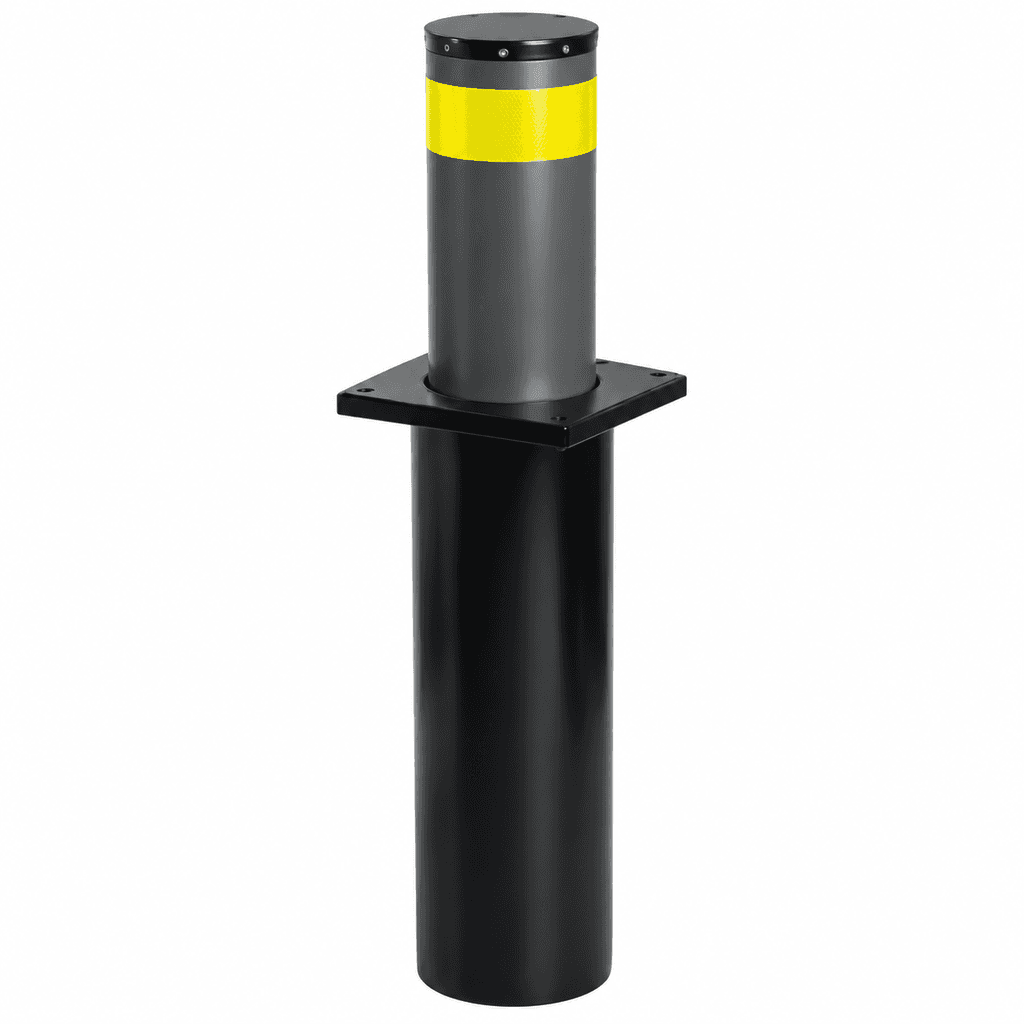
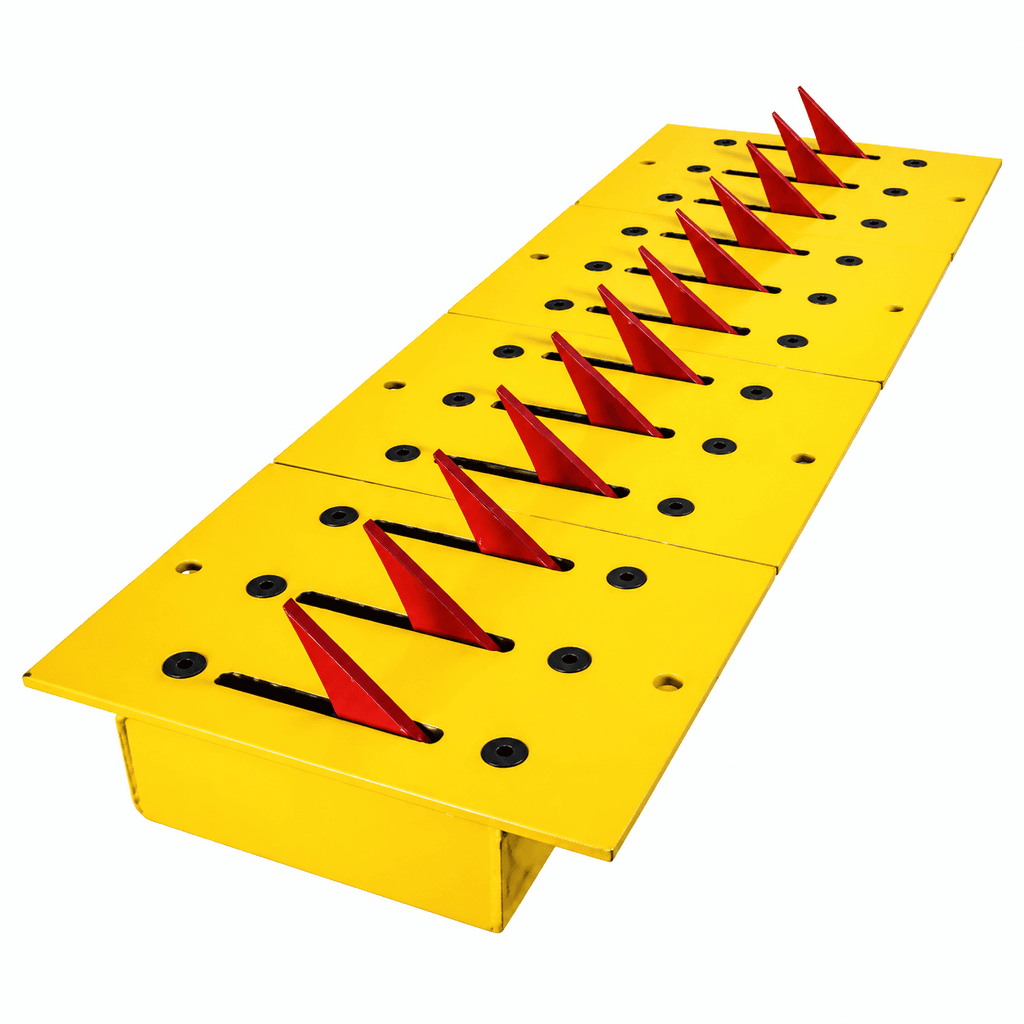
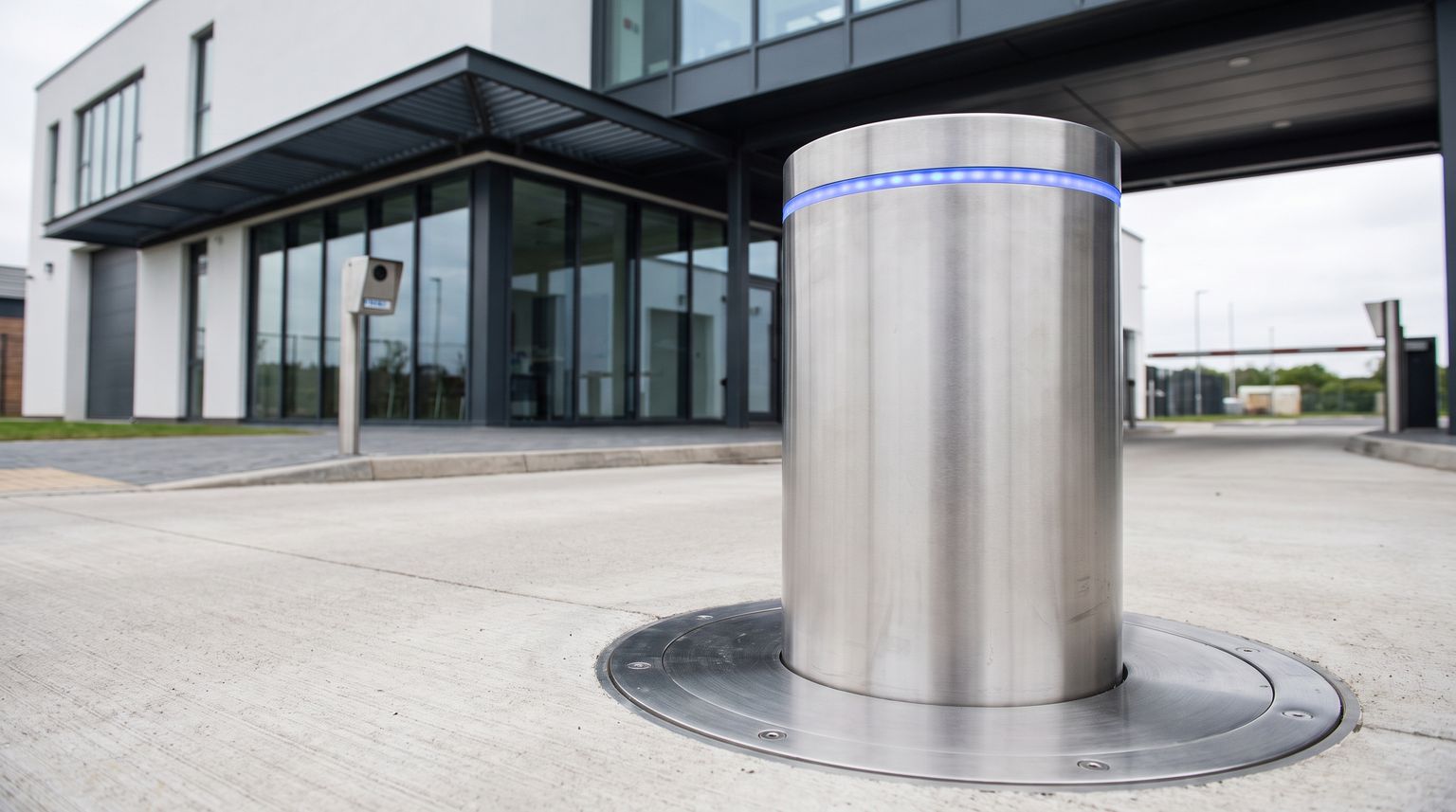
- A road blocker closes the whole lane, bollards stop cars while leaving a path for pedestrians, and a tyre killer stops wrong-way traffic.
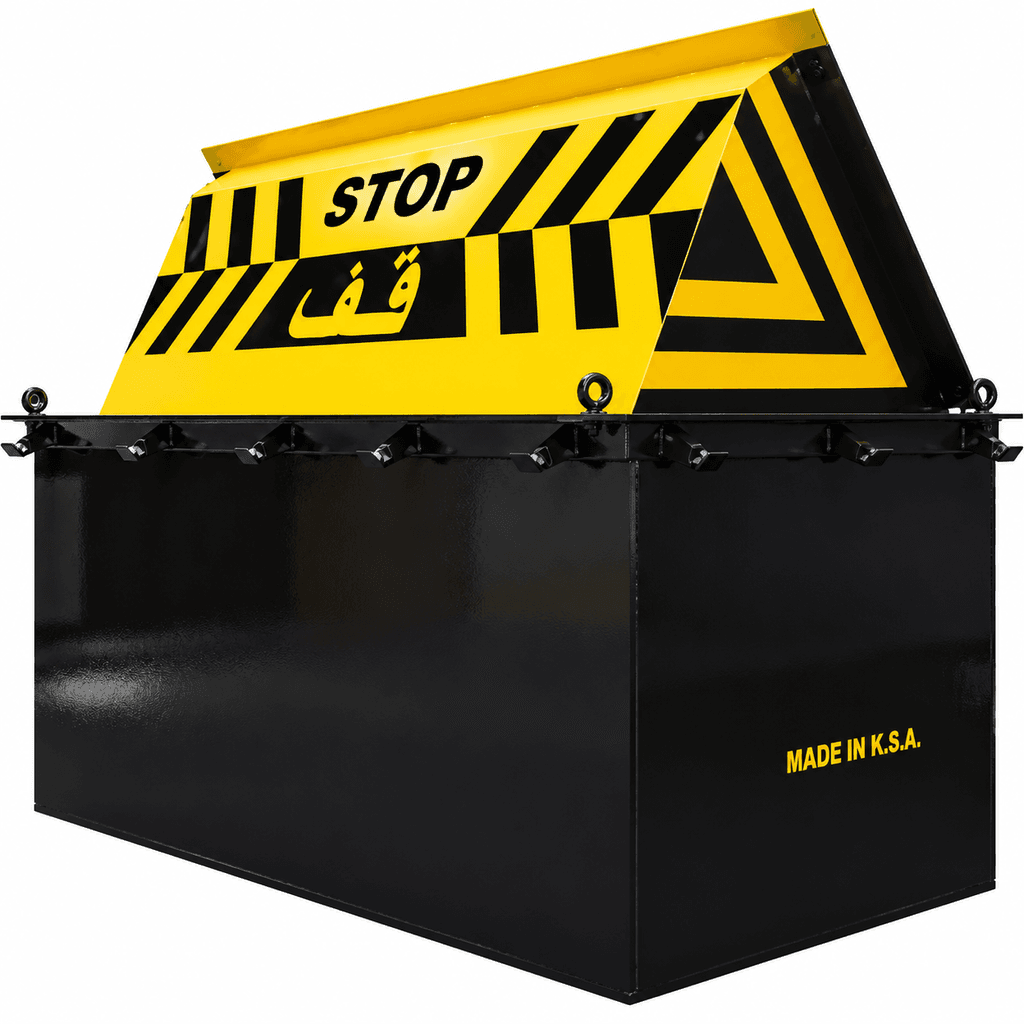
- Where underground services rule out deep excavation, a surface-mount road blocker or the 40 cm high-security shallow road blocker is the alternative.
- The catalogue lists axle loads of up to 50 tons for the surface-mount blocker, the high-security shallow blocker and the tyre killer; rise times run from 1.5 to 6 seconds depending on the type.
- The SAB TECH RB3M1000CT high-security road blocker and RBS3MCT shallow road blocker passed PAS 68 crash tests in Germany with zero penetration. A rating belongs to the model tested, so ask for the certificate with the technical proposal.
What Role Do Road Blockers Play?
Road blockers provide a physical barrier at vehicle entry points and can be integrated with access-control systems to create a controlled entrance.
They can be used at facilities where vehicle access needs to be restricted while authorized traffic must still be able to enter and exit efficiently.
Why Do Installation Requirements Matter?
Security requirements vary from one site to another. Vehicle types, traffic volume, available space, road construction, and underground infrastructure can all affect the choice of vehicle barrier.
Some sites may also have underground cables, pipes, or other utilities that make deep excavation difficult.
What Are the Benefits of Surface-Mounted Systems?
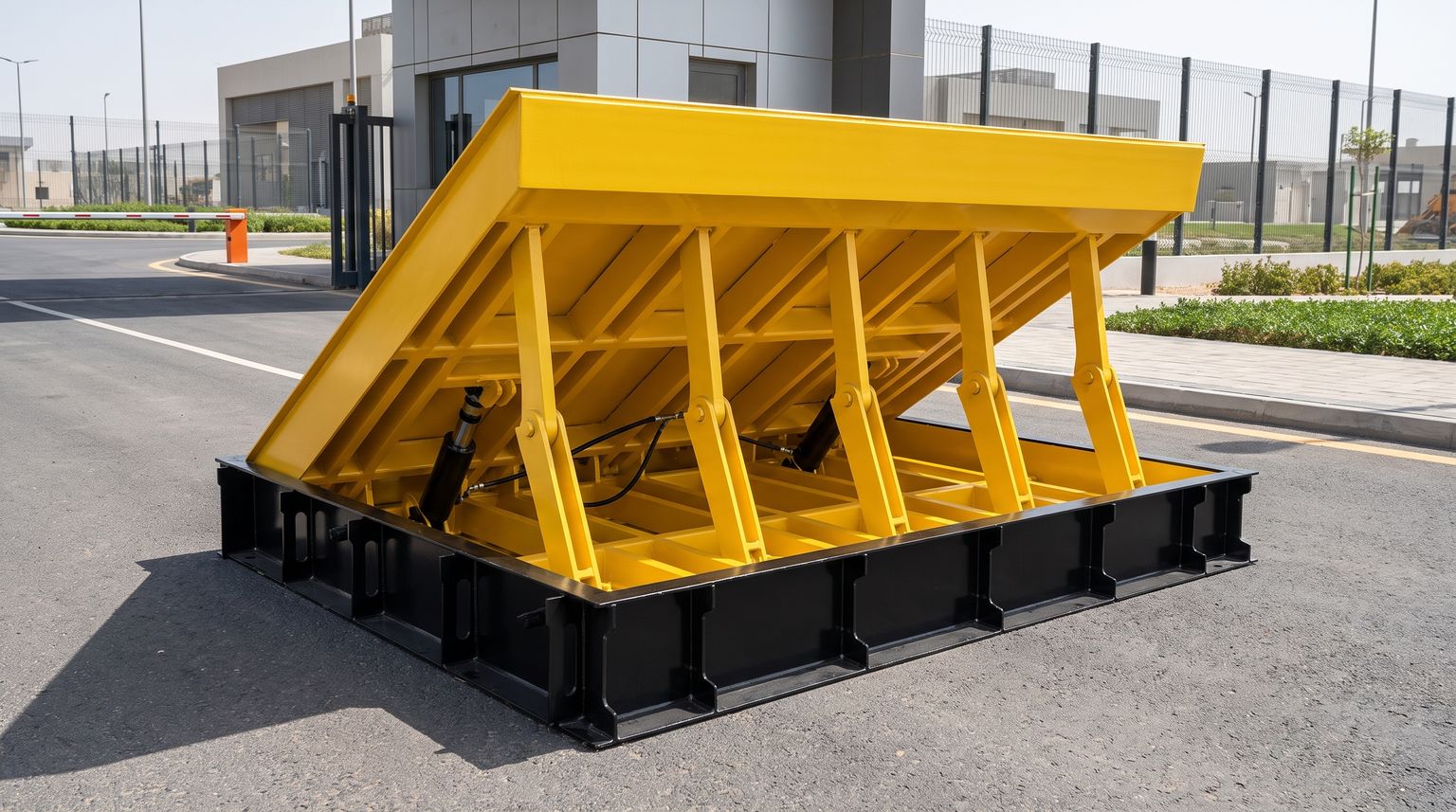
Surface-mounted road blockers can provide greater installation flexibility where deep excavation is impractical.
The surface-mount road blocker is fixed directly onto existing asphalt or concrete without a pit, and the high-security shallow road blocker needs a pit only 40 cm deep, which suits existing facilities and sites with utilities under the road.
How Do Hydraulic Road Blockers Work?
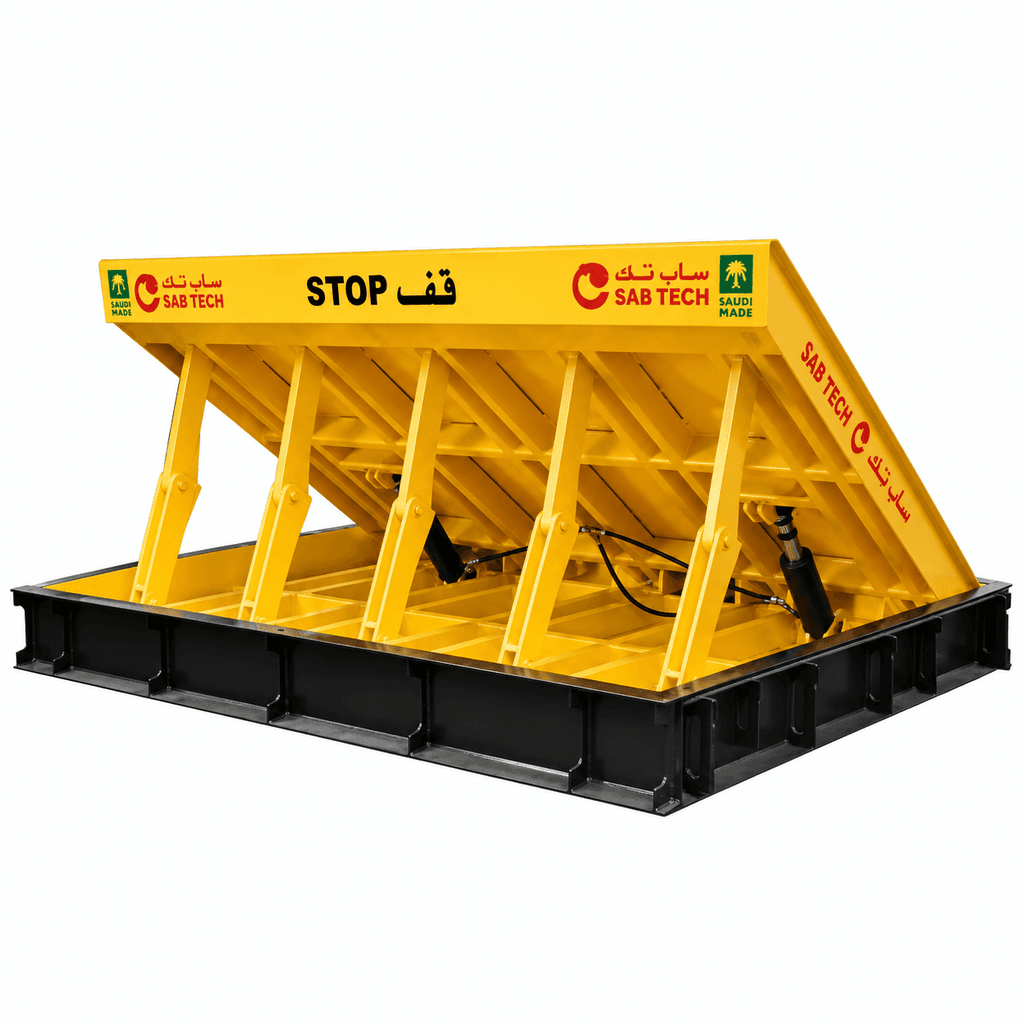
Hydraulic road blockers use a hydraulic power unit to move the blocking structure between lowered and raised positions.
When vehicles are authorized to pass, the blocker is lowered toward road level. When the entrance needs to be secured, the blocker rises to create a physical obstacle for approaching vehicles.
Operating speed varies by system, and some designs add an emergency fast operation mode.
Why Is Access-Control Integration Important?
A vehicle barrier is often part of a wider access-control system rather than an isolated security device.
Depending on the equipment and configuration, hydraulic road blockers can be integrated with technologies such as:
- Card readers
- Biometric identification
- Remote controls
- License plate recognition
- Electronic access-control systems
This integration can help facilities manage vehicle entry in a more organized way.
Vehicle security barriers compared
The table shows the values listed for each type in the SAB TECH catalogue approved by Bestolex:
| Criterion | Hydraulic road blocker | Surface-mount road blocker | High-security shallow road blocker | Automatic bollard | Tyre killer |
|---|---|---|---|---|---|
| Raised height | 800 – 1100 mm | 500 – 800 mm | 1100 mm | 600 – 800 mm | Spikes 150 – 250 mm |
| Blocking width | 2000 – 6000 mm | 2000 – 6000 mm | 2000 – 6000 mm | Posts 220 – 275 mm in diameter | 2000 – 6000 mm |
| Rise time | 4 – 6 seconds | 3 – 5 seconds | 3 – 5 seconds (1.5 s in emergency EFO mode) | 3 – 5 seconds | 1.5 – 3 seconds |
| Installation | Pit below road level | On the surface, ramp 100 – 150 mm above ground | Pit only 40 cm deep | Pit for each post | Pit; a surface type without excavation is also available |
| Axle load | — | 50 tons per axle | 50 tons per axle | — | 50 tons per axle |
| Crash test | — | — | PAS 68: V/7500[N3]/80/90:-1.4/16.2 (model RBS3MCT) | — | — |
Source: Bestolex approved product catalogue. A dash (—) means the value is not listed in the catalogue; in the crash-test row it means there is no certificate for that type.
What Should You Consider When Choosing a Road Blocker?
Several factors should be evaluated before selecting a system.
Site requirements: Consider whether the system will be installed at an industrial facility, logistics center, sensitive facility, or private entrance.
Vehicle type: Identify the types and weights of vehicles that will use the entrance.
Installation conditions: Assess the existing road surface and underground infrastructure before determining installation requirements.
Operating speed: High-traffic entrances may require faster raising and lowering times.
Access-control compatibility: Make sure the blocker can integrate with the facility's existing access-control equipment.
Safety requirements: Appropriate operating and warning systems should be considered according to the site and equipment specifications.
What Does PAS 68 Mean?
PAS 68 is a British specification that was used to test and rate vehicle security barriers designed to resist hostile vehicle impact; it has since been superseded by the international standard ISO 22343-1. Testing conditions can include factors such as vehicle type, vehicle speed, and impact angle.
Therefore, PAS 68 should not be treated as a generic description for every security barrier. Specific certification, test results, and manufacturer documentation should be reviewed for the individual product.
Two road blockers supplied by Bestolex are crash-tested at crashtest-service.com in Münster, Germany: the high-security road blocker RB3M1000CT, rated PAS 68: V/7500[N3]/80/90:-1.5/4.6 and IWA 14-1: V/7200[N3C]/80/90:-0.9, and the high-security shallow road blocker RBS3MCT, rated PAS 68: V/7500[N3]/80/90:-1.4/16.2. In both tests the truck did not advance beyond the barrier. The rating codes and certificate numbers are explained in how the vehicle impact resistance of high-security road blockers is evaluated.
Protecting sensitive entrances in Qatar
In Qatar, government, industrial and port entrances may sit above underground utilities, so the site survey first decides whether deep excavation is possible or a surface solution is needed. The design also covers drainage before the rainy season, an operating temperature range that the catalogue lists up to +65 °C for most of these models, and how the barrier links to the existing access control.
Bestolex, the exclusive SAB TECH agent in Qatar, supplies the hydraulic road blocker, the surface-mount road blocker, the high-security shallow road blocker, the automatic bollard and the tyre killer. The full range is under perimeter protection systems.
Conclusion
Sensitive facilities require carefully selected systems for controlling vehicle access. The appropriate solution depends on the site's security requirements, operating conditions, and existing infrastructure.
Surface-mounted hydraulic road blockers can provide an option for locations requiring strong vehicle protection while limiting the need for deep excavation compared with systems requiring deeper foundations. They can also be integrated with access-control technologies to create a more comprehensive vehicle entry-management system.
Planning to secure an entrance? Request a site survey or a quotation, or message us on WhatsApp at +974 51505014.