
Why Do Sensitive Facilities Need High-Security Road Blockers?
Facilities exposed to vehicle intrusion risks require more than standard gates or access control systems. Vehicle entrances may also need a physical barrier capable of preventing unauthorized vehicles from crossing into protected areas.
- A crash test measures how a barrier stops a vehicle of set mass, speed and angle, and the result is written as a rating code.
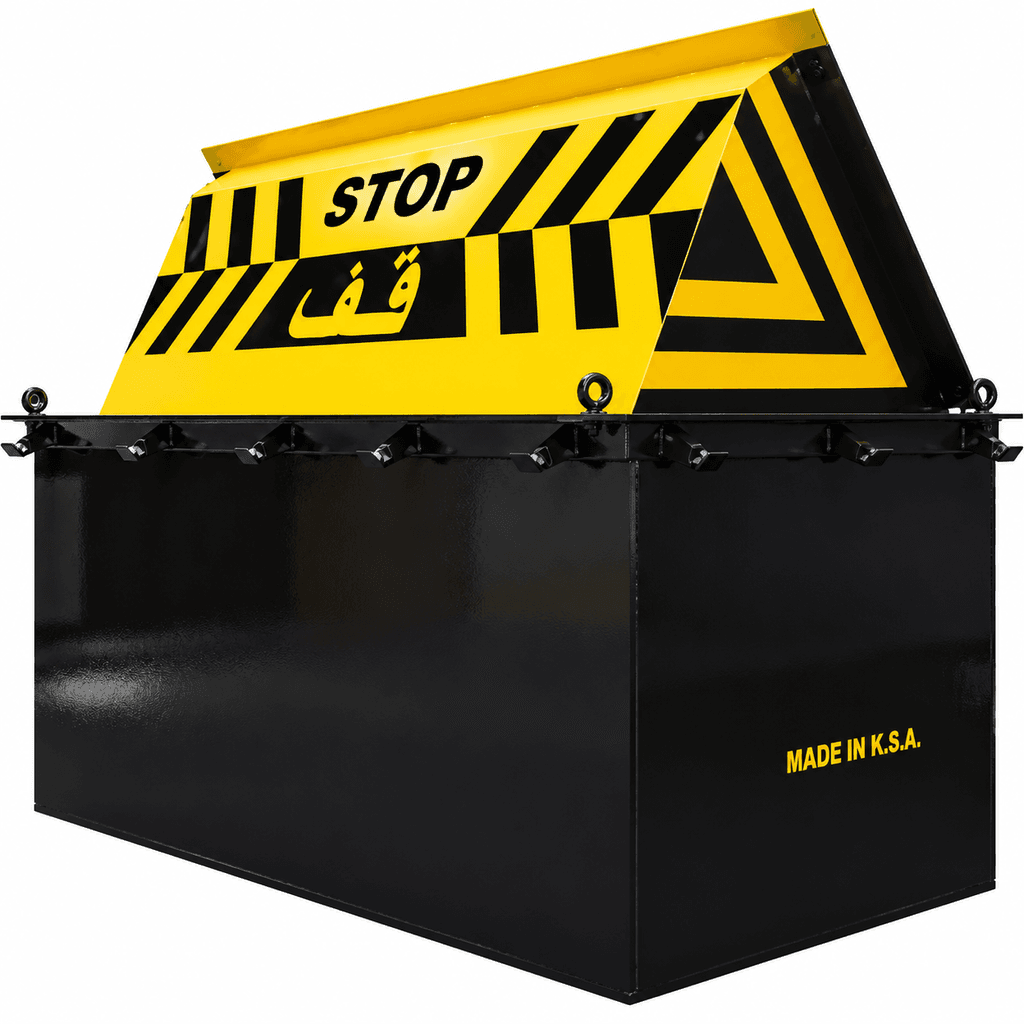
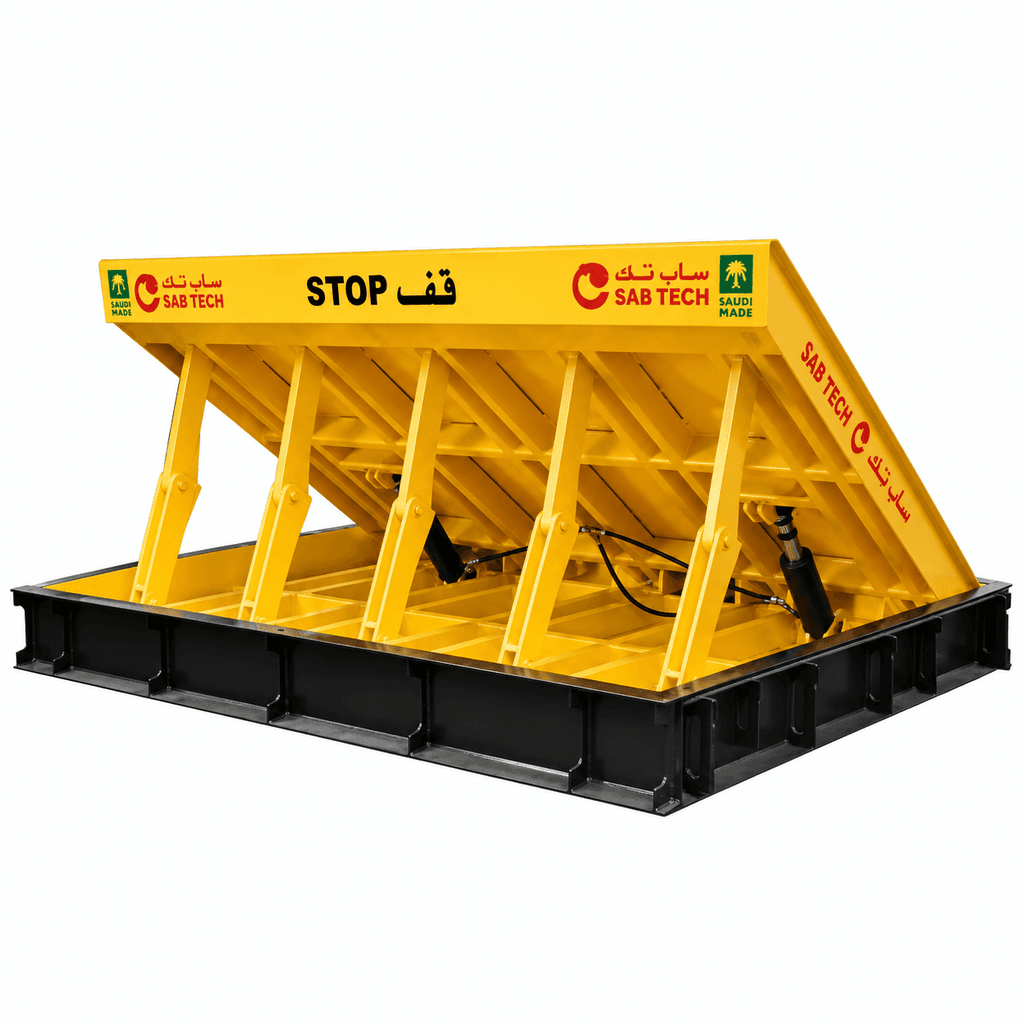
- The SAB TECH RB3M1000CT high-security road blocker holds PAS 68: V/7500[N3]/80/90:-1.5/4.6 and IWA 14-1: V/7200[N3C]/80/90:-0.9 with zero penetration, tested in Germany.
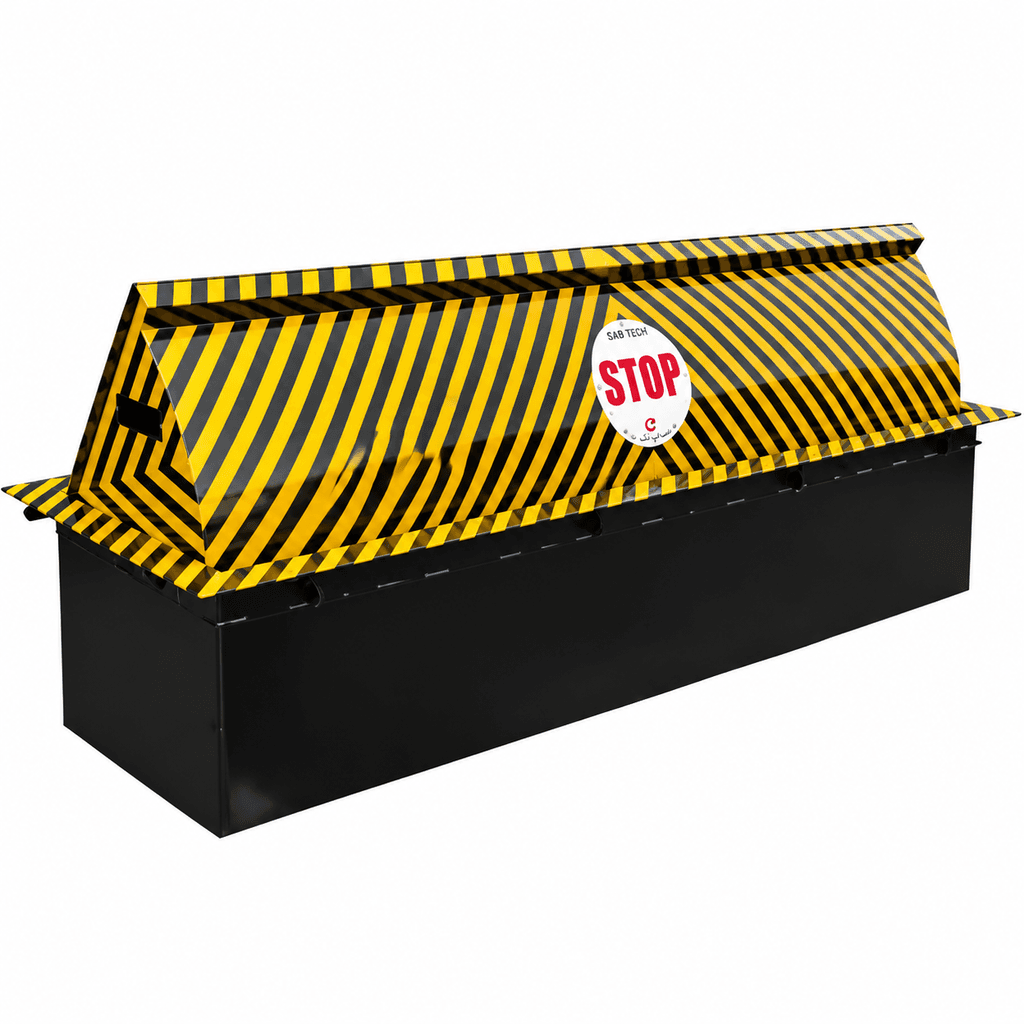
- The RBS3MCT shallow road blocker, installed at 40 cm depth, holds PAS 68: V/7500[N3]/80/90:-1.4/16.2.
- A rating applies to the model, width and foundation as tested, so ask for the certificate with the technical proposal.
High-security road blockers are therefore used as part of perimeter protection systems, combining structural strength, rapid deployment, and integration with vehicle access control technologies.
What Is a High-Security Road Blocker?
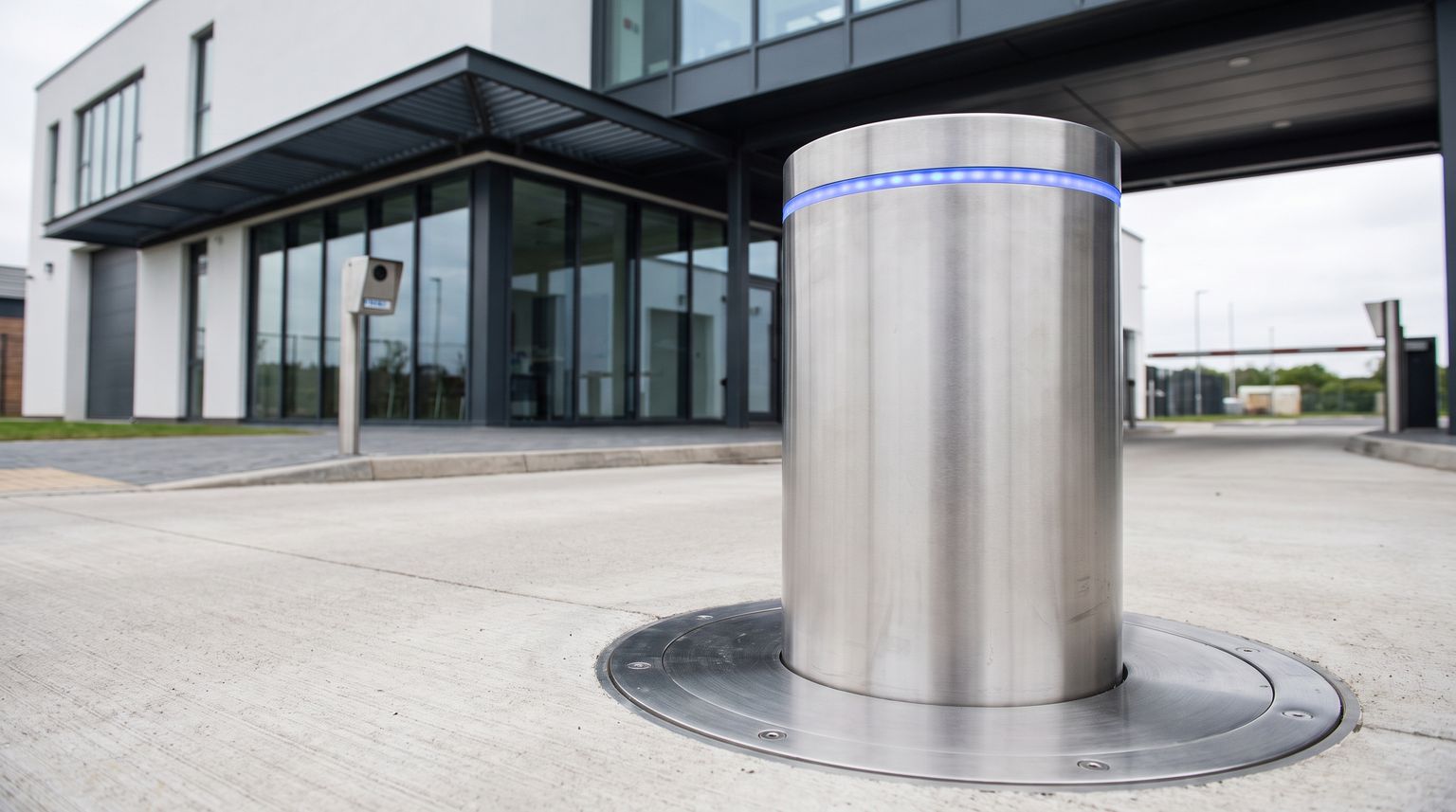
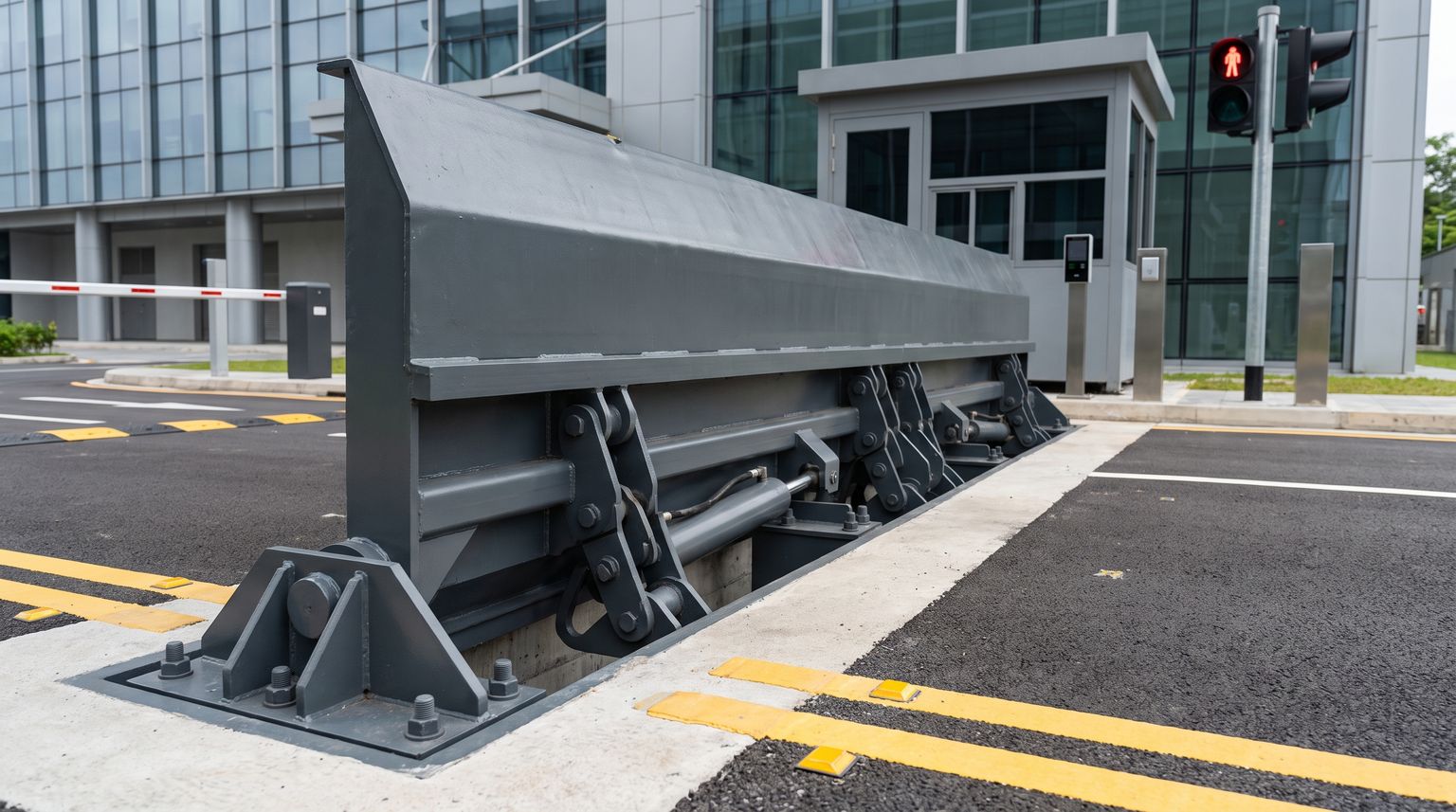
A road blocker is a hydraulic security system installed at vehicle entrances and exits. It can be raised to restrict vehicle movement and lowered to allow authorized vehicles to pass.
Unlike conventional traffic barriers, high-security road blockers are also designed and tested with vehicle impact resistance as an important performance consideration.
What Does PAS 68 Mean?
PAS 68 was used to classify the performance of vehicle security barriers subjected to horizontal impact testing. PAS 68 has since been withdrawn and superseded by ISO 22343-1:2023, although products previously tested under PAS 68 can still be described according to their original test results.
A test rating is usually written as a code describing the test vehicle, its mass and speed, the impact angle and how far the vehicle travelled past the barrier line. The rating belongs to the model that was actually tested, installed as it was in the test; it does not carry over automatically to another model or another foundation.
So if your project requires a specific rating, ask for the official test certificate issued for the proposed model itself and check that the rating on it matches the consultant's requirement. A general statement in a brochure or on a product page is not enough.
ASTM describes F2656 as a structured procedure for establishing a penetration rating for vehicle barriers under specified impact conditions, and notes that the rating does not imply the barrier will perform as rated in all site conditions.
SAB TECH road blocker crash-test results
Two road blocker models supplied by Bestolex have passed full-scale crash tests at crashtest-service.com (CTS) in Münster, Germany, and hold certificates with the following ratings:
| Model | Standard | Rating on the certificate | Vehicle beyond the barrier? | Test date | Certificate no. |
|---|---|---|---|---|---|
| High-security road blocker RB3M1000CT (3 m wide) | PAS 68:2013 | V/7500[N3]/80/90:-1.5/4.6 | No | 12 Nov 2020 | TC-12055-3532-19475-EN |
| RB3M1000CT | IWA 14-1:2013 | V/7200[N3C]/80/90:-0.9 | |||
| High-security shallow road blocker RBS3MCT (3 m wide) | PAS 68:2013 | V/7500[N3]/80/90:-1.4/16.2 | No | 19 Jul 2023 | TC-12055-4574-19988-2-EN |
Source: test certificates issued by crashtest-service.com GmbH, Münster, Germany.
In both tests the blocker stopped and immobilised the truck and the vehicle did not advance beyond the barrier, i.e. zero penetration. Impact energy was 1800.5 kJ in the RB3M1000CT test and 1867 kJ in the RBS3MCT test.
How to read the rating code
Take the PAS 68 code V/7500[N3]/80/90:-1.5/4.6:
- V: a vehicle impact test of a barrier.
- 7500: test vehicle mass in kilograms.
- [N3]: vehicle category, here a heavy goods vehicle.
- 80: impact speed in km/h.
- 90: impact angle in degrees, i.e. a head-on impact.
- -1.5: vehicle penetration in metres measured from the rear face of the barrier; a negative value means the front of the vehicle did not reach it.
- 4.6: the furthest distance reached by major debris, in metres.
The rating belongs to the model tested, at the width and with the foundation used in the test. Ask for the certificate with the technical proposal and check that the width and foundation on your project match the tested model. If the consultant specifies ASTM F2656, that is a separate test that needs its own certificate.
What Does Vehicle Impact Resistance Actually Mean?
Impact testing provides a standardized way to evaluate barrier performance under defined conditions, including vehicle characteristics, impact speed, and impact location.
Test results therefore help security planners understand the tested performance of a barrier and determine whether it is appropriate for a specific vehicle threat and site requirement.
Site conditions and installation are also important because real-world performance is not determined by the barrier alone.
How Does a Hydraulic Road Blocker Work?
The system uses a Hydraulic Power Unit (HPU) to move the road blocker between its raised and lowered positions.
According to the catalogue for the SAB TECH high-security road blocker, it deploys within 3–5 seconds in normal operation and in 1.5 seconds in emergency fast (EFO) mode.
Rapid operation can be important when an entrance needs to change from an open to a restricted state quickly.
What Happens During a Power Failure?
Operational continuity is an important consideration for security entrance systems.
This road blocker includes a dedicated manual hand pump that can be used during a power failure, allowing the barrier to remain operable when the primary electrical supply is unavailable.
How Can a Road Blocker Integrate With Access Control?
The road blocker can form part of an integrated vehicle access control system through PLC-controlled electronics.
According to the SAB TECH road blocker catalogue, the system can integrate with:
- Card readers.
- Biometric readers.
- Radio remote control.
- License plate recognition systems.
- Traffic signals.
This allows barrier operation to be coordinated with vehicle identification, authorization, and traffic management at the entrance.
Where Are High-Security Road Blockers Used?
These systems are suitable for locations requiring a high level of vehicle movement control, particularly where protection against vehicle intrusion is part of the site's security requirements.
Typical applications include:
- Sensitive facilities.
- Restricted security entrances.
- Industrial facilities.
- Sites requiring high-level perimeter protection.
- Vehicle entrances requiring integration with identification and access control systems.
What Should You Consider Before Choosing a Road Blocker?
Choosing a road blocker involves more than looking at an impact-test classification. The site layout, vehicle types, traffic direction, operating requirements, installation conditions, and existing access-control systems should all be considered.
It is also important to determine whether the tested performance is appropriate for the actual site conditions because vehicle impact tests are performed under defined conditions and do not necessarily represent every possible real-world scenario.
Conclusion
High-security road blockers help protect facility entrances against vehicle intrusion by combining impact resistance, rapid deployment, operational continuity, and access-control integration.
The SAB TECH high-security road blocker combines a hydraulic power unit, a 3–5 second rise (1.5 seconds in emergency EFO mode), a manual hand pump for power failures and a PLC controller for access-control integration. The RB3M1000CT model passed PAS 68 and IWA 14-1 crash tests with zero penetration, certified by the CTS laboratory in Germany.
High-security road blockers in Qatar
In Qatar, high-security road blockers are typically specified at government gates, critical facilities, ports and industrial sites, and the consultant often names the test standard and rating in the project specification. Start by getting the required rating in writing, then compare the proposed models against their certificates.
Where deep excavation is difficult because of underground services, look at the high-security shallow road blocker, which installs at a depth of just 40 cm. The rest of the range is under perimeter protection systems.
Bestolex is the exclusive SAB TECH agent in Qatar and handles the site survey, supply, installation, commissioning and maintenance. To discuss your entrance, request a site survey or a quotation, or message us on WhatsApp at +974 51505014.