
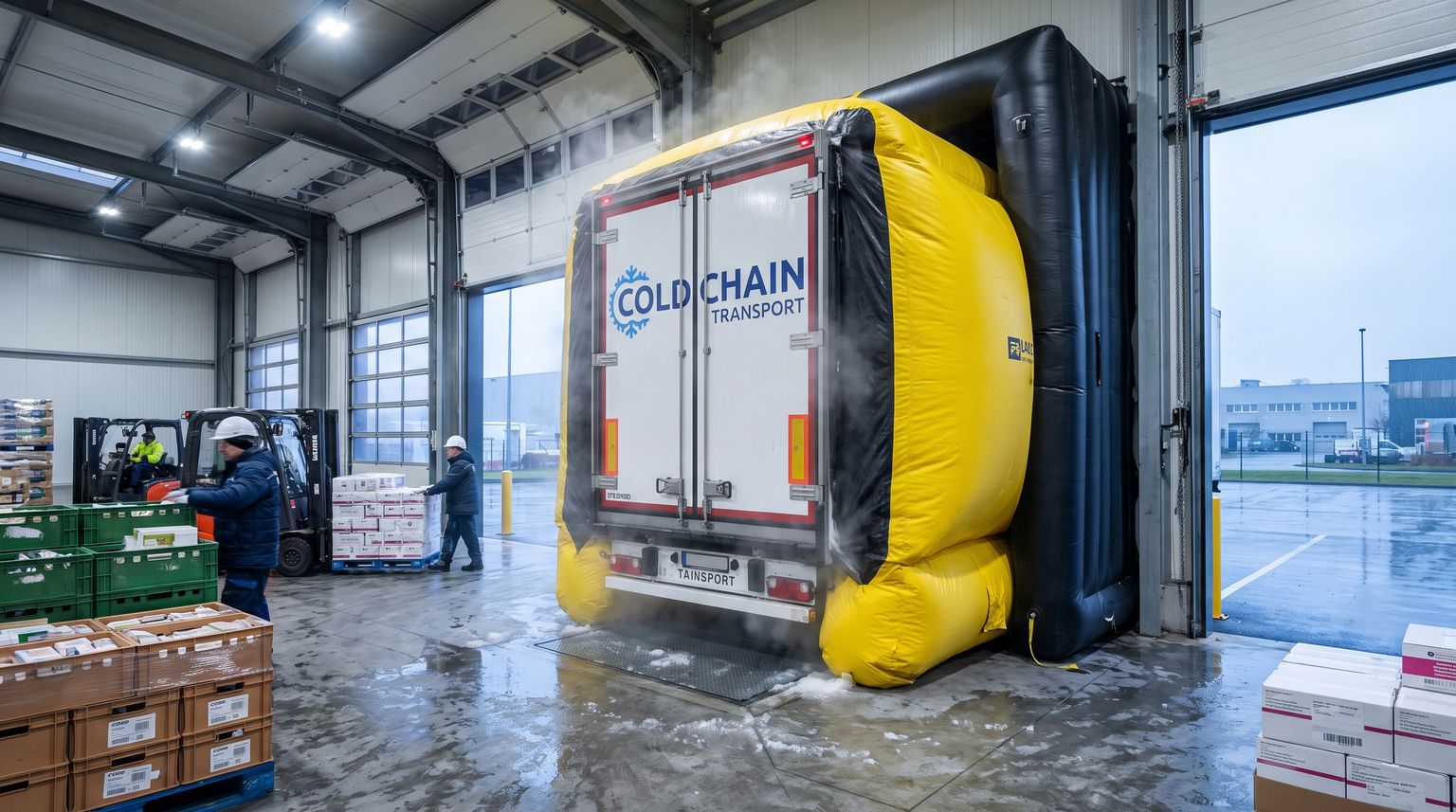
Cold storage facilities, food distribution centers, pharmaceutical warehouses, and temperature-sensitive logistics operations all face a common challenge: maintaining consistent environmental conditions during loading and unloading activities.
- The gap between the truck and the door opening during loading lets chilled air out and heat and dust in; a dock shelter closes that gap.
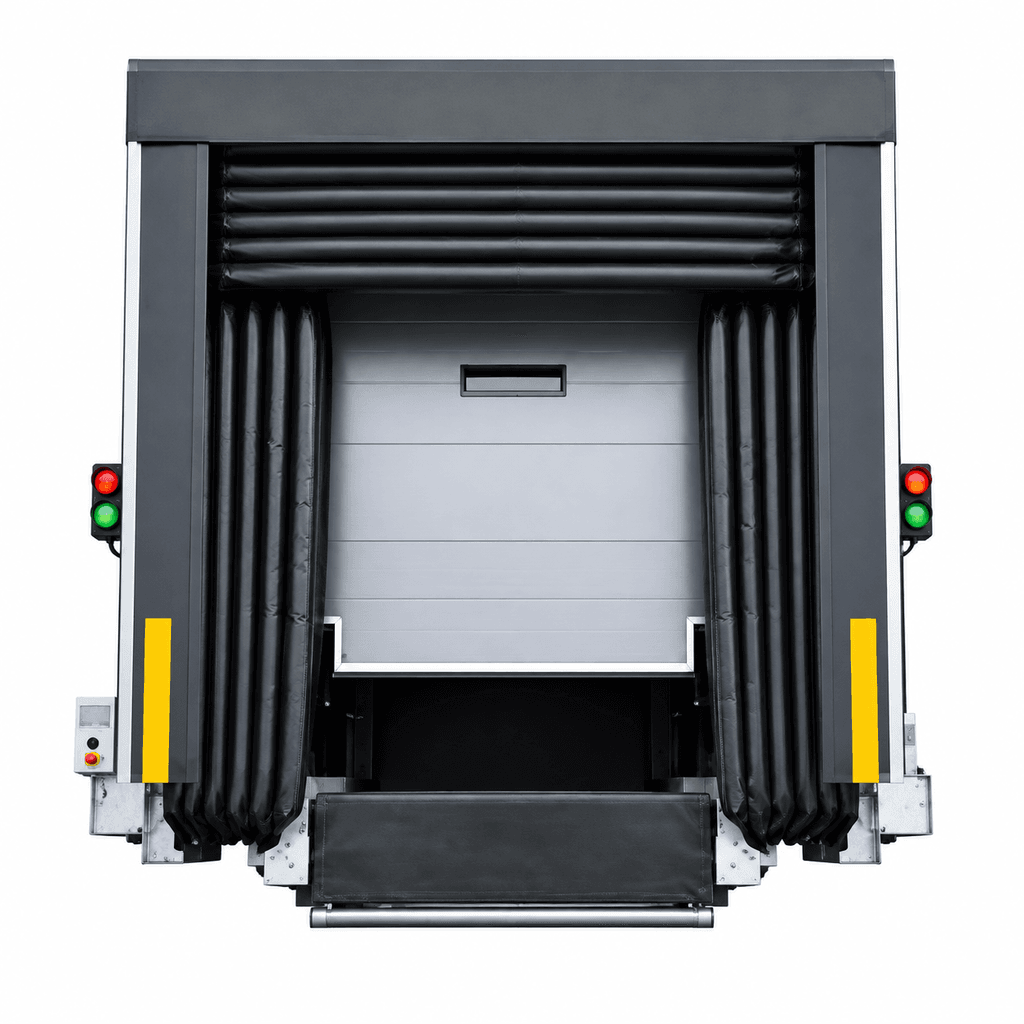
- An inflatable dock shelter has cushions that an electric blower inflates in 15–20 seconds to wrap around the truck body; its operating range is -30 to +70 °C, according to the catalogue.
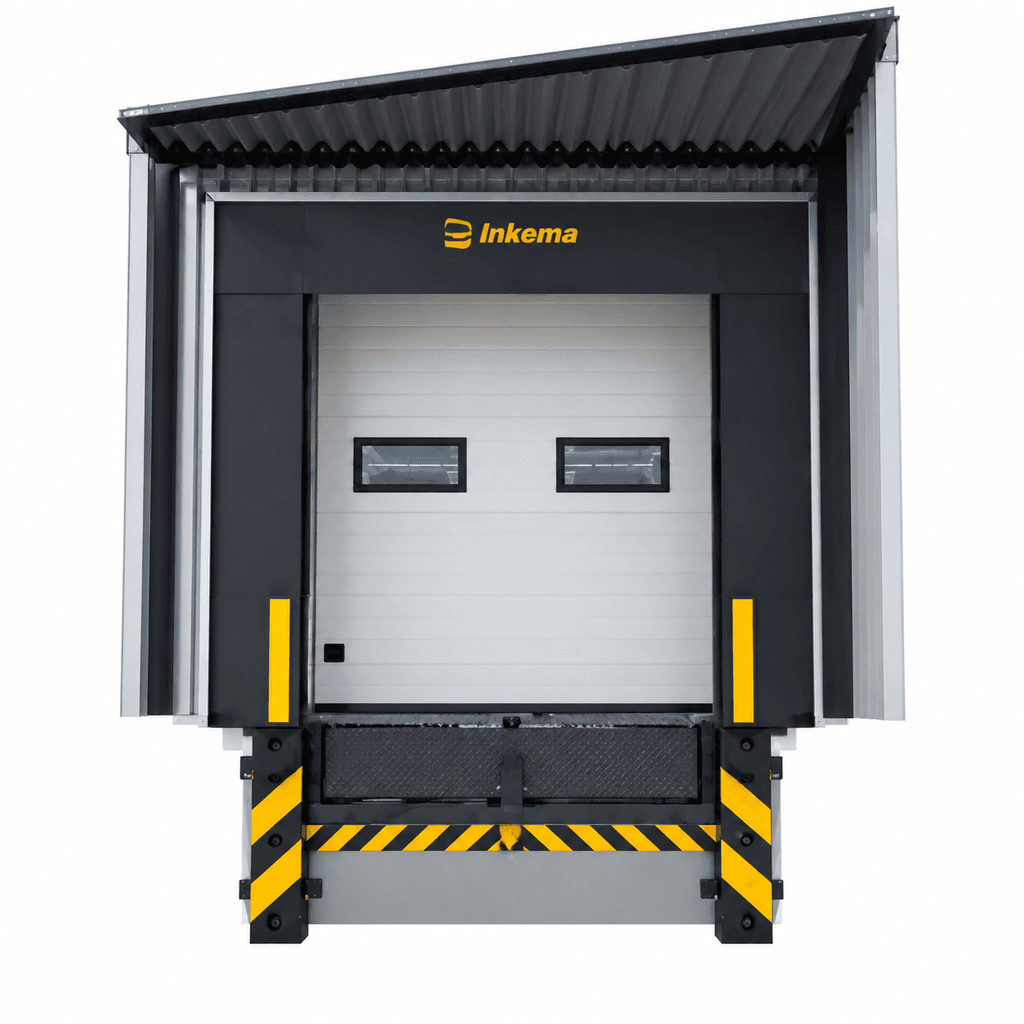
- A retractable dock shelter has PVC curtains on a retractable frame that absorbs truck impacts and protects the building walls around the door.
While advanced refrigeration systems play a critical role, loading dock areas are often one of the main points of thermal loss in a facility. Every shipment moving in or out creates potential exposure to external temperatures, making effective dock sealing a vital part of modern cold chain management.
The Challenge of Temperature Control
Products that require controlled storage conditions must remain protected throughout the logistics process.
Even short periods of temperature fluctuation can impact product quality, operational efficiency, and overall storage performance. Loading operations create unavoidable openings between vehicles and facilities, making proper sealing essential for maintaining environmental stability.
As cold chain requirements become stricter, organizations increasingly focus on minimizing temperature loss during cargo handling activities.
Why Effective Sealing Matters
Creating a tight seal around a vehicle helps reduce the exchange of indoor and outdoor air during loading operations.
This improves temperature retention while helping refrigeration systems maintain consistent performance. A well-sealed loading area also supports energy efficiency by reducing the workload placed on cooling equipment.
The result is better environmental control and enhanced product protection throughout the facility.
Protecting Sensitive Cargo
Many products require protection not only from temperature changes but also from external contaminants.
Dust, insects, moisture, and weather conditions can all affect product integrity if they enter the loading environment. Effective dock protection creates a barrier between external conditions and the controlled warehouse environment.
This is particularly valuable for food distribution, pharmaceutical storage, and other industries where product quality and hygiene are critical.
Reducing Energy Consumption
Energy management remains a major priority for temperature-controlled facilities.
By minimizing the loss of conditioned air during loading operations, businesses can improve refrigeration efficiency and reduce energy consumption. Over time, these improvements can lower operating costs while supporting sustainability objectives.
Lower equipment strain may also contribute to improved long-term system performance.
Supporting Efficient Logistics Operations
Modern warehouses must maintain productivity without compromising environmental control.
Advanced dock protection systems allow facilities to continue loading and unloading operations efficiently while preserving internal temperature conditions. This balance between operational speed and environmental stability is essential for successful cold chain management.
Facilities that achieve both goals benefit from stronger overall logistics performance.
Preparing for Future Logistics Demands
The demand for temperature-controlled transportation and storage continues to grow across multiple industries.
As distribution networks expand, organizations require infrastructure that protects inventory while supporting higher shipment volumes. Dock sealing solutions provide an important layer of protection that helps facilities remain competitive and operationally efficient.
Inkema dock shelters: catalogue comparison
| Item | Inflatable dock shelter | Retractable dock shelter |
|---|---|---|
| Standard size | 3500 (W) × 3700 (H) mm | 3400 (W) × 3400 (H) mm |
| Depth | 800 mm | 600 mm |
| Sealing method | Cushions inflated by a 0.55 kW electric blower in 15–20 seconds, wrapping around the truck body | PVC curtains that close around the docked truck: a 3 mm reinforced PVC front curtain and 3 mm PVC side curtains |
| Operating temperature | -30 to +70 °C | — |
| Frame | — | Galvanised steel retractable frame with spring assist |
| Best suited to | Cold stores, food and pharmaceutical warehouses | Docks where impacts from imprecise truck parking must be absorbed, with protection from rain, dust and heat |
Source: Inkema catalogue approved by Bestolex; full details on the product page.
Conclusion
Maintaining cold chain integrity requires attention to every point where products interact with the external environment. Loading docks play a critical role in this process, making effective sealing solutions an essential component of modern temperature-controlled facilities.
By improving insulation, protecting sensitive cargo, and reducing energy loss, advanced dock protection systems help organizations achieve higher performance and greater operational reliability.
Dock shelters for cold stores in Qatar
Warehouses, distribution centres and factories in Qatar differ in dock height, truck types, yard space and the goods they handle, so Bestolex surveys the site and measures heights and space before proposing a dock shelter. The door width and height and the range of truck sizes it serves are measured, because the shelter has to seal around both the largest and the smallest.
What to prepare before asking for a quote
- The door opening width and height, and the dock height above ground
- The truck and container types served, including the widest and tallest
- The temperature to be held inside the cold store or chilled area
- Whether the door has a dock leveler and an industrial door
- Photos of the dock front and the door
- How many loadings a day
Bestolex supplies Inkema loading equipment in Qatar and handles the site survey, supply, installation, commissioning, operator training, maintenance and spare parts. Browse the full range under loading systems. To discuss your site, request a site survey or a quotation, or message us on WhatsApp at +974 51505014.