
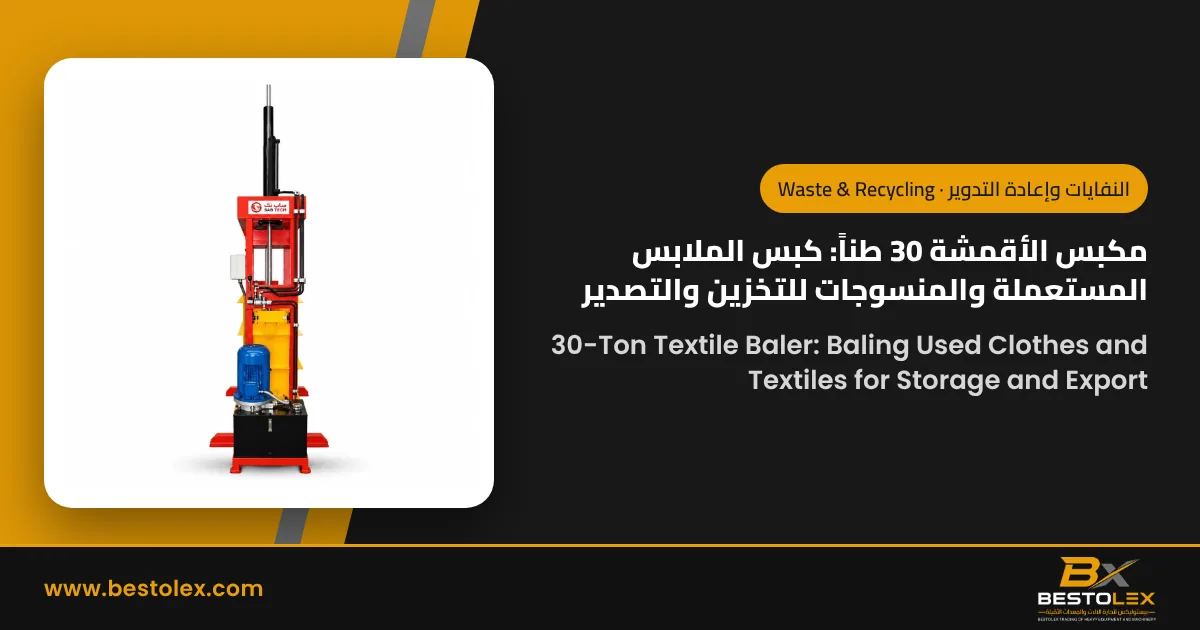
Used clothes, fabric, wool and cotton are light and springy: left loose they take up a lot of space, and pressed without proper tying they expand again. That is why clothing collection centres, textile plants and recycling and export companies need a dedicated textile baler that presses material into bales of even size and weight and ties them on every side. This guide explains how the SAB TECH 30-ton textile baler works, its specifications and why a uniform bale matters for storage and shipping.
- The TCB30T textile baler has 30 tons of hydraulic force and is designed for used clothes, wool and cotton.
- It makes 800 × 450 × 600 mm bales weighing 65–75 kg, according to the catalogue.
- All-side tying stops the fabric springing back and keeps the bale's shape in transit.
- Uniform bales are easier to stack in the warehouse and to load into export containers.
Why textiles need a dedicated baler
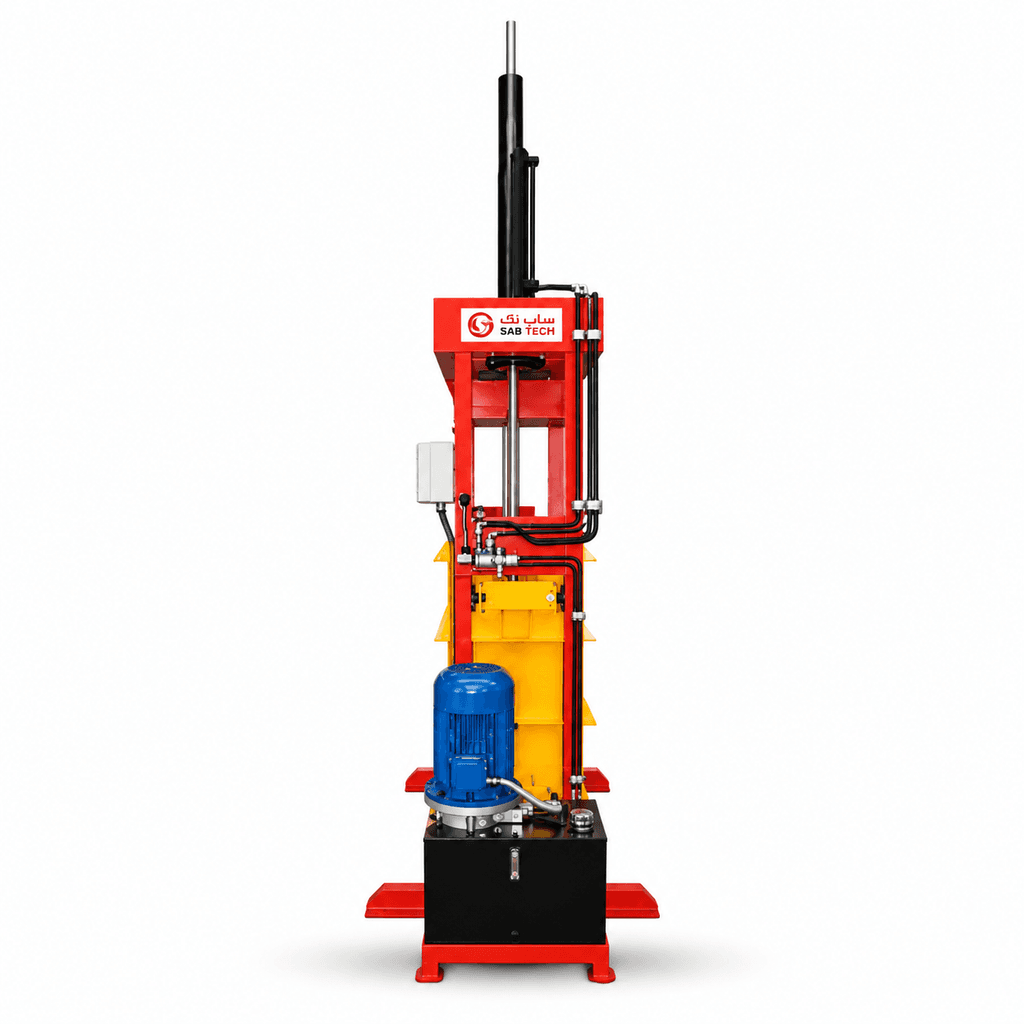
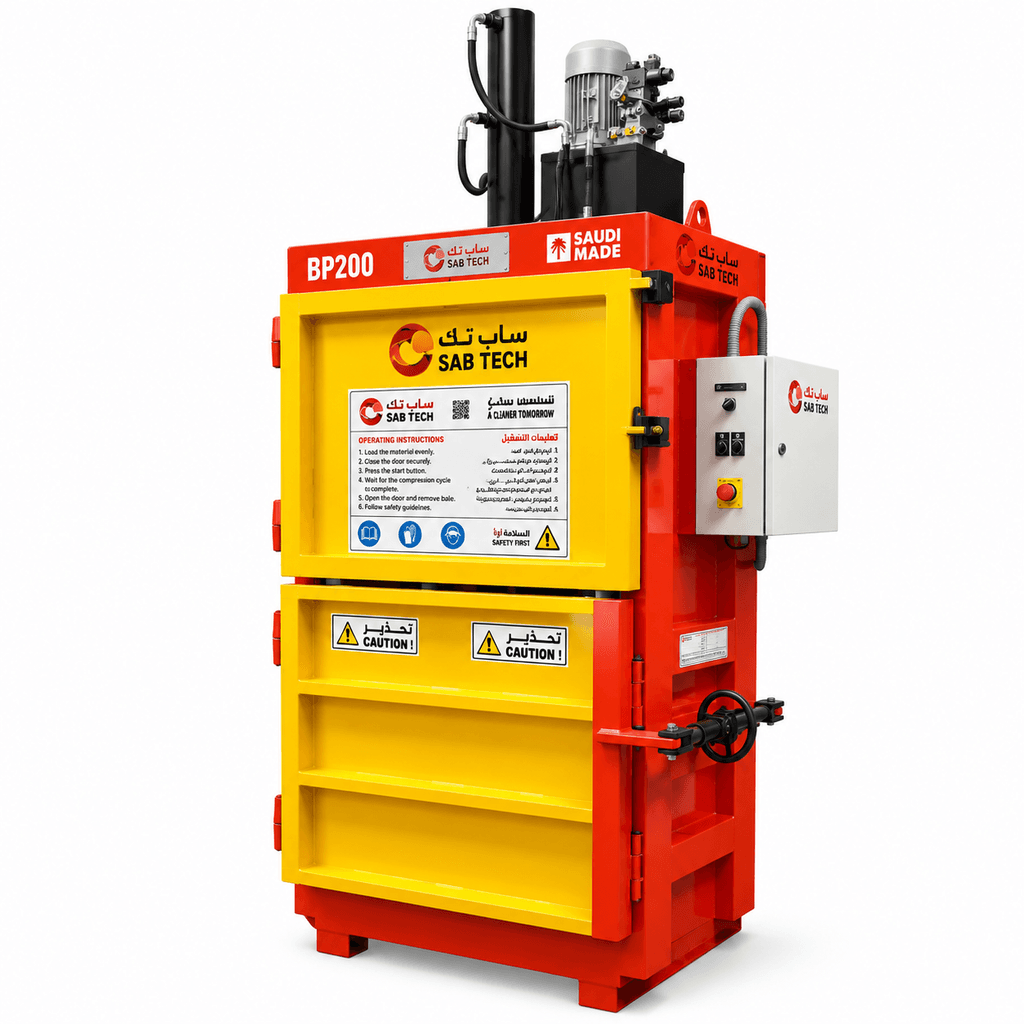
Textiles differ from cardboard and plastic: they are flexible and hold air in their folds, so if they are pressed without firm tying they puff up again. A textile baler is built for this, with a chamber sized to the bale, a hydraulic press plate that compresses the clothes in batches, and a tying system that wraps the bale on all sides so it comes out compact and firm.
How the 30-ton textile baler works
- The operator loads clothes or fabric into the chamber.
- The manual control valve brings the press plate down with 30 tons of force to compress the load, then returns it.
- Loading and pressing repeat until the bale reaches the required size.
- The bale is tied on all sides with the all-around tying system.
- The chamber lifts up so the bale can be removed easily.
SAB TECH textile baler specifications
| Specification | Value |
|---|---|
| Model | TCB30T |
| Hydraulic force | 30 tons |
| Electric motor | 5.5 kW |
| Operation | Manual control valve |
| Bale size | 800 × 450 × 600 mm (L × W × H) |
| Bale weight | 65 – 75 kg |
| Machine weight | 1000 kg |
| Tying | On all sides of the bale |
Source: Bestolex approved product catalogue.
The benefits of a uniform bale
1. Organised storage
Bales of equal size and weight stack in stable rows, clearing the warehouse of open sacks and making stock easy to count.
2. Easier export shipping
Exporting used clothing depends on loading containers to the highest practical weight. Firmly tied bales fill a container evenly and are easy to count and document, and a consistent weight (65–75 kg) makes pricing and grading clearer.
3. Protected material
Firm tying keeps clothes from spilling and getting dirty during handling and transport, reducing damage in warehouses and ports.
4. Simple operation
The baler runs on a manual control valve and its chamber lifts to release the bale; the catalogue describes it as safe and easy to operate, and operators are trained at installation.
Who uses a textile baler?
- Used-clothing collection centres and charities.
- Clothing sorting, recycling and export companies.
- Textile and garment plants for fabric offcuts.
- Hotels baling discarded linen before removal.
Textile baling in Qatar
According to Qatar News Agency, Qatar's national environment and climate strategy aims to close and rehabilitate unsanitary landfills and reach a 15% material recycling rate for municipal waste. Clothing and textiles can be collected, sorted and reused or recycled instead of landfilled, and baling makes them practical to move and export.
Bestolex is the exclusive SAB TECH agent in Qatar and supplies, installs and commissions the 30-ton textile baler, trains operators and provides after-sales service and spare parts with a one-year warranty as listed in the catalogue. For cardboard and plastic, see the vertical balers under waste & recycling. Collecting clothes or fabric in volume? Request a site survey or a quotation, or message us on WhatsApp at +974 51505014.