
What is a horizontal waste baler, and how is it different from an air compressor?
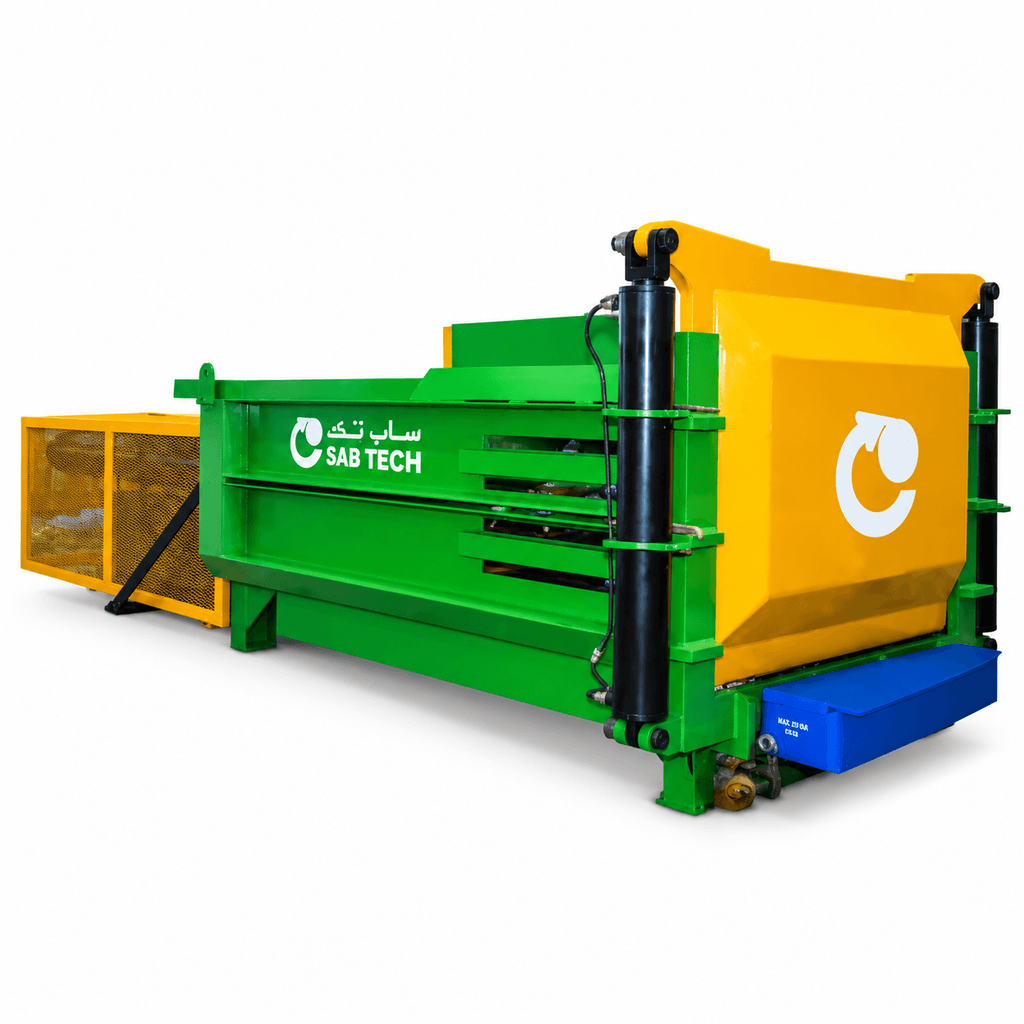
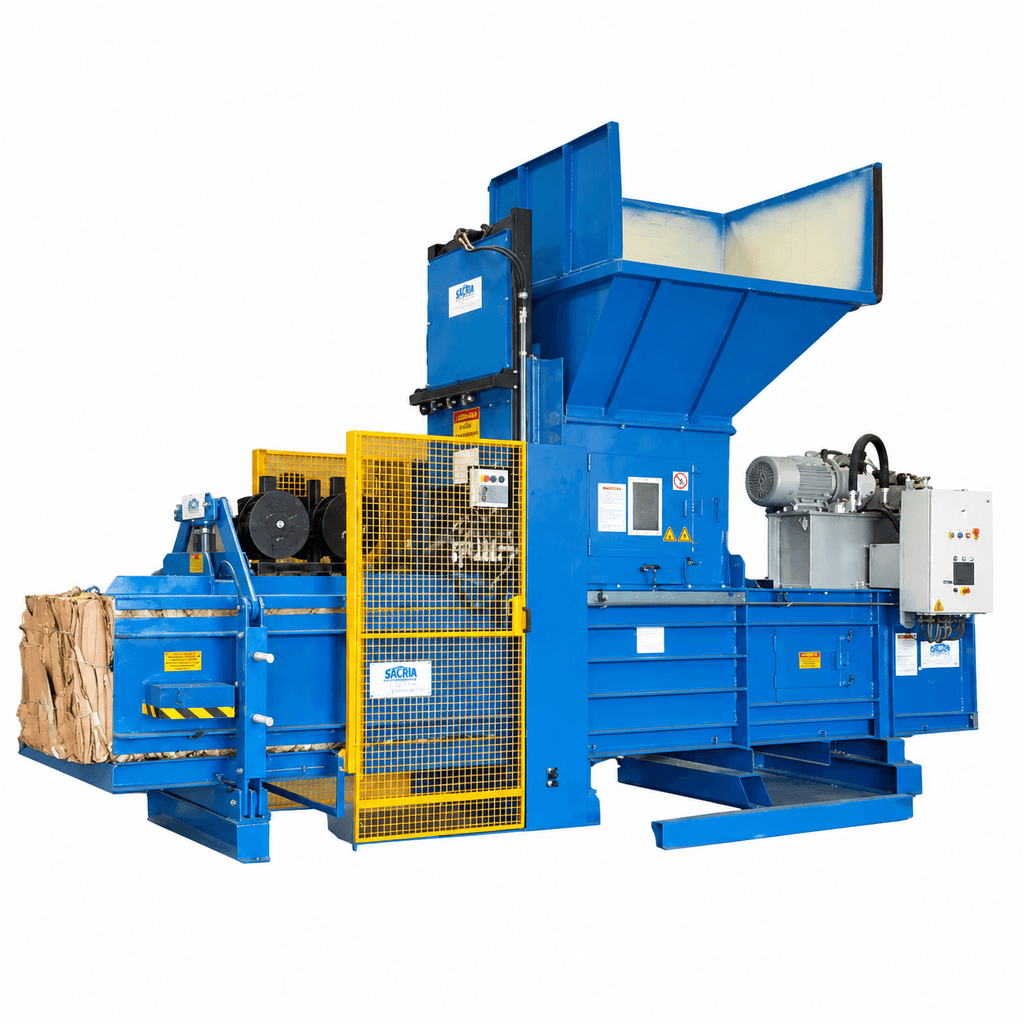
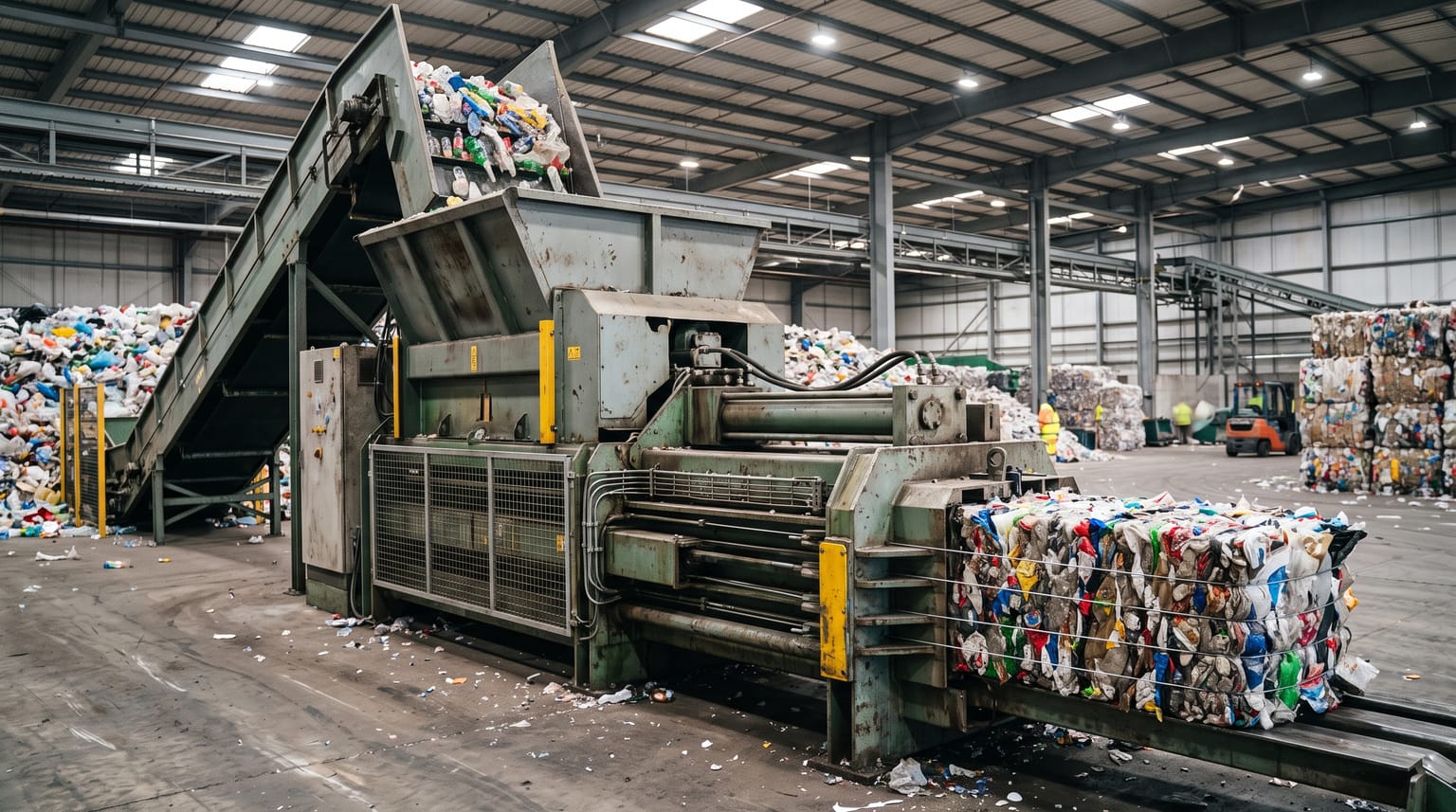
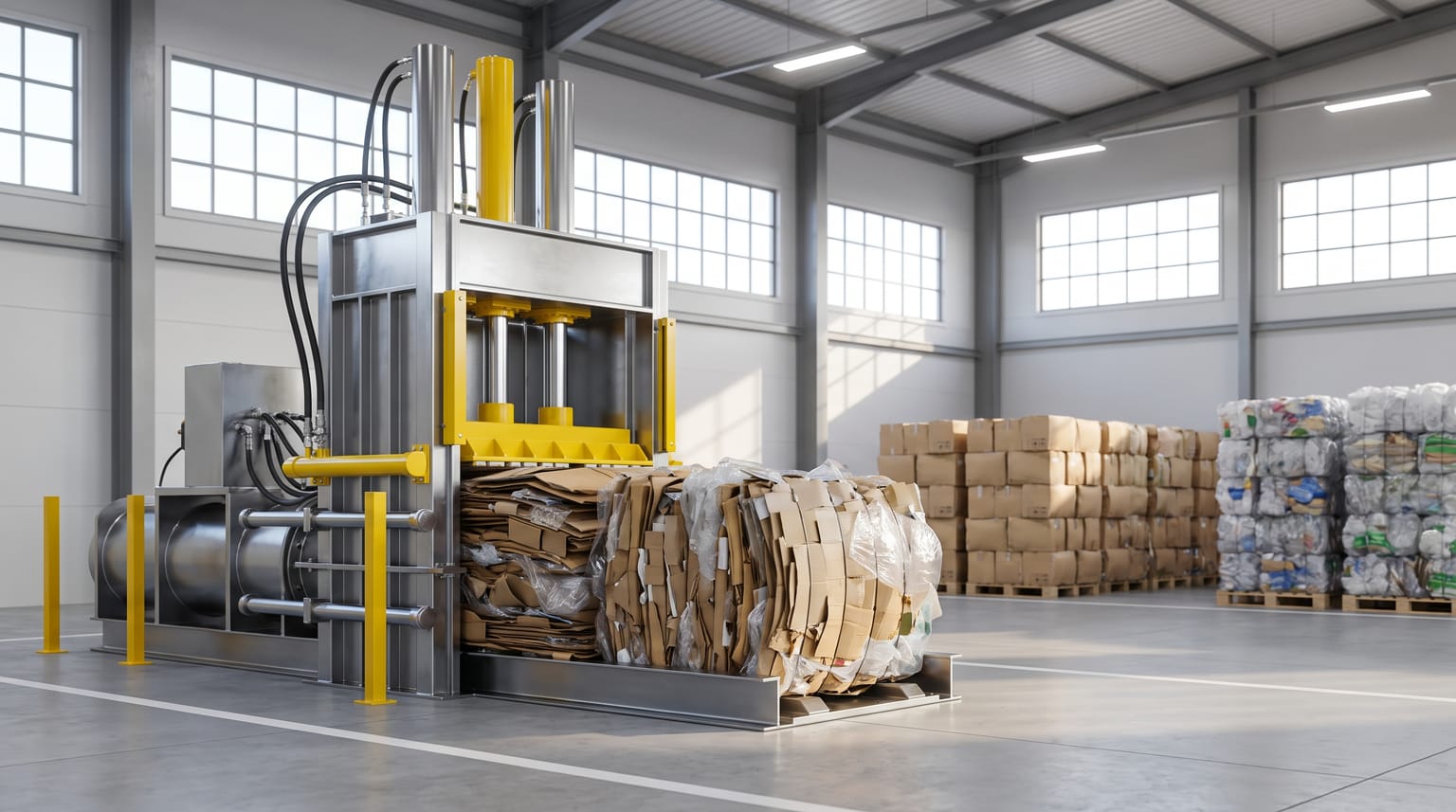
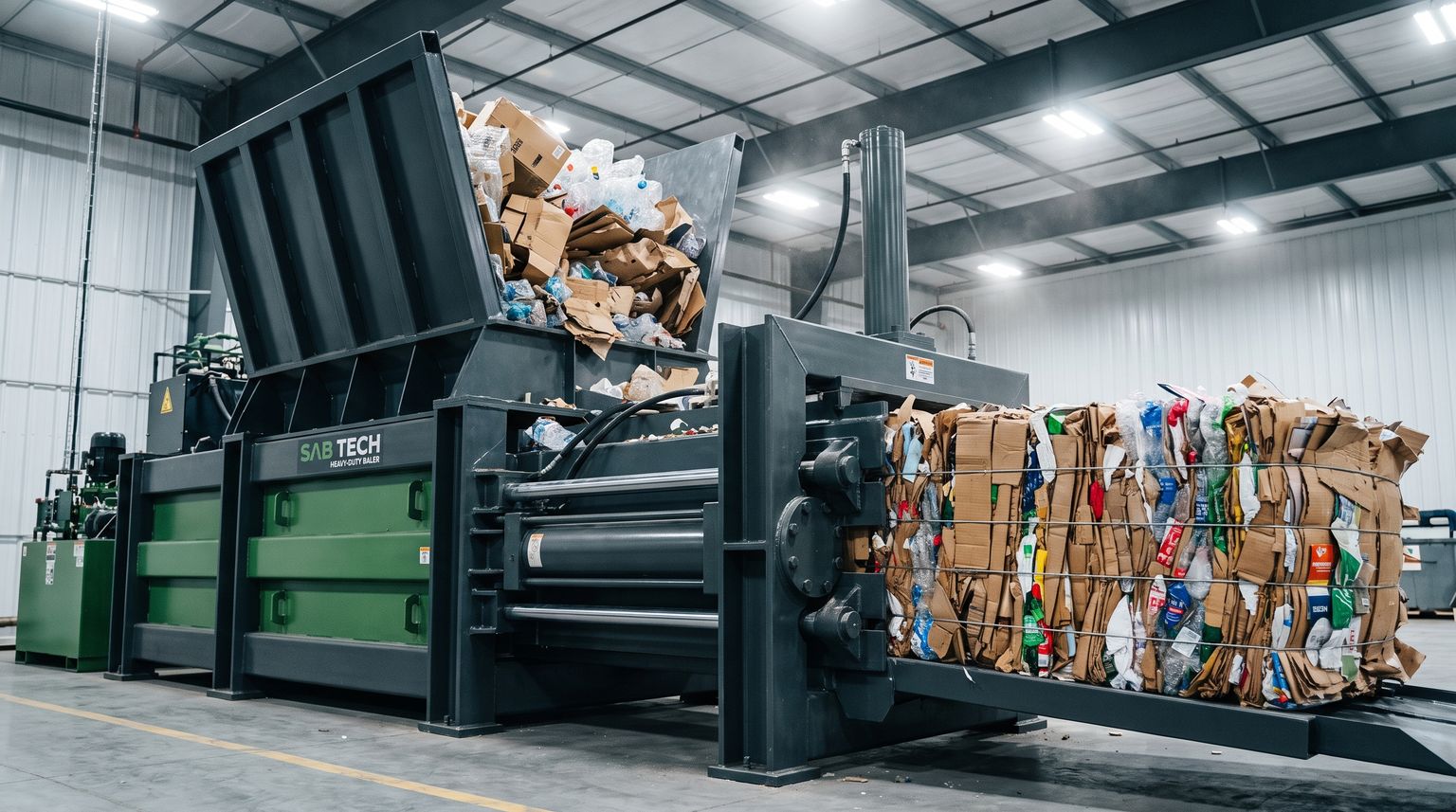
A horizontal waste baler is a large machine usually installed in production halls or rear loading bays of factories and large facilities. Operators feed material into the hopper, and a ram driven by hydraulic power moves horizontally, pressing the material against the chamber end or the previous bale. The cycle repeats until a dense bale forms, which is then tied and ejected before the next one starts.
- A horizontal baler suits large, continuous volumes of cardboard and plastic in factories, distribution centres and malls.
- A baler ties recyclables into bales you can sell; a compactor reduces general waste for haulage.
- In the Bestolex catalogue: a 70-ton horizontal press with bales up to 300 kg, and a 22–45 ton horizontal auto baler with automatic tying.
- Work out savings from your current haulage trips and the price your bales fetch, not from general percentages.
A note to avoid confusion: "compressor" or "hydraulic compressor" on its own usually means an air or gas compressor, a completely different machine that compresses gas to drive tools and equipment. This article is about balers and compactors for solid waste, which reduce the volume of material, so state the material and the specification clearly when you search or ask for quotes.
How does a horizontal hydraulic baler work?
The baler runs on a simple hydraulic circuit:
- An electric motor drives a hydraulic pump.
- The pump sends hydraulic oil under high pressure to the main cylinders.
- The cylinder extends the ram and pushes material into the compaction chamber. Because oil is practically incompressible, the force goes straight to the ram face.
- As the ram moves, air trapped between layers of material is pushed out, giving a large reduction in the volume of waste.
- On automatic models, once the bale reaches its set length, the tying system feeds, ties and cuts the wire, and the bale is ejected automatically.
Key components to check before you buy
- Ram (press plate): pushes and compresses the material; its design and steel thickness are among the main factors in machine life.
- Hydraulic power unit (HPU): houses the pump, motor, oil tank and valves, and drives the pressing cycle.
- Hopper: receives material by hand or from a conveyor; the size of its opening sets the largest piece that can be fed directly.
- Electrical control panel: runs the pressing cycle and stops, and is fully automatic on models with automatic tying.
- Safety guards and emergency stops: keep the operator away from moving parts during a stroke and are the basis of safe operation around the baler.
- Hydraulic oil cooling: keeps the oil within its temperature limits in hot weather, so its viscosity does not drop and damage the pump.
Three criteria for judging baler quality
The brand alone is not enough when choosing a baler. Assess three things that decide how reliably it will keep running:
- Build quality: the strength of the steel frame, the quality of the welding and the source of the hydraulic components.
- Safety standards: ask whether the machine conforms to the relevant European standards, such as EN 16252 for horizontal baling presses and EN 16486 for waste compactors, and ask for the conformity documents.
- Local service and support: any machine becomes a burden without fast technical support, genuine spare parts and operator training in Qatar.
Types of waste baling and compaction equipment
- Horizontal baler: the ram moves horizontally. It suits sites with large, continuous volumes such as distribution centres and large factories, because it can be fed continuously and, on automatic models, ties bales without an operator.
- Stationary compactor: a fixed unit on a concrete base that pushes general waste and dry cardboard into a separate container; the container is swapped when full while the machine stays in place.
- Self-contained compactor: the compactor and container form one sealed unit, designed for wet waste and food plants to stop leaks and odours.
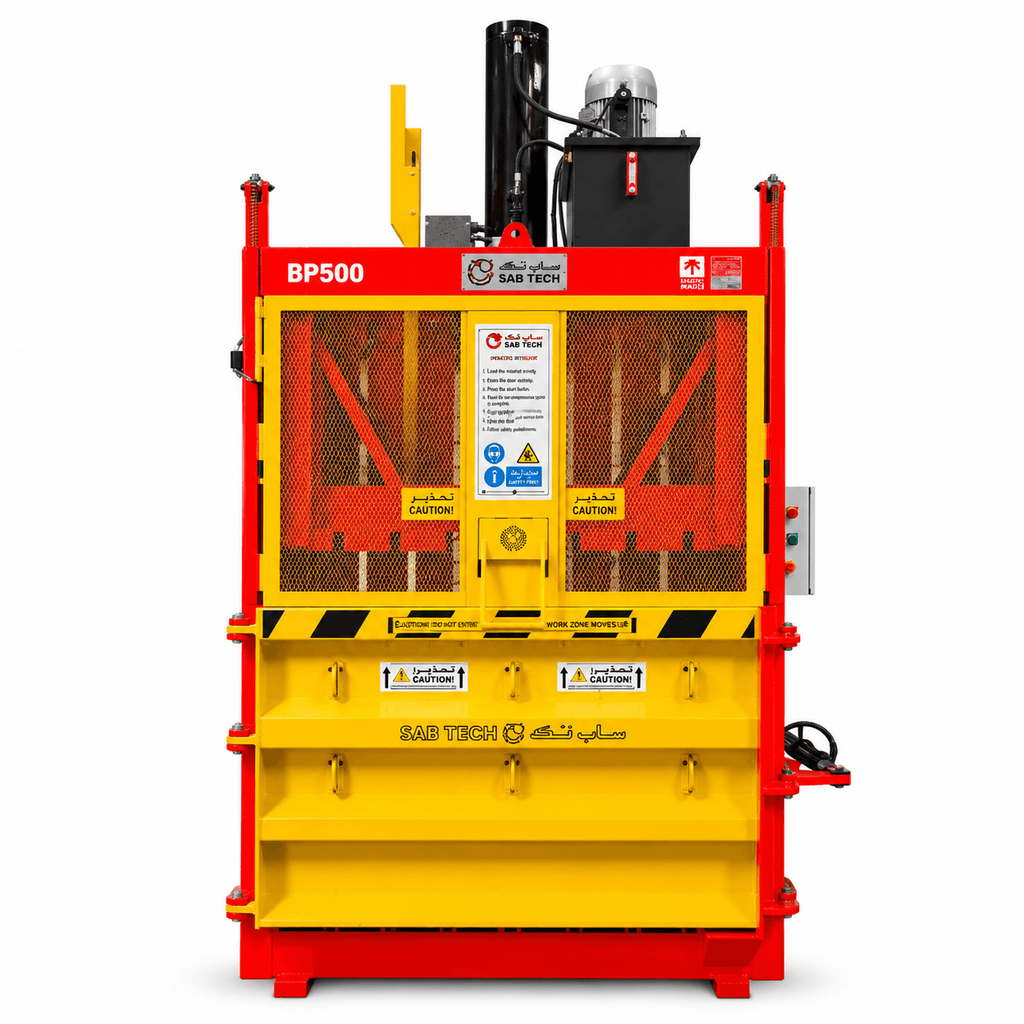
- Vertical baler: compresses material from top to bottom and needs little floor space, so it suits shops and warehouses with limited volumes and tight spaces.
- Screw compactor: a continuously rotating screw crushes and pushes material forward; it is useful for breaking up light wooden crates and packaging of mixed sizes.
Baler or waste compactor?
The two are often confused because both run on hydraulics, but they differ in purpose and output:
- Waste compactor: reduces the volume of general, mixed waste that has no resale market, to cut haulage costs and landfill fees.
- Baler: presses clean, sorted recyclables (such as cardboard, paper, PET plastic and aluminium cans) into high-density bales that are easy to stack, store and sell as raw material, turning waste into a source of income.
The rule of thumb: if your goal is to get rid of mixed waste at the lowest haulage cost, choose a compactor. If your site produces large volumes of packaging and plastic that you want to sell, a baler is the right choice. Many large sites use both.
Compaction ratio and bale density: what do they mean?
The compaction ratio expresses how much the volume of loose material shrinks. A 4:1 ratio, for example, means 4 cubic metres of loose waste become 1 cubic metre after compaction.
- Dry cardboard and paper: the real ratio depends on the material, its moisture and the machine's force, which is why performance is judged by the weight of the finished bale.
- Flexible materials and PET plastic: plastic tends to spring back after pressing, so it needs a higher pressing force for the bale to hold together; final bale density is the real measure.
- Factors that affect the ratio: the type of material, its moisture, the pressing force and the design of the compaction chamber.
Return on investment and payback period
The basic idea: the denser the material, the fewer trips you need and the lower your operating cost. How much you save depends on your volumes, haulage rates and the price your bales fetch, so work it out with the steps below rather than relying on general percentages.
To calculate the savings at your site:
- Work out your current annual haulage cost (trips per week × cost per trip × 52 weeks).
- Estimate the number of bales or the volume after baling, based on your material and the bale weight in the baler's specification.
- Calculate the new number of trips; the truck will carry compressed material instead of loose material that is mostly air.
- Subtract the new cost from the old one, add income from bale sales if you have a buyer, and deduct running costs (power, wire and maintenance) to get your net annual saving. Payback period = baler purchase and installation cost ÷ net annual saving.
Operating benefits that don't show on the invoice
- Cleaner workplace: turning loose waste into bales straight away prevents piles and odours and helps keep pests away.
- Better use of space: uniform bales can be stacked by forklift, freeing floor space for production or storage.
- Health and safety: workers handle sharp or heavy waste less, and the fire risk from scattered cardboard falls.
- Lower carbon footprint: fewer truck trips mean less fuel and fewer emissions, which supports the site's environmental record.
Applications by sector
- Factories, warehouses and distribution centres: produce large, continuous volumes of corrugated cardboard, paper trimmings and packaging. A horizontal baler, especially with a feed conveyor, is the usual choice to keep operations running without waste building up.
- Food plants and central kitchens: handle wet waste with a lot of liquid and need sealed self-contained compactors to prevent leaks, with regular scheduled collection to keep the site clean.
- Malls and large retail centres: generate a large mix of shop cardboard and wet restaurant waste; combining a baler and a compactor consolidates collection points and reduces waste-truck traffic at peak times.
- Hospitals and healthcare facilities (general waste only): use balers for paper packaging, medical-supply cardboard and office waste. Hazardous clinical waste follows a separate, regulated route set by the health authorities and is never mixed with general waste.
Horizontal balers and Qatar's environmental targets
According to Qatar News Agency, Qatar's national environment and climate strategy aims to close and rehabilitate unsanitary landfills and reach a 15% material recycling rate for municipal waste.
A horizontal baler helps factories, distribution centres and malls in Qatar separate cardboard and plastic at source and turn them into bales for recycling plants instead of hauling them away with general waste.
Horizontal balers available in Qatar
Bestolex supplies two horizontal balers: the SAB TECH 70-ton press and the horizontal auto baler. These are their specifications from the approved catalogue:
| Specification | Horizontal baling press 70T | Horizontal auto baler |
|---|---|---|
| Pressing force | 70 tons | 22 – 45 tons depending on model |
| Bale weight | Up to 300 kg depending on material | 300 – 400 kg |
| Bale size | 540 × 800 × 1020 mm | Depends on model |
| Motor power | 22 kW | 7.5 – 15 kW |
| Tying | Manual | Fully automatic, 3 – 4 wires |
| Cycle time | — | 24 – 34 seconds |
Source: Bestolex approved product catalogue. A dash (—) means the value is not listed in the catalogue.
The horizontal baling press 70T is built for heavy applications: paper, cardboard, drums and PET plastic. The horizontal auto baler ties bales automatically and suits malls, supermarkets, warehouses, printers and recyclers that need continuous running with little operator input. For smaller volumes or tight spaces, see the vertical balers under Waste & Recycling.
We study your volumes and survey the site, then supply, install, commission, train operators and provide maintenance and spare parts. To size a baler for your site, request a site survey or a quotation, or message us on WhatsApp at +974 51505014.