
What Is a Waste Compactor?
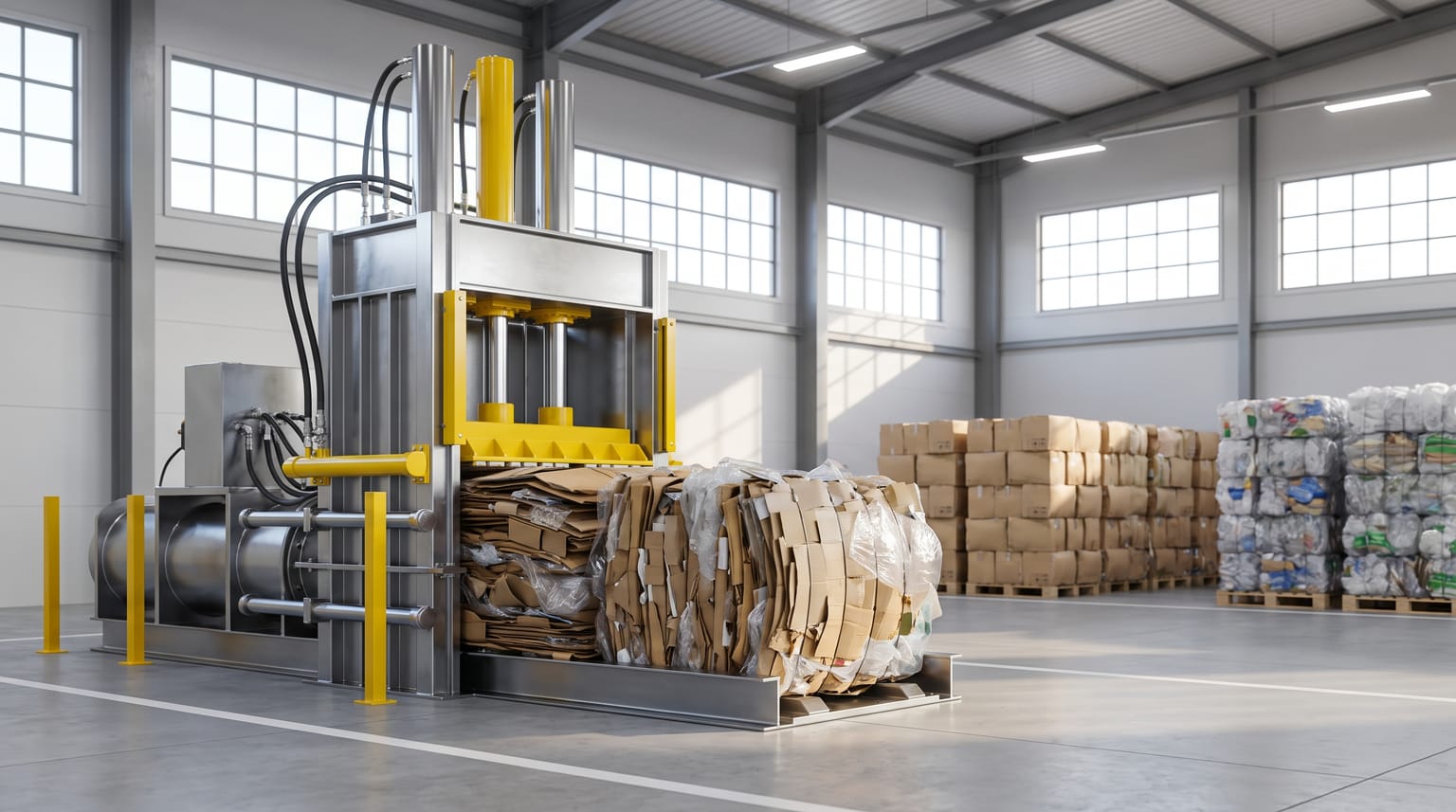
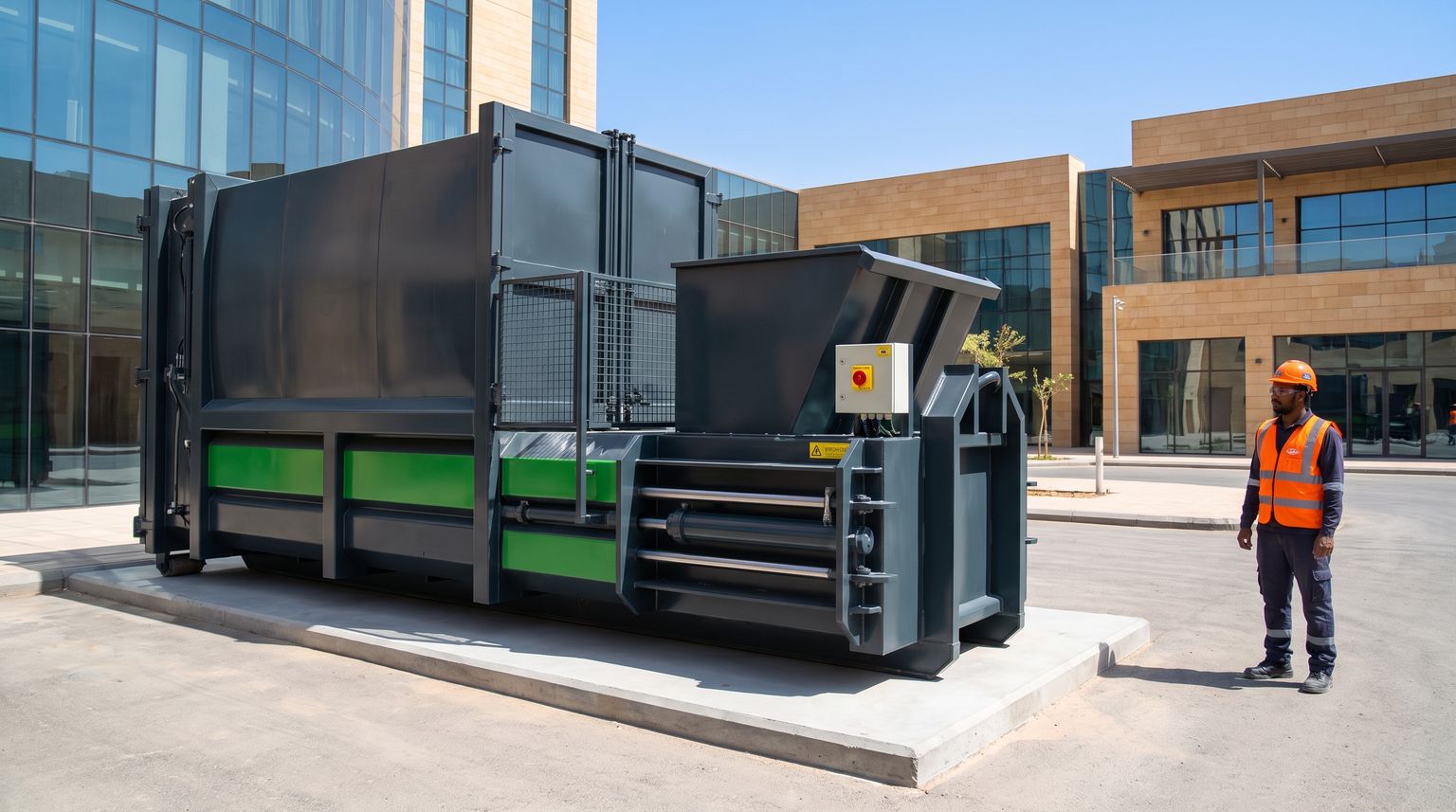
A waste compactor is a heavy-duty machine, usually installed at a loading dock or service yard. Staff load waste into a feed hopper. A press plate (also called a ram) then drives the waste into a container. The cycle repeats until the container is full of compacted waste and is swapped for an empty one.
- A compactor reduces general waste volume and haulage trips; a baler ties cardboard and plastic into bales you can sell.
- Stationary units suit dry waste and cardboard; self-contained units suit wet waste in restaurants, hotels and food plants.
- Compaction ratios in our catalogue: 5:1 for the German refuse compactor and 4:1 for the vertical garbage compactor 2CY.
- Work out savings from your current hauling bills and confirm the container fits your hauler's system before buying.
Not to be confused with air compressors. Searching for just "hydraulic compressor" tends to return air and gas compressors, which are entirely different machines. A waste compactor is built to reduce the volume of solid waste. You will also see it called a waste press, trash compactor or garbage compactor.
How a Hydraulic Waste Compactor Works
- An electric motor drives a hydraulic pump.
- The pump sends pressurised hydraulic oil to a hydraulic cylinder.
- The cylinder extends the press plate, pushing waste into the container. Because liquids do not compress, force transfers efficiently to the ram face.
- When pressure reaches a set point, the cycle ends or the unit signals that the container is full.
- The ram retracts and the next cycle begins when more waste is loaded.
Key components to know before you buy
- Press plate (ram): pushes and compresses the waste. Its thickness and design drive service life.
- Hydraulic power unit (HPU): pump, oil tank and valves. Much unplanned downtime starts here.
- Feed hopper: receives the waste and determines the largest item you can load.
- Control panel: runs the compaction cycle and stops, and on some models signals when the container is full.
- Guards, interlocks and emergency stops: prevent access to moving parts and are the foundation of safety.
- Container: holds the compacted waste and must match your hauler's lifting system.
Why Choose a German Waste Compactor?
"Made in Germany" does not guarantee quality by itself, but it usually points to a strong engineering tradition and strict manufacturing and safety norms. In practice, when buyers search for a German compactor they want three things:
- Build quality: robust steel structure, good welding and surface protection, reliable hydraulic components.
- Standards compliance: the European standard EN 16486 sets safety requirements for the design and manufacture of waste compactors and the information needed to use them safely. Ask the supplier for the declaration of conformity and the technical file.
- Serviceability: even a well-built machine becomes a burden if spare parts and a technician are not available in Qatar.
Questions to ask any supplier: Who is the manufacturer and where is it built? Can you see the conformity documents? What does the warranty cover and for how long? Are spare parts stocked in Qatar? Are the manual and operator training available in Arabic?
Types of Waste Compactors
Stationary compactors
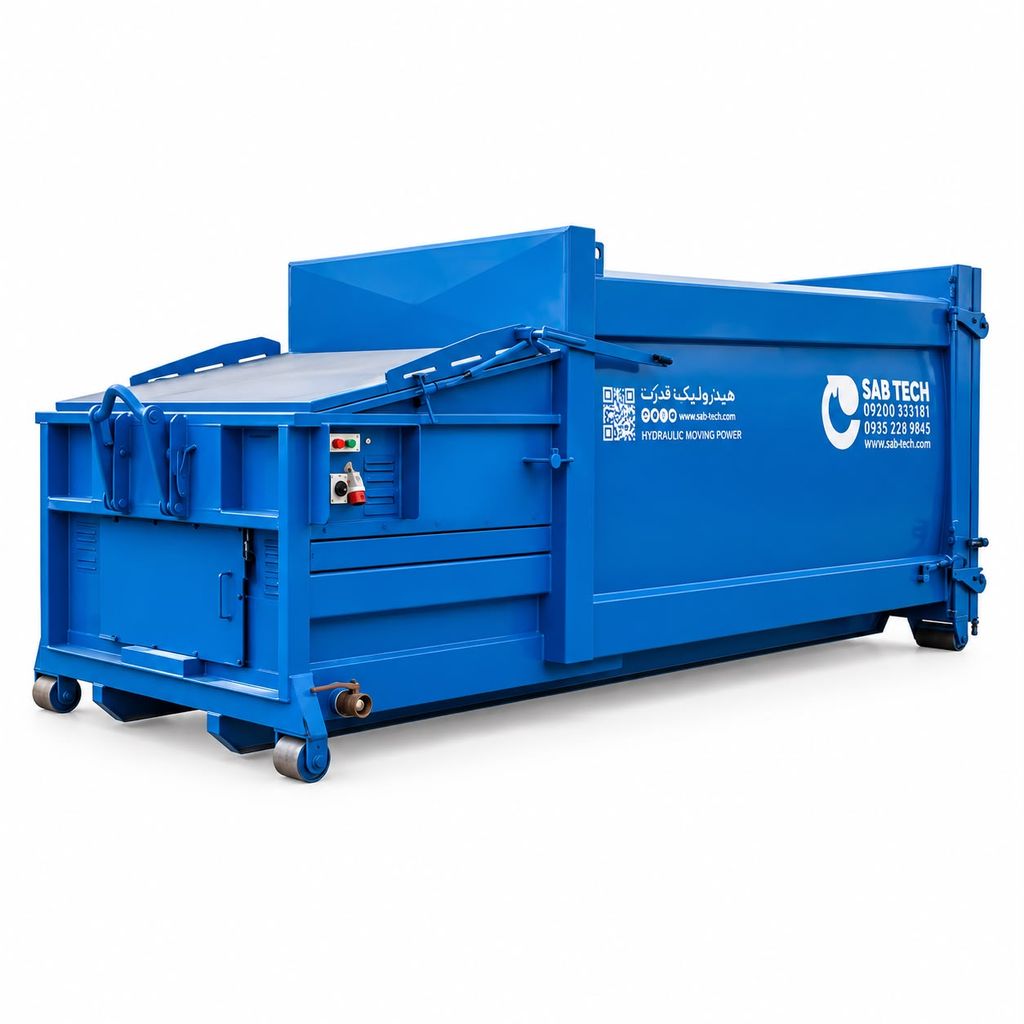
A fixed unit on a concrete pad that pushes waste into a separate container, typically a roll-off, which the hauler swaps. Best for dry waste, cardboard and packaging in warehouses, retail and manufacturing. Only the container is hauled.
Self-contained compactors
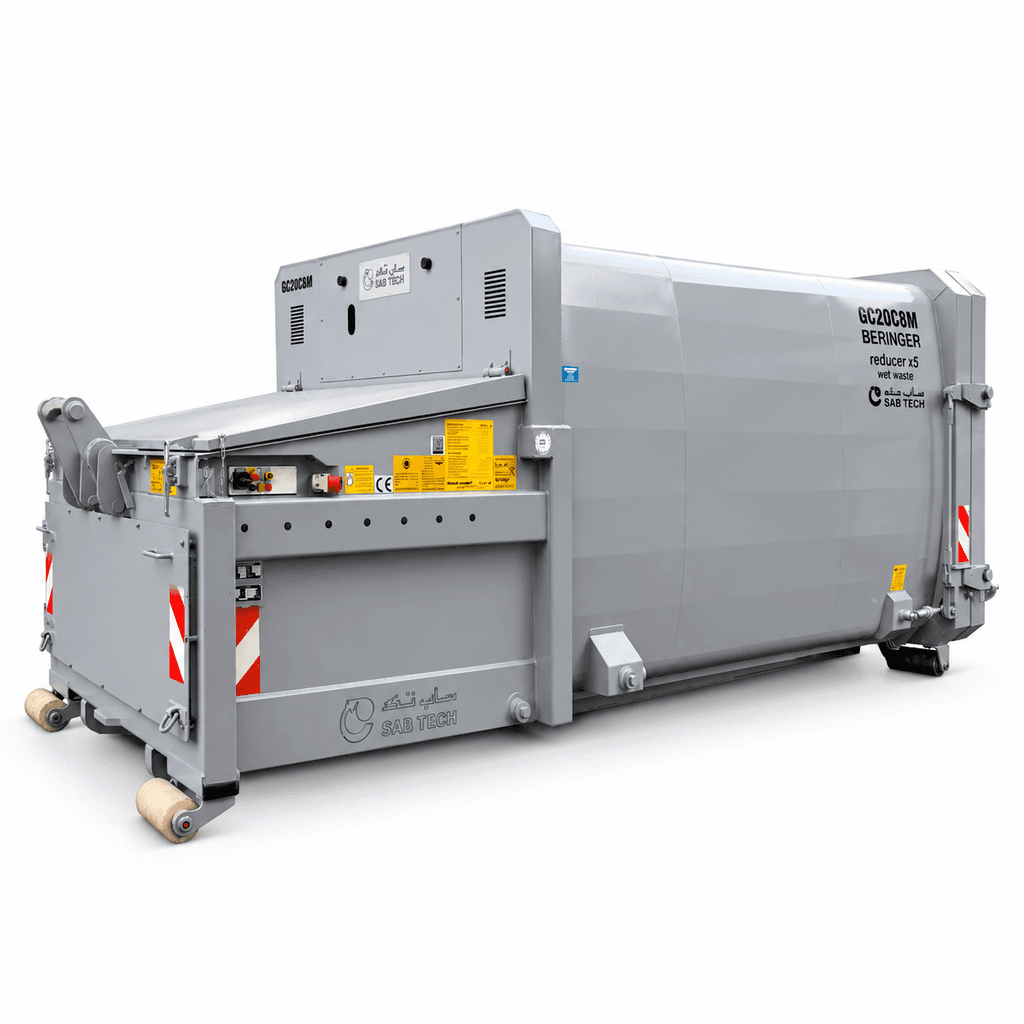
Machine and container form one unit that is hauled away and returned. Preferred for wet waste because the closed unit contains liquids. Common in restaurants, food plants and hotels.
Horizontal compactors
The ram moves horizontally. The right choice for continuous high volumes: distribution centres, large malls, hotels, factories and hospitals (general waste only). They need more room but handle more throughput.
Vertical compactors
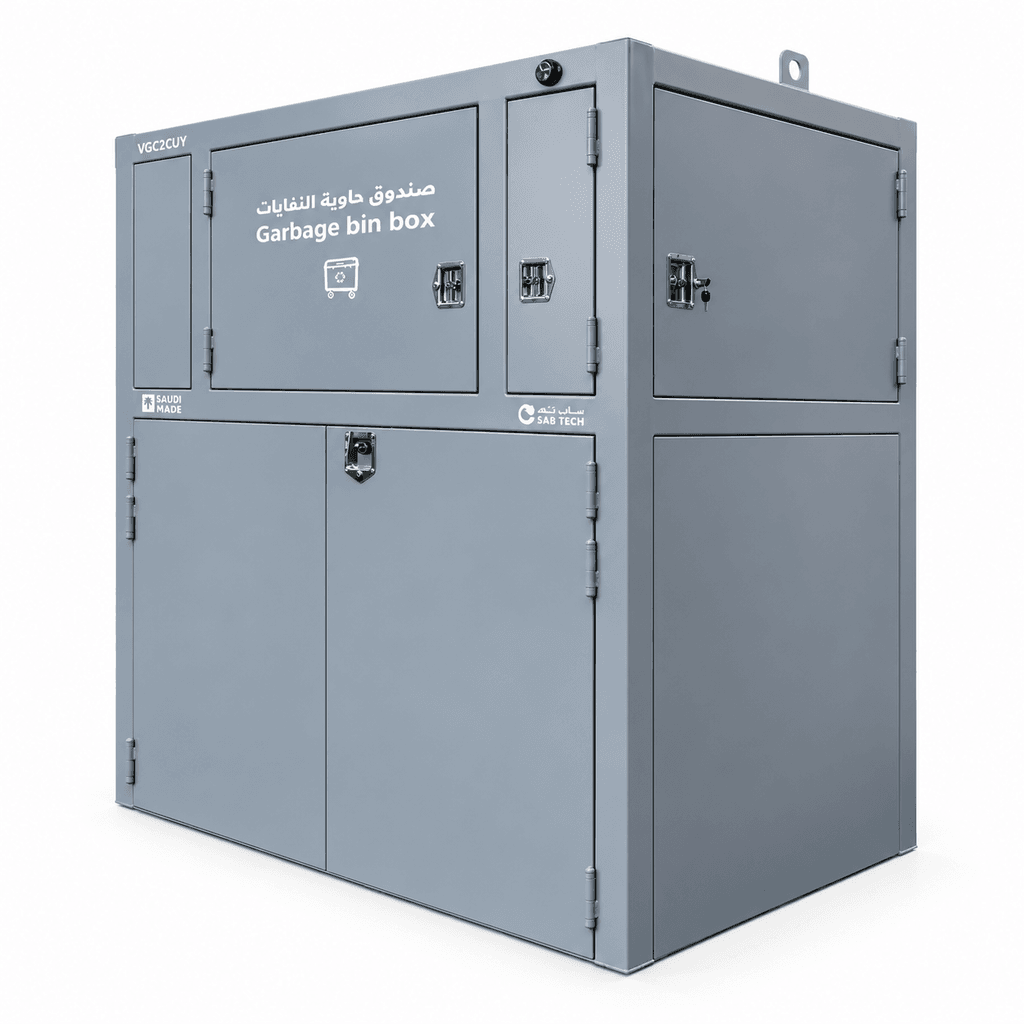
These compress downward and save floor space, so they suit shops and kitchens with limited room.
Screw (auger) compactors
An auger crushes and pushes waste into the container. Good for mixed or bulky waste and for continuous operation.
Portable (hook-lift) compactors
Mobile units lifted by a hook-lift truck, useful for temporary sites or when the machine itself must move.
Waste compactor specifications in the Bestolex catalogue
| Specification | German refuse compactor | Vertical garbage compactor 2CY |
|---|---|---|
| Compaction ratio | 5:1 | 4:1 |
| Motor power | 4 kW (5.5 HP) | 2.2 kW |
| Feed opening | 2500 × 2500 mm | 1220 × 768 mm, at 1410 mm height |
| Dimensions | 6400 L × 2550 W × 2650 H mm | 2205 W × 1325 D × 2280 H mm |
| Also | Machine weight 4200 – 4600 kg | 2 cubic yard capacity, 25-second cycle |
| Suits | High volumes in hotels, hospitals, malls and supermarkets | Commercial and residential complexes, hotels and hospitals with limited space |
Source: Bestolex approved product catalogue. The "Suits" row is general guidance confirmed after a site survey.
Compactor or Baler?
People confuse the two because both use hydraulic force. The difference is purpose:
- A compactor reduces the volume of general waste and materials without a ready resale market, cutting hauling and disposal cost.
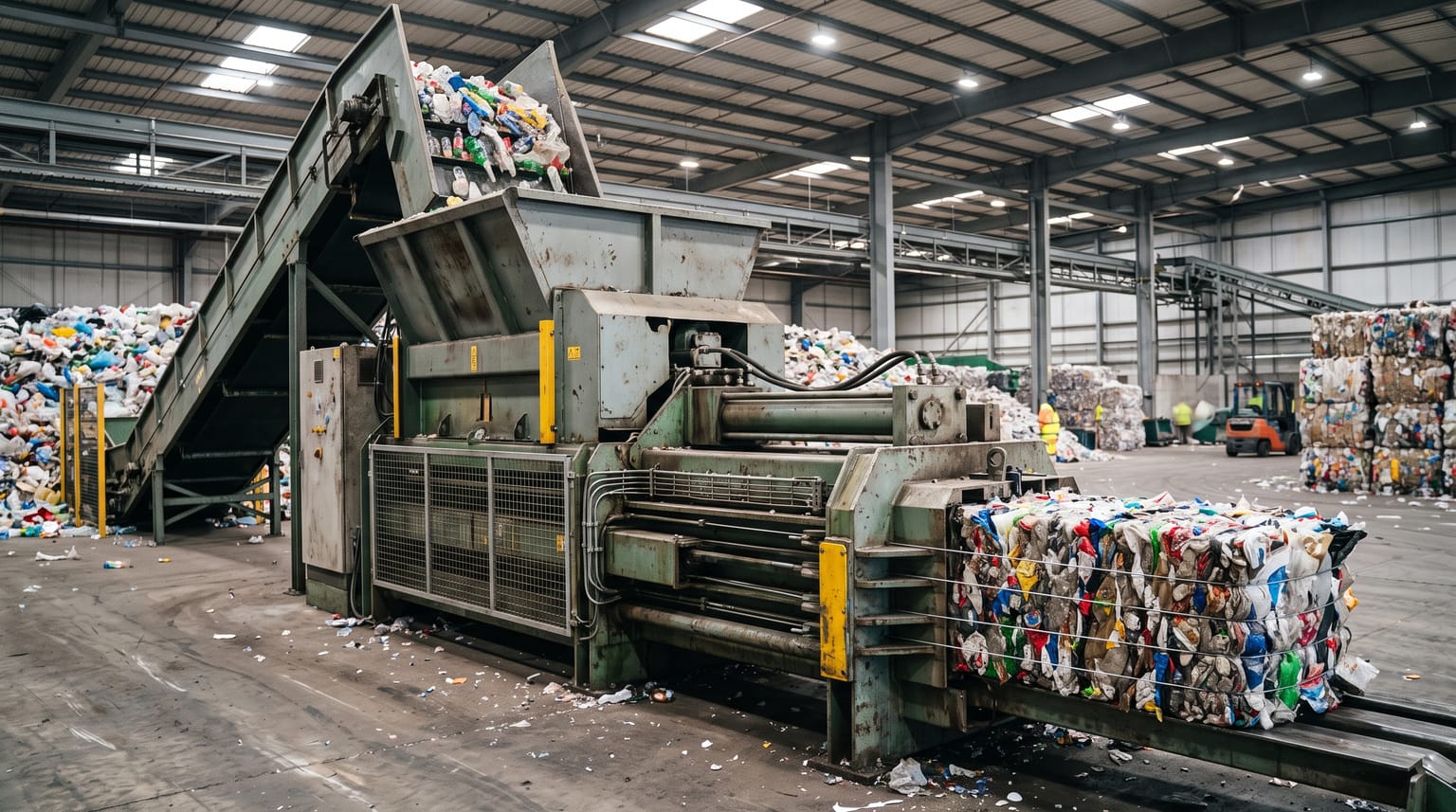
- A baler bundles recyclable commodities (cardboard, paper, plastic, metal) into dense bales that can be stored, sold or sent for recycling.
Rule of thumb: if your goal is to reduce the volume and cost of mixed waste, choose a compactor. If you generate large amounts of clean cardboard or plastic and want to sell it or hand it to recyclers, consider a baler. Large sites often run both.
Compaction Ratio Explained
Compaction ratio describes volume reduction. A 4:1 ratio means four cubic yards of loose waste become one cubic yard after compaction.
- From the Bestolex catalogue: a 5:1 compaction ratio for the German refuse compactor and 4:1 for the vertical garbage compactor 2CY.
- Wet or dense waste: the real ratio is lower, but the volume reduction still pays off operationally.
- What affects it: waste composition, hydraulic force, chamber design and how the container is filled.
Don't rely on the highest figure in the brochure; ask the supplier for the ratio they expect for your own waste stream.
How Much Can You Save? Cost and Payback
The core logic is simple: fewer hauls, lower cost. How much you save depends on the real compaction ratio for your waste and on your hauler's rates, so work it out with the steps below rather than relying on general percentages.
How to calculate payback
- Add up your current annual hauling cost (hauls per week × cost per haul × 52 weeks).
- Estimate the compaction ratio for your waste.
- Estimate hauls after compaction. Wet organic waste still needs regular removal for hygiene, even if the container is not full.
- Subtract the new cost from the old to get annual savings.
- Payback = equipment and installation cost ÷ annual savings net of running and service costs.
A simplified worked example
A site has three 8-yard dumpsters, each emptied twice a week and about 90% full. That is roughly 43 cubic yards of loose waste per week (3 × 8 × 2 × 0.9). At 4:1 the compacted volume is about 11 cubic yards per week. Depending on its capacity, a large compactor container could hold more than a week of dry waste instead of six pickups a week, although wet waste usually needs removal at least weekly for hygiene. The change in the number of hauls creates the savings.
This example only illustrates the method. Your figures depend on local hauling rates, contract terms and waste type.
Benefits that do not appear on the invoice
- Cleanliness: closed containers reduce odour, pests and untidy overflow.
- Security: with locks and fencing, only authorised staff can reach the waste.
- Labour: less manual handling of bags and bins.
- Space: fewer containers around the building.
- Environment: fewer truck trips mean less fuel and fewer emissions.
Waste Compactors by Industry
Hotels and resorts
Large daily volumes of food waste, packaging, cardboard and room waste. A horizontal or self-contained unit tidies the service area and reduces truck visits during guest hours.
Hospitals (general, non-hazardous waste only)
Packaging, cardboard, kitchen and administrative waste can be compacted. Hazardous healthcare waste follows a separate classification and pathway set by the competent health authorities and does not belong in a general compactor. Even the European standard for horizontal baling presses (EN 16252) explicitly excludes hazards from processed materials such as clinical waste, asbestos and aerosol containers.
Shopping malls
High volumes of cardboard, packaging and food-court waste. A stationary or horizontal compactor reduces open bins and visual clutter.
Supermarkets and hypermarkets
Cardboard, packaging and produce waste. Pairing a general-waste compactor with a cardboard baler often gives the larger saving.
Food processors and central kitchens
Wet waste and liquids. Choose a well-sealed self-contained unit with a leachate collection tank and plan frequent removal.
Warehouses, distribution centres and factories
Cardboard, packaging and light wood in large volumes. A horizontal compactor with a large container is the usual choice.
Waste compactors and Qatar's environmental targets
According to Qatar News Agency, Qatar's national environment and climate strategy aims to close and rehabilitate unsanitary landfills and reach a 15% material recycling rate for municipal waste.
A compactor does not sort waste, but it keeps cardboard, packaging and general waste in organised streams and closed containers and cuts the trips each stream generates. Paired with a cardboard baler, recyclables can be separated and sold instead of hauled away with general waste. Always check the municipality's and your hauler's requirements for your site.
How to Choose the Right Compactor: 9 Practical Steps
- Estimate weekly waste volume from current bills (containers × size × pickups × fullness). Size for your peak season, not the average.
- Identify the waste type: dry (cardboard, packaging) or wet (food, liquids). This points to stationary or self-contained.
- Check space and the concrete pad. Large compactors need a reinforced pad and clearance for service and truck access. Dimensions vary by model, so ask the supplier for a pad drawing.
- Confirm electrical supply: power, voltage and panel location.
- Match ram force to the job. Ask the supplier for the ram force and the compaction ratio expected for your waste. Too little force means light loads and extra hauls.
- Check hopper size against the largest item you generate.
- Confirm container compatibility with your hauler: roll-off, hook-lift or self-contained.
- Verify safety features: EN 16486 conformity, interlocked guards, emergency stops and a lockable container.
- Plan after-sales support: written warranty, service contract, spare parts and a nearby technician.
Safety and Compliance: What Gets Overlooked
Compactors work with considerable force. They need strict safety controls, especially on sites open to the public. Typical hazards include:
- Moving rams, parts and closing lids.
- A machine that appears stopped but resumes its cycle once a blockage clears.
- Timer-driven automatic cycles.
- Poor isolation after a malfunction.
- Unauthorised use by the public or untrained staff.
- Vehicle strikes during container exchange.
Basic controls: lockable fencing, high-quality interlocked guards, visible emergency stops, trained operators, lockout/tagout before any maintenance, and no one entering the compaction chamber.
Maintenance Schedule
Preventive maintenance is usually cheaper than repair after a failure. Much unplanned downtime starts in the hydraulic system, typically seal failure and pump wear caused by deferred oil changes.
- Daily: visual check for leaks, confirm guards, interlocks and emergency stops, clear obstructions, listen for unusual noise, and log the check.
- Weekly: oil level, ram guides and wear strips, and cleaning of residue (and drains for wet waste).
- Monthly: full hydraulic inspection (pressure, leaks, hoses), check floor anchoring, and grease the lubrication points.
- Annually: replace oil and filter, clean the suction strainer, and pressure-test at rated load.
Notes for hot, dusty climates
- Watch oil temperature in operation: sustained high readings warn of low oil, blocked cooler fins or pump wear.
- ISO VG 46 or 68 oil is often used in hot climates. Follow the manufacturer's specification.
- In dusty environments it is wise to clean oil coolers and air filters more often, and to check that the oil is not milky or cloudy, which indicates water ingress.
Signs that need immediate attention
Incomplete compaction, oil on the floor, slow cycles, knocking sounds (possible oil aeration), or high temperature.
Odours, Hygiene and Pests
Organic waste breaks down fast in hot weather. A closed compactor container limits exposure but does not replace hygiene:
- For wet waste: choose a well-sealed unit with a leachate tank and keep drainage areas clean.
- Haul wet waste frequently, even when the container is not full. Long residence time causes odour and pest problems regardless of container size.
- Keep dry cardboard and packaging separate from food waste where possible.
- Clean the chamber and hopper on a schedule.
Common Mistakes When Buying a Waste Compactor
- Always buying the biggest unit. An oversized container for wet waste means long storage and odour.
- Ignoring the hauler's container system.
- Skipping pad and electrical planning before delivery.
- Comparing price only, without spare parts, warranty and service.
- Compacting unsuitable materials such as hazardous waste, pressurised containers and flammable liquids.
- Neglecting training and safety.
The Solution: German Waste Compactors
If you run a hotel, hospital, shopping mall, supermarket or food processing plant, you know waste is not a side issue. It affects cleanliness, cost and reputation. German waste compactors are industrial machines designed to handle large volumes of recyclable material, residual waste and commercial waste. They use a hydraulic system and a horizontal press plate to compress waste into a much smaller volume, which lowers transport costs and keeps your facility clean and safe.
They are well suited to hotels, hospitals (non-hazardous waste), shopping malls, supermarkets and food processors.
Why do they fit? They cut the number of hauls and reduce open containers, they help keep recyclable and general waste organised, and they suit sites with large, continuous volumes.
Before you order, send us your waste type, weekly volume and your hauler's container system, and we will help you pick the right model and estimate the savings.
Conclusion
An industrial waste compactor is a control tool for cost, cleanliness and safety on high-volume sites. A sound purchase starts from numbers: your real waste volume, waste type, available space and your hauler's container system. Then choose a horizontal, stationary or self-contained model that fits, and verify safety and service. If you are looking for a reliable German waste compactor for hotels, hospitals (non-hazardous waste), malls, supermarkets or food processing, start by requesting an estimate built on your own data.
Bestolex is the exclusive SAB TECH agent in Qatar and supplies the German refuse compactor, the Beringer refuse compactor and the vertical garbage compactor 2CY, with cardboard balers under Waste & Recycling, together with site survey, supply, installation, training, maintenance and spare parts. Request a site survey or a quotation, or message us on WhatsApp at +974 51505014.