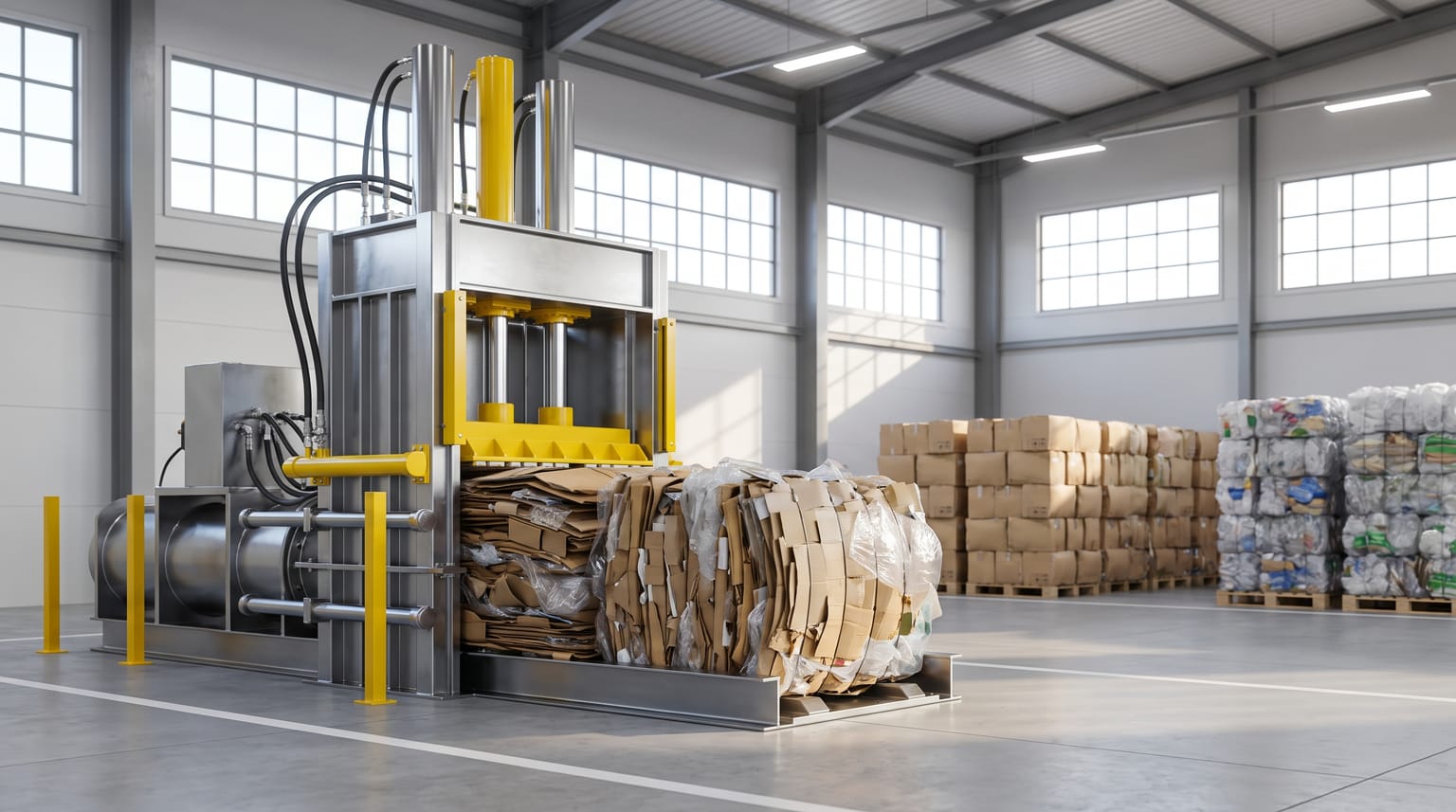
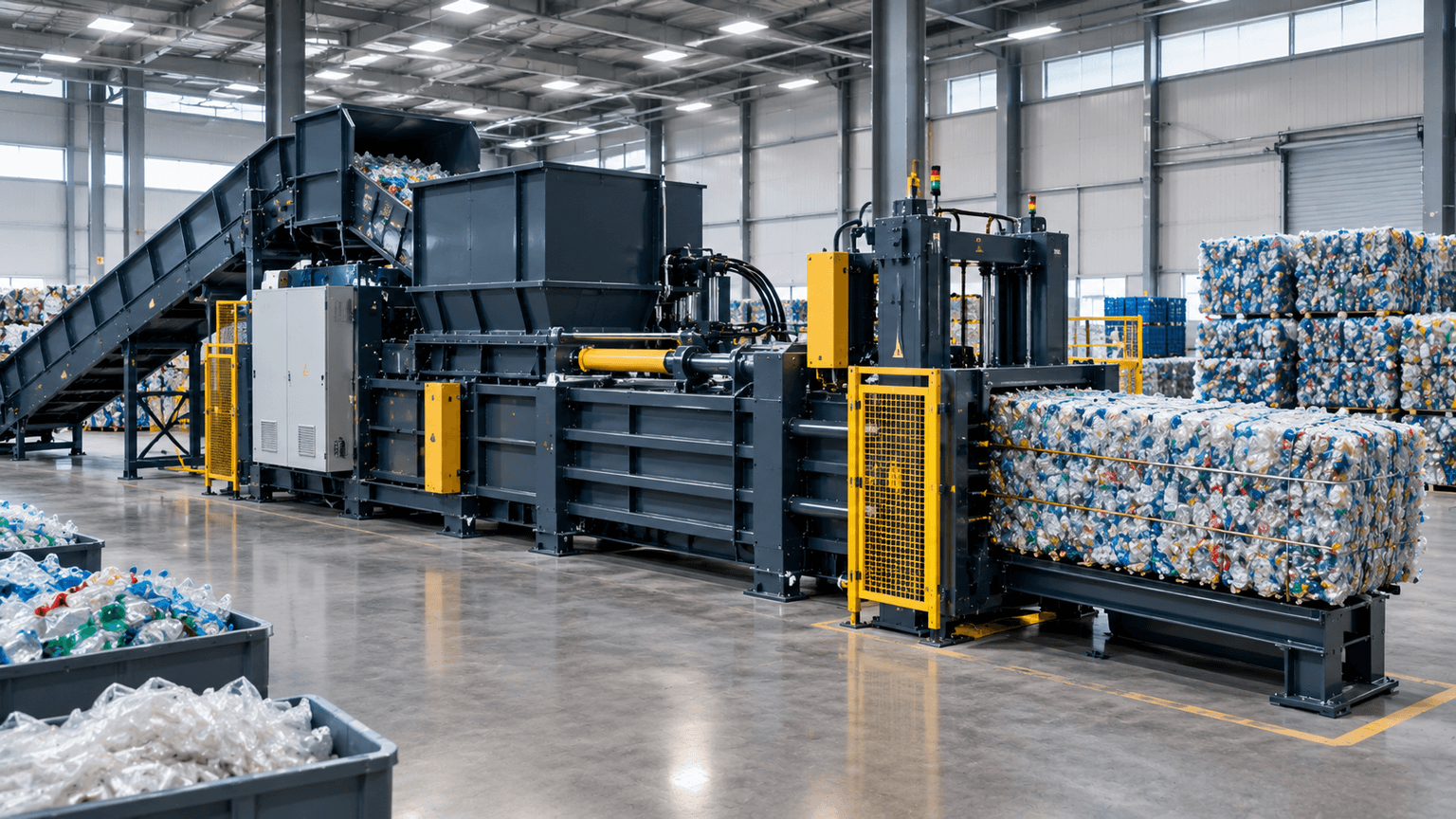
Horizontal Plastic Baler: Compacting Plastic Waste for Recycling
Many commercial and industrial facilities handle large quantities of plastic waste and packaging materials every day. As these materials accumulate, storage and transportation can become increasingly difficult, especially when lightweight plastic waste occupies a large volume.
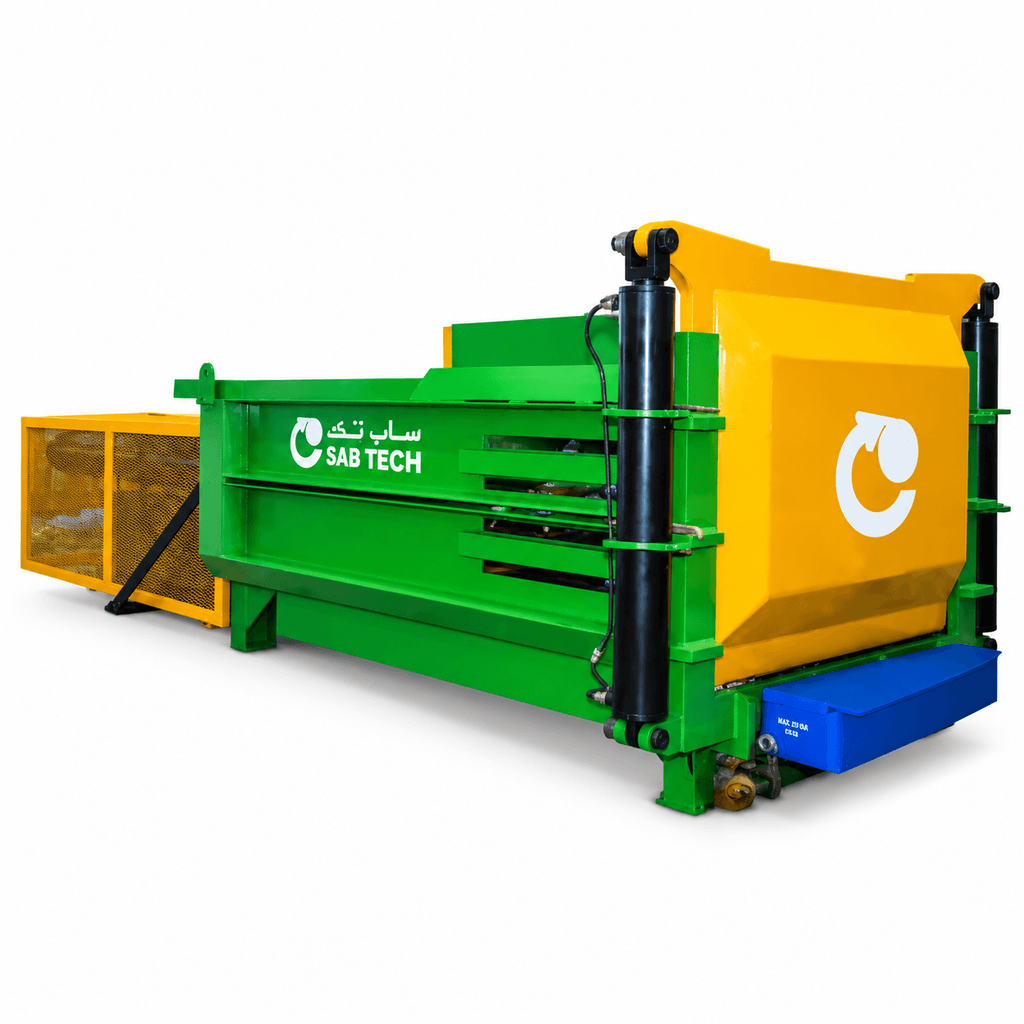
- A horizontal auto baler compresses plastic and packaging and ties the bales automatically, with no one threading wires by hand.
- From the Bestolex catalogue: 22–45 tons of pressing force, 300–400 kg bales and a 24–34 second cycle.
- It suits malls, supermarkets, warehouses, printers and recyclers with a continuous flow of material.
- The model is chosen by daily volume, feeding method, required bale size and available space.
A horizontal plastic baler provides an efficient solution by compressing loose plastic materials into denser, organized bales. This helps facilities make better use of available storage space while improving material handling, transportation, and recycling operations.
What Is a Horizontal Plastic Baler?
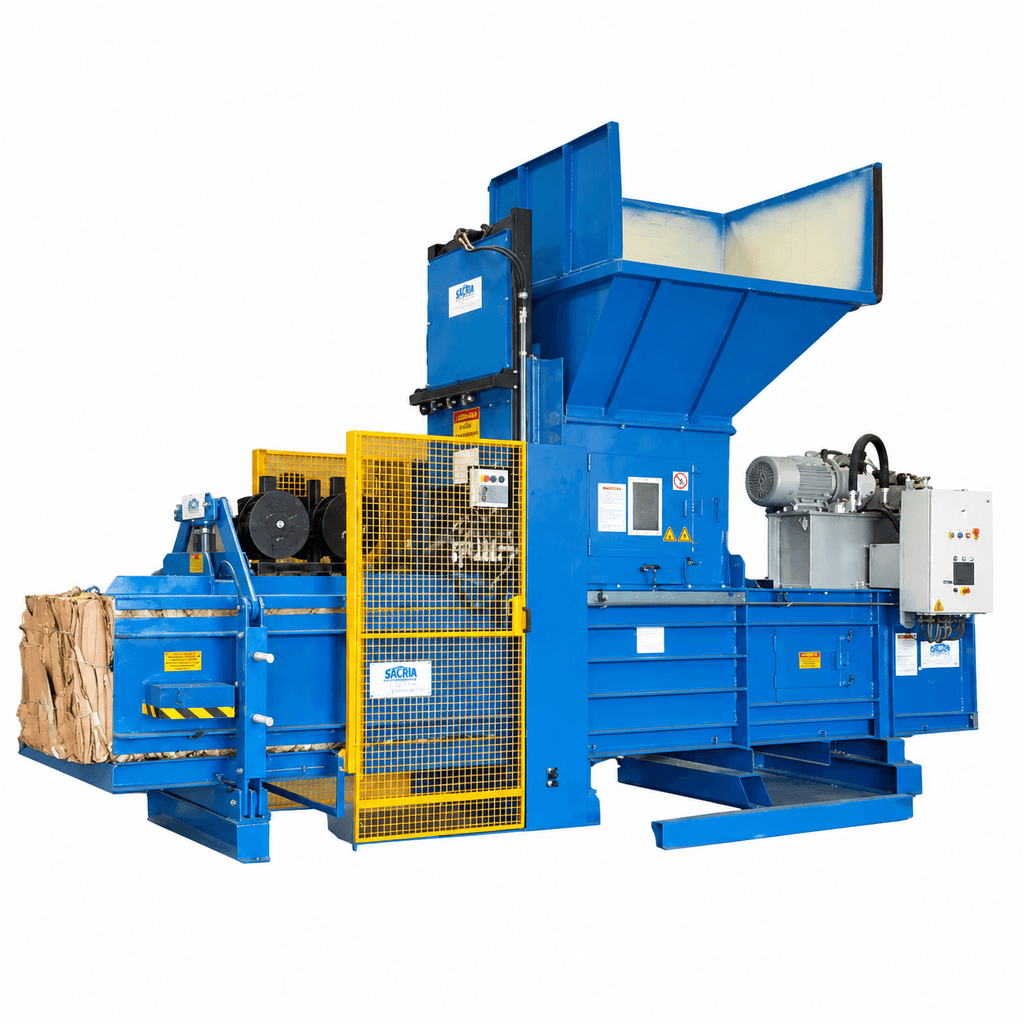
A horizontal plastic baler is industrial equipment designed to compress large volumes of plastic waste and recyclable materials inside a horizontal baling chamber.
Unlike equipment that requires repeated manual handling, fully automatic systems can integrate compression and bale tying into a continuous process. This makes them particularly suitable for facilities dealing with high and continuous material volumes.
Depending on the machine configuration, horizontal balers can process materials such as plastic bottles, plastic film, packaging materials, and other suitable recyclable materials.
How Does a Hydraulic Horizontal Baler Work?
A hydraulic horizontal baler uses a hydraulic power system to generate the force required to compress material inside the baling chamber.
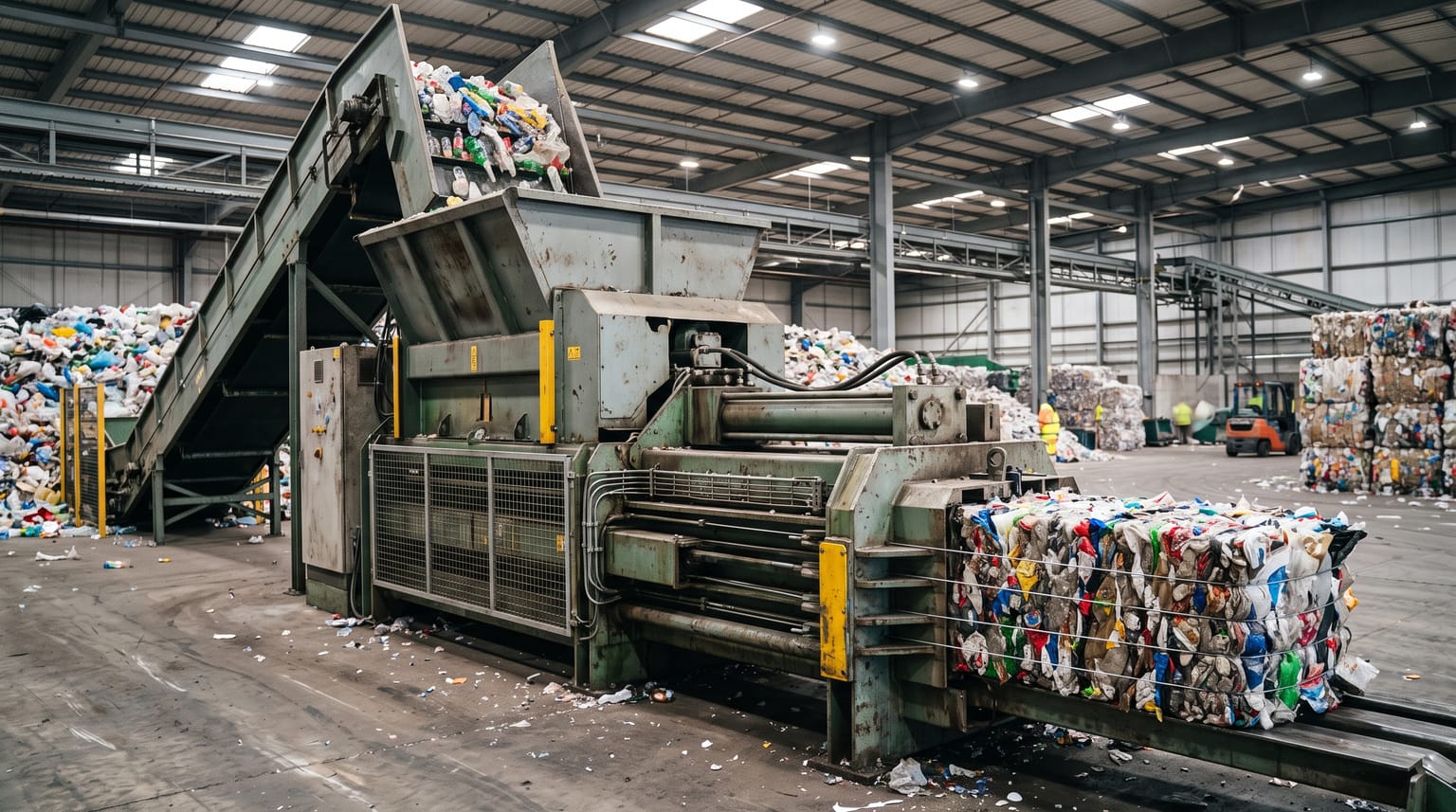
Plastic waste enters the feeding area and is progressively compressed by the hydraulic ram until it reaches the required bale density and dimensions.
In fully automatic systems, feeding, compression, tying, and bale discharge can be integrated into a continuous workflow. Once the required bale length is reached, the automatic tying system secures the compressed material before the finished bale is discharged.
This approach provides a more consistent process for recycling facilities and industrial operations handling large quantities of material.
Why Is Automatic Bale Tying Important?
One of the key features of an automatic horizontal baler is its automatic bale tying system.
After the material has been compressed to the required size, the tying mechanism secures the bale automatically. This helps maintain its shape and stability during handling, storage, and transportation.
Automatic tying also reduces the need for continuous manual intervention, making the equipment particularly useful for high-throughput applications where baling needs to continue with minimal interruption.
Benefits of an Automatic Horizontal Plastic Baler
A horizontal plastic baler offers several advantages for facilities processing large volumes of plastic and recyclable materials.
Reduced Waste Volume
Compressing plastic materials significantly reduces their loose volume. This allows facilities to use available storage areas more efficiently and postpone the need for frequent waste removal.
More Efficient Transportation
Compressed bales are more compact, stable, and easier to stack than loose plastic waste. This can improve the use of available transportation space and simplify material handling.
Automated Operation
Fully automatic systems can combine compression and tying into a coordinated process, reducing the need for continuous manual handling and supporting a smoother workflow.
Consistent Bale Formation
Controlled compression and automatic tying help produce more consistent bale shapes and densities, which can be useful when materials are being stored, transported, or prepared for further recycling.
Where Are Horizontal Plastic Balers Used?
Horizontal plastic balers are used in a wide range of commercial, industrial, and recycling environments where large volumes of plastic waste and packaging materials are generated.
Shopping Centers and Supermarkets
Retail facilities generate continuous streams of packaging materials, plastic film, and other recyclable waste. A horizontal baler can help reduce the volume of these materials and keep waste collection areas more organized.
Department Stores
Large retail operations require equipment capable of handling continuous waste generation. A horizontal baler can convert loose packaging materials into compact bales that are easier to store and transport.
Manufacturing Facilities
Manufacturing plants may generate substantial quantities of plastic scrap and packaging waste. A hydraulic horizontal baler can provide a practical way to handle these materials continuously and produce consistent bales.
Printing and Graphics Industries
Printing facilities and graphics-related operations can generate packaging materials, plastic films, and other recyclable waste. A baler can be integrated into the facility's internal waste handling process to reduce material volume.
Warehouses and Logistics Centers
Warehouses and distribution centers generate large amounts of packaging waste through receiving, storage, and shipping operations. A horizontal baler can process these materials close to their source and prevent bulky waste from occupying excessive floor space.
Recycling Companies
Recycling facilities are among the most important applications for horizontal balers, particularly when large volumes of plastic materials need to be compacted and prepared for transportation or further processing.
Municipal Operations
Horizontal balers can also be integrated into waste management systems handling large quantities of recyclable materials, depending on the type of material and the overall processing system.
Horizontal Baling vs. Traditional Plastic Waste Storage
Plastic waste, particularly bottles and flexible films, can occupy a significant amount of space relative to its actual weight.
Compaction reduces the empty spaces between materials and transforms loose waste into denser bales. This allows storage areas to be used more efficiently while making handling and transportation more organized.
Horizontal Auto Baler Specifications
| Specification | Value |
|---|---|
| Pressing force | 22 – 45 tons depending on model |
| Bale weight | 300 – 400 kg |
| Cycle time | 24 – 34 seconds |
| Binding slots | 3 – 4 slots, fully automatic tying |
| Motor power | 7.5 – 15.0 kW |
| Machine dimensions | H 1860 – 2240 × W 1235 – 1590 × L 3300 – 3750 mm |
Source: Bestolex approved product catalogue.
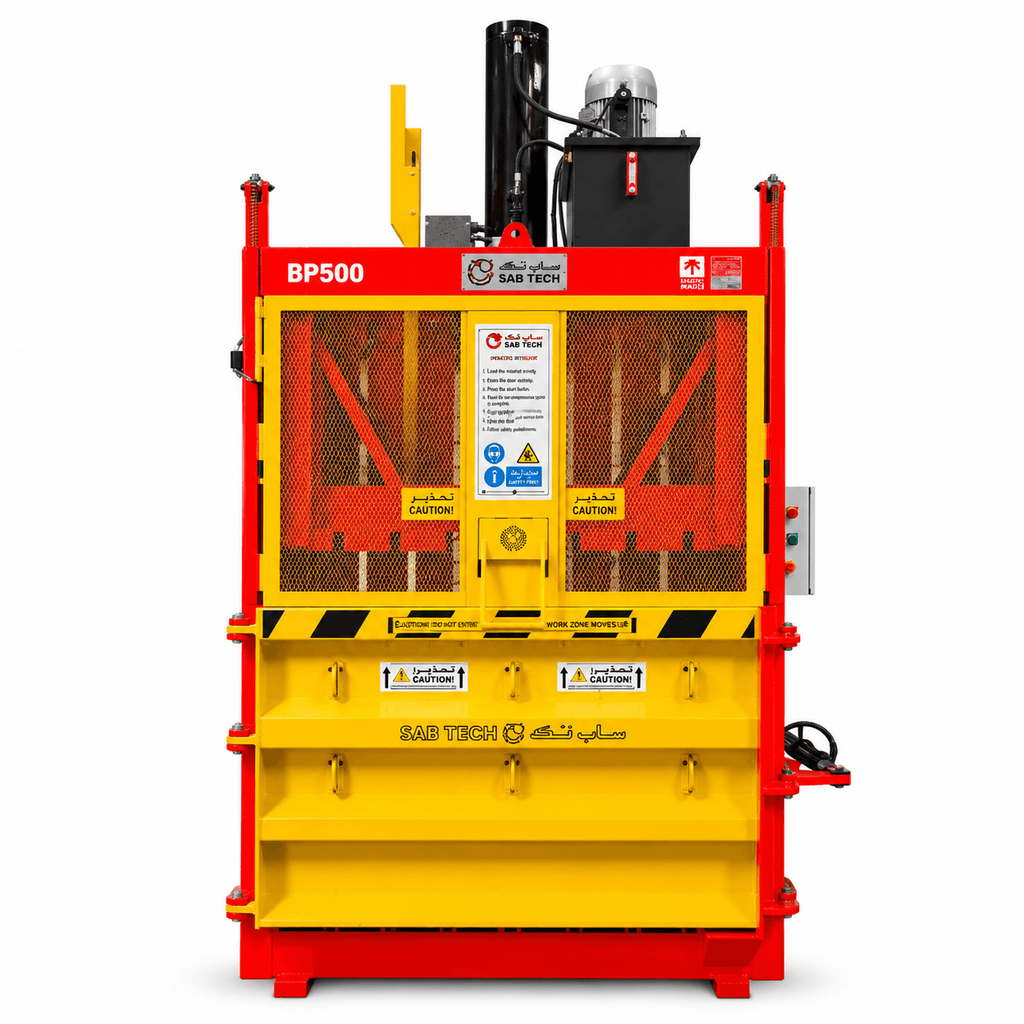
For heavier material such as thick cardboard or drums that needs more force, compare it with the horizontal baling press 70T, which ties bales manually according to the catalogue.
How to Choose the Right Plastic Baler
Choosing the right baler depends on the actual operating requirements rather than compression force alone.
Important factors include the type of plastic being processed, average daily material volume, feeding method, available installation space, desired bale dimensions, and required level of automation.
It is also important to consider the tying method, maintenance requirements, and whether the baler needs to be integrated with conveyors, sorting equipment, or other machinery within an existing recycling line.
The Role of Horizontal Balers in Plastic Recycling
Compaction is an important stage in many plastic waste management and recycling operations because it transforms loose materials into denser bales that are easier to handle.
By combining hydraulic compression, automatic tying, and continuous feeding, a horizontal plastic baler can become an essential part of a high-volume waste processing system.
The Horizontal Auto Baler in Qatar
According to Qatar News Agency, Qatar's national environment and climate strategy aims to close and rehabilitate unsanitary landfills and reach a 15% material recycling rate for municipal waste. Sites that separate plastic and cardboard and bale them cut haulage trips and can hand material to local recycling plants.
Bestolex is the exclusive SAB TECH agent in Qatar: we study your volumes and survey the site, then supply, install and commission the horizontal auto baler, train operators and provide maintenance and spare parts. See the other balers under waste & recycling.
Conclusion
A fully automatic horizontal plastic baler provides an efficient way to compress large quantities of plastic waste and packaging materials into compact and organized bales.
With hydraulic compression and automatic tying, these machines can support operations in shopping centers, supermarkets, department stores, manufacturing facilities, warehouses, logistics centers, recycling companies, and other environments that handle substantial volumes of recyclable materials.
The right baler should always be selected according to the material type, operating volume, feeding system, desired bale dimensions, and automation requirements of the facility.
Want to know which model fits your volumes? Request a site survey or a quotation, or message us on WhatsApp at +974 51505014.