
What Is a Metal Scrap Baler?
Manufacturing plants, metal processing facilities, scrap yards, and recycling centers generate large quantities of metal waste in different shapes and sizes.
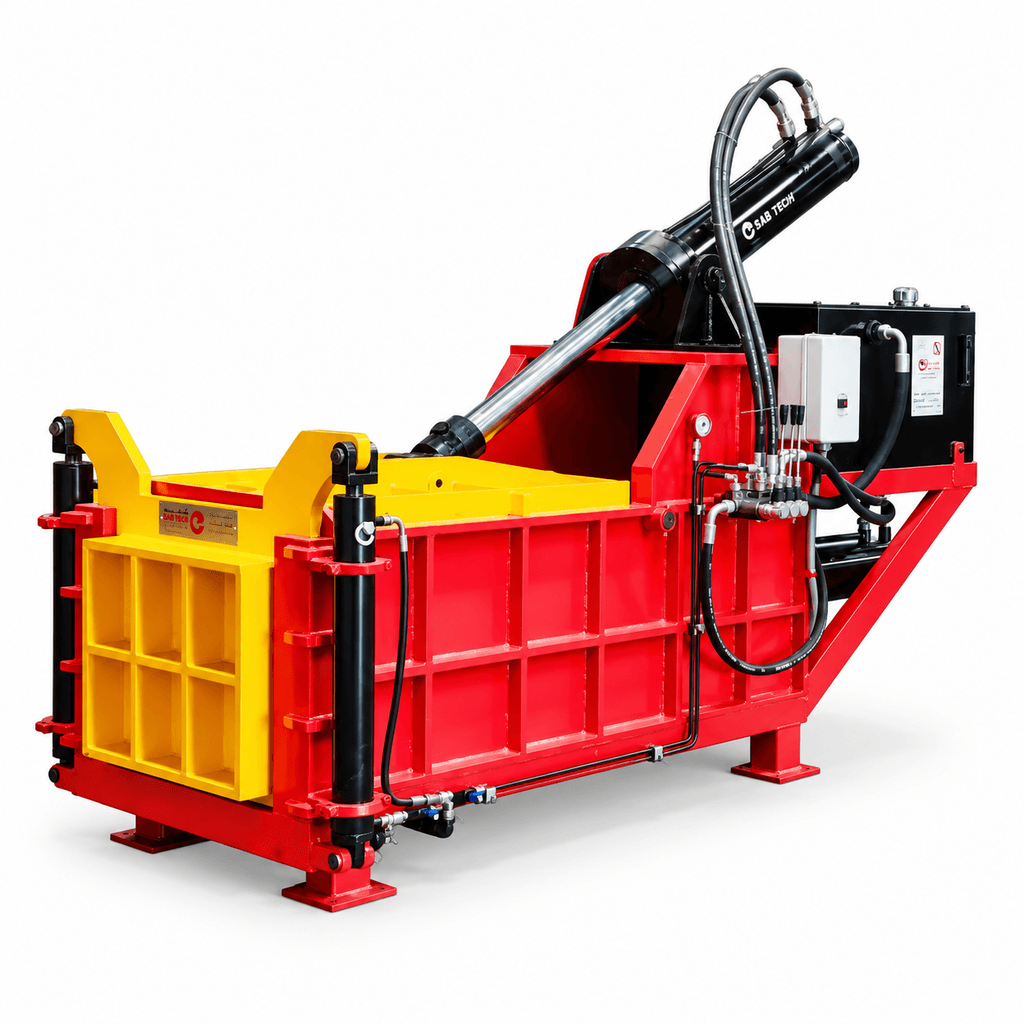
- The Steel Press 50T compresses steel, iron and aluminium scrap into dense bales, saving storage space and making transport and recycling easier.
- It has 50 tons of pressing force, makes 150 × 600 × 500 mm bales of up to 70 kg and runs a 75–90 second cycle, according to the catalogue.
- The right baler depends on the type of scrap, the size of the pieces and the daily quantity, not on pressing force alone.
Iron, steel, aluminum, production offcuts, punching waste, and other metal scrap can occupy significant storage space when collected in loose form.
A hydraulic metal scrap baler provides a practical way to compress suitable metal waste into denser and more organized bales.
Metal balers are commonly used for processing scrap steel, iron, aluminum, copper, and other recyclable metals, depending on the machine configuration and application.
How Does a Hydraulic Metal Baler Work?
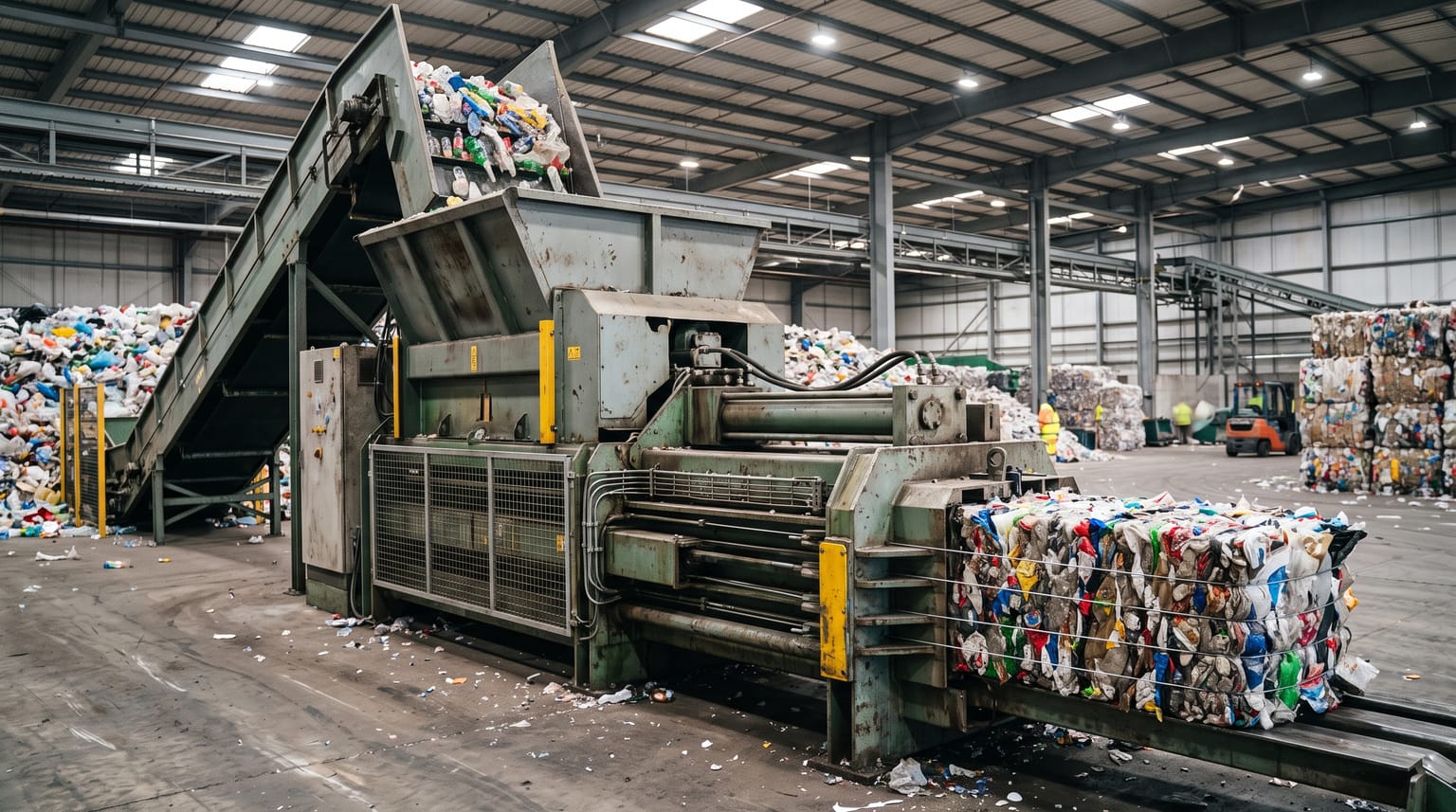
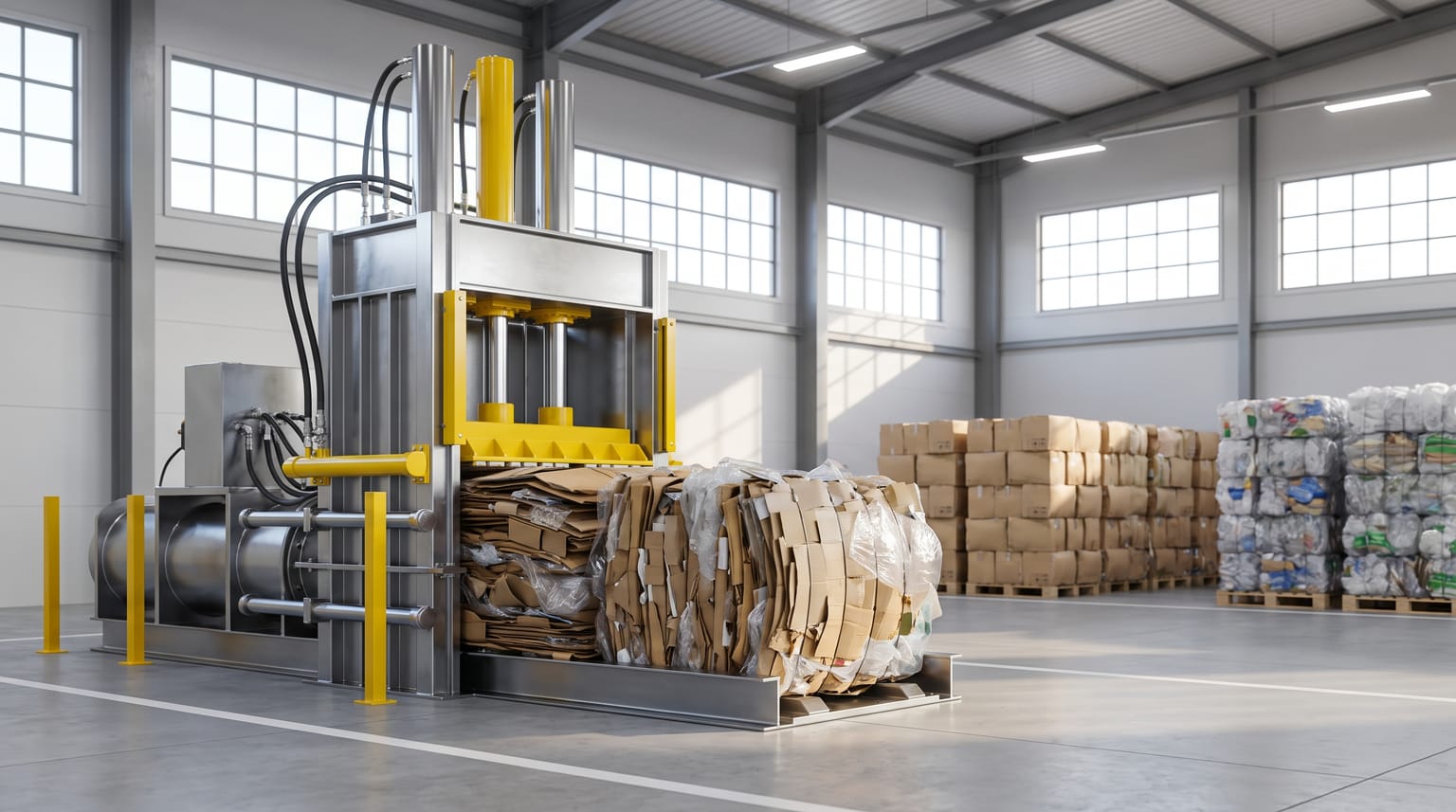
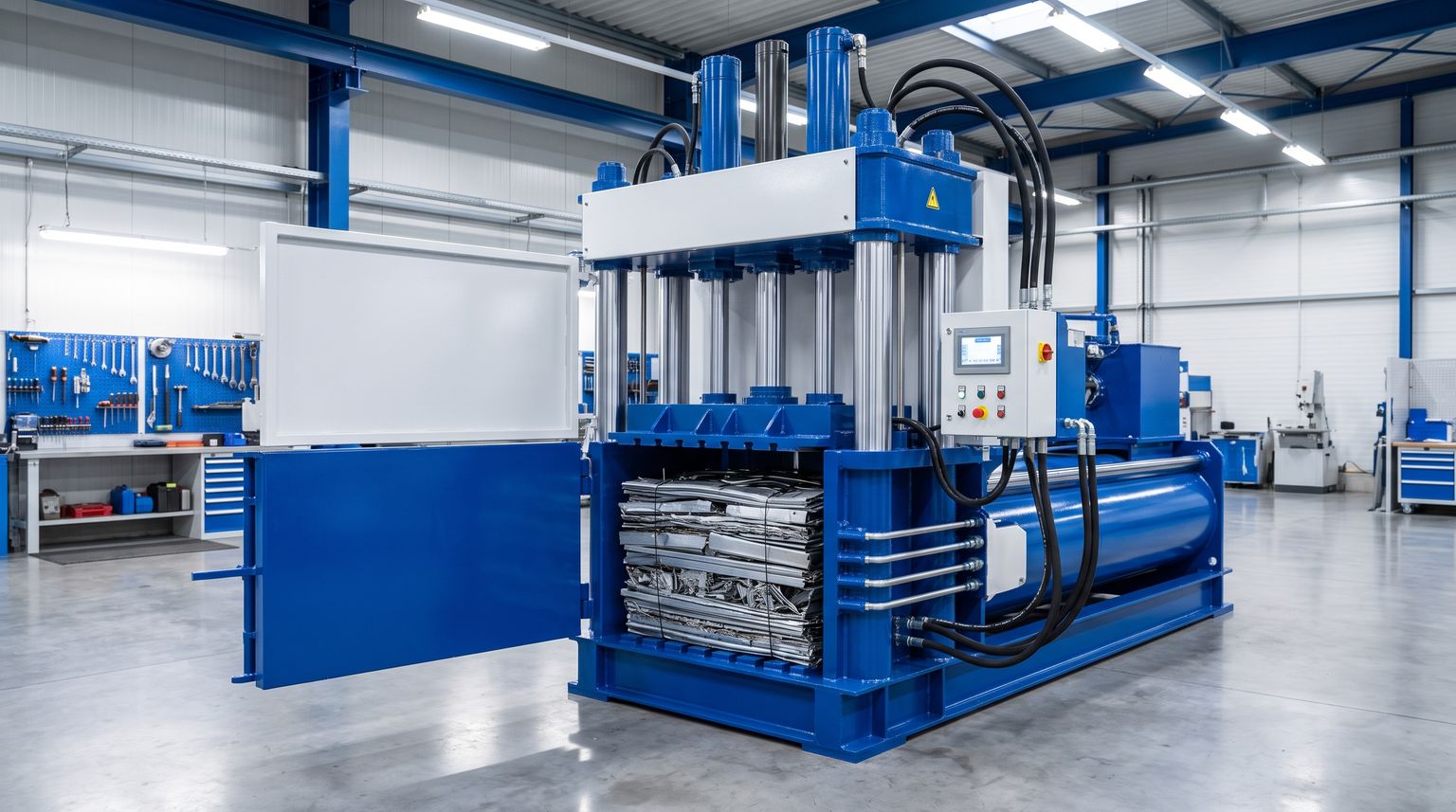
A hydraulic scrap baling machine uses hydraulic cylinders to generate the compression force required to compact metal materials inside a baling chamber.
The scrap is loaded into the feeding area, after which the hydraulic ram moves against the material and compresses it.
As the material is compressed, empty spaces are reduced and the overall density of the scrap increases.
Once the compression cycle is completed, the resulting metal bale can be discharged for storage, handling, transportation, or further recycling processes.
Industrial metal balers are available in different configurations, including automatic and semi-automatic systems, depending on the required production volume and feeding method.
What Types of Metal Can Be Baled?
The materials that can be processed depend on the machine design, compression force, chamber dimensions, and operating specifications.
Iron and Steel Scrap
Iron and steel scrap baling is one of the major applications of metal recycling balers.
Recycling facilities, scrap yards, manufacturing plants, and metal processing operations may generate large quantities of steel and iron waste.
Compressing suitable scrap into dense bales can improve storage organization and simplify material handling.
Industrial scrap balers are used to process steel scrap, iron scrap, manufacturing offcuts, and other suitable ferrous materials.
Aluminum Scrap
Aluminum is relatively lightweight compared with many other metals, but loose aluminum waste can still occupy considerable volume.
A hydraulic aluminum scrap baler can compress aluminum cans, sheets, profiles, offcuts, and other suitable non-ferrous scrap into more compact bales.
This can make storage, handling, and transportation more efficient for aluminum recycling operations.
Non-Ferrous Metals
Depending on its configuration, a metal baler may also process certain non-ferrous metals such as aluminum and copper.
Some machines are specifically designed for non-ferrous scrap, while other systems can process multiple types of recyclable metal under suitable operating conditions.
Why Compress Metal Scrap?
There are several operational reasons for using a metal scrap baling machine.
Loose scrap often has irregular shapes, creating empty spaces that make storage and transportation less efficient.
Compressing the material into bales creates more organized and compact units.
Key operational benefits can include:
- Better storage space utilization.
- More organized scrap yards.
- Easier material handling.
- Improved loading efficiency.
- Reduced loose scrap volume.
- Easier transportation to recycling facilities.
- More efficient processing of high-volume scrap.
Turning loose scrap into dense bales reduces storage needs and makes transport and handling easier.
How Does a Metal Baler Save Storage Space?
Metal scrap can have highly irregular shapes.
A recycling facility may collect long pieces, flat sheets, small offcuts, punching waste, and other materials at the same time.
These materials are difficult to stack efficiently when they remain loose.
A metal baling press compresses suitable scrap into more compact units, which can improve the use of available warehouse or yard space.
The resulting bales are also easier to arrange and move using suitable handling equipment.
Can Baling Improve Scrap Transportation?
Compressing scrap can improve the utilization of available transportation space because dense bales are more organized than loose material.
The actual transportation savings depend on the type of scrap, bale dimensions, bale weight, vehicle capacity, and operating conditions.
However, compact metal bales can make loading, handling, and transportation more organized and can allow more material to be handled within available loading space.
Why Is the Hydraulic System Important?
The hydraulic system is one of the main components of a hydraulic metal baler.
Hydraulic cylinders and the power unit generate the force required to move the ram and compress the scrap.
The design of the hydraulic system affects compression control, movement, operating cycles, and overall machine performance.
For this reason, selecting a scrap baler should involve evaluating the complete hydraulic system rather than focusing only on the rated pressing force.
Why Does the Machine Frame Matter?
Metal scrap balers can operate under significant mechanical loads, particularly when processing large quantities of scrap.
Industrial balers therefore use robust structures designed for demanding operating conditions.
Some industrial metal balers also incorporate reinforced structures, hydraulic systems designed for extended operation, automated controls, and protective components depending on their configuration.
Metal Balers in Recycling Facilities
Metal recycling balers can form an important part of the material preparation process before scrap is stored, transported, or processed further.
For example, a recycling facility can collect and sort different types of scrap before compressing suitable materials into separate bales.
This can help organize storage and handling while preparing the material for transportation to downstream processing or recycling facilities.
Metal balers are used in scrap yards, recycling plants, and industrial facilities handling steel, iron, aluminum, and other recyclable metals.
Metal Scrap Baler vs. Metal Forming Press
These two types of equipment should not be confused.
A metal scrap baler is designed to compress recyclable metal waste into compact bales, while a metal forming press is used for operations such as bending, punching, forming, straightening, and pressing metal components.
The fact that both machines may have a rated force such as 50 tons does not mean they perform the same function.
Machine design, chamber dimensions, feeding system, ram configuration, and discharge method all depend on the intended application. Hydraulic 50-ton presses are also available specifically for metal forming applications, which represents a different equipment category from scrap metal balers.
How to Choose the Right Metal Scrap Baler
Selecting an industrial scrap baler should begin with the material and production requirements rather than pressing force alone.
Type of Scrap
Identify the materials that will be processed, such as:
- Iron scrap.
- Steel scrap.
- Aluminum.
- Metal offcuts.
- Manufacturing waste.
- Suitable non-ferrous metals.
Scrap Size
The approximate dimensions of the incoming scrap should be considered, especially when dealing with large or irregular pieces.
Scrap Volume
Daily or monthly scrap volume is an important factor when determining the appropriate machine capacity and feeding configuration.
Bale Size
The required bale dimensions and weight should be determined according to storage, transportation, and handling requirements.
Automation Level
Metal balers can be configured for manual, semi-automatic, or automatic operation depending on production requirements.
Some industrial systems also support automated controls and additional feeding equipment.
Available Space
The required installation area should include the baler, feeding zone, bale discharge area, storage space, and equipment access routes.
Is a 50-Ton Metal Baler Suitable for Every Type of Scrap?
Not necessarily.
A 50-ton pressing force is only one machine specification. It does not by itself determine which materials the machine can process.
The chamber dimensions, material type, scrap size, bale specifications, feeding system, and operating cycle should all be reviewed before determining whether a particular 50-ton baler is suitable for a specific application.
This is particularly important when comparing 50-ton iron balers and hydraulic metal balers, because two machines with the same rated pressing force can have very different designs and intended applications.
The Role of Metal Balers in Recycling Efficiency
A metal baler does more than simply reduce the volume of scrap.
It can become part of a broader workflow for collecting, sorting, storing, handling, and transporting recyclable metal materials.
Once suitable scrap has been sorted and compressed into organized bales, it can become easier to handle and prepare for downstream recycling operations.
This is why metal balers are used across scrap yards, recycling centers, metal recovery facilities, and industrial operations.
SAB TECH Steel Press 50T: key specifications
These are the main specifications of the steel press supplied by Bestolex:
| Specification | Value |
|---|---|
| Pressing Force | 50 Tons |
| Press Box Size | 1000 (L) × 600 (W) × 500 (H) mm |
| Bale Size | 150 (L) × 600 (W) × 500 (H) mm |
| Bale Weight | Up to 70 kg max. (Steel) |
| Cycle Time | 75 – 90 s |
| Machine Dimensions | 2872 (L) × 1120 (W) × 980 (H) mm |
| Motor Power | 22.0 kW (29.5 HP) |
Source: SAB TECH catalogue approved by Bestolex; full details on the product page.
Conclusion
A hydraulic metal scrap baler is designed to compress suitable metal waste such as iron, steel, aluminum, and other recyclable materials into denser and more organized bales.
This process can help improve storage utilization, material handling, loading, transportation, and recycling workflows.
When selecting a 50-ton metal baler, however, pressing force should not be the only consideration. Material type, scrap dimensions, processing volume, bale size, feeding method, automation level, and available installation space should all be evaluated to determine whether the equipment matches the intended operation.
Metal scrap balers in Qatar
According to Qatar News Agency, Qatar's national environment and climate strategy aims to close and rehabilitate unsanitary landfills and reach a 15% material recycling rate for municipal waste. At facility level, Bestolex starts with the type and quantity of scrap and the space available before proposing a baler.
What to prepare before asking for a quote
- The scrap type (iron, steel, aluminium) and the size of the largest pieces
- The daily or monthly quantity
- The space available for feeding, bale discharge and storage
- Who collects the bales now, or who will
- Photos of the installation spot and of the scrap
Bestolex is the exclusive SAB TECH agent in Qatar and handles the site survey, supply, installation, commissioning, operator training, maintenance and spare parts. Browse the full range under waste & recycling. To discuss your site, request a site survey or a quotation, or message us on WhatsApp at +974 51505014.