A High-Capacity Baling Solution for Modern Recycling Operations
The growing volume of recyclable materials generated by commercial and industrial activities has made efficient recycling management an important operational priority.
- 80 tons of pressing force, bales up to 380 kg of PET and a 15 kW motor, according to the catalogue.
- Suited to beverage plants, recyclers and retailers collecting large volumes of bottles, cans and cardboard.
- Denser bales mean fewer haulage trips, less storage space and easier sale to recycling plants.
- For moderate cardboard volumes, a 20-ton or 50-ton baler may be enough.
Businesses involved in beverage production, retail, logistics, manufacturing, recycling, and distribution can generate significant quantities of plastic bottles, cans, cardboard, packaging materials, office waste, and other recyclable materials every day.
When these materials are stored in loose form, they can quickly occupy valuable space. Lightweight materials such as plastic bottles and cardboard can be particularly challenging because they may take up a large amount of volume compared with their actual weight.
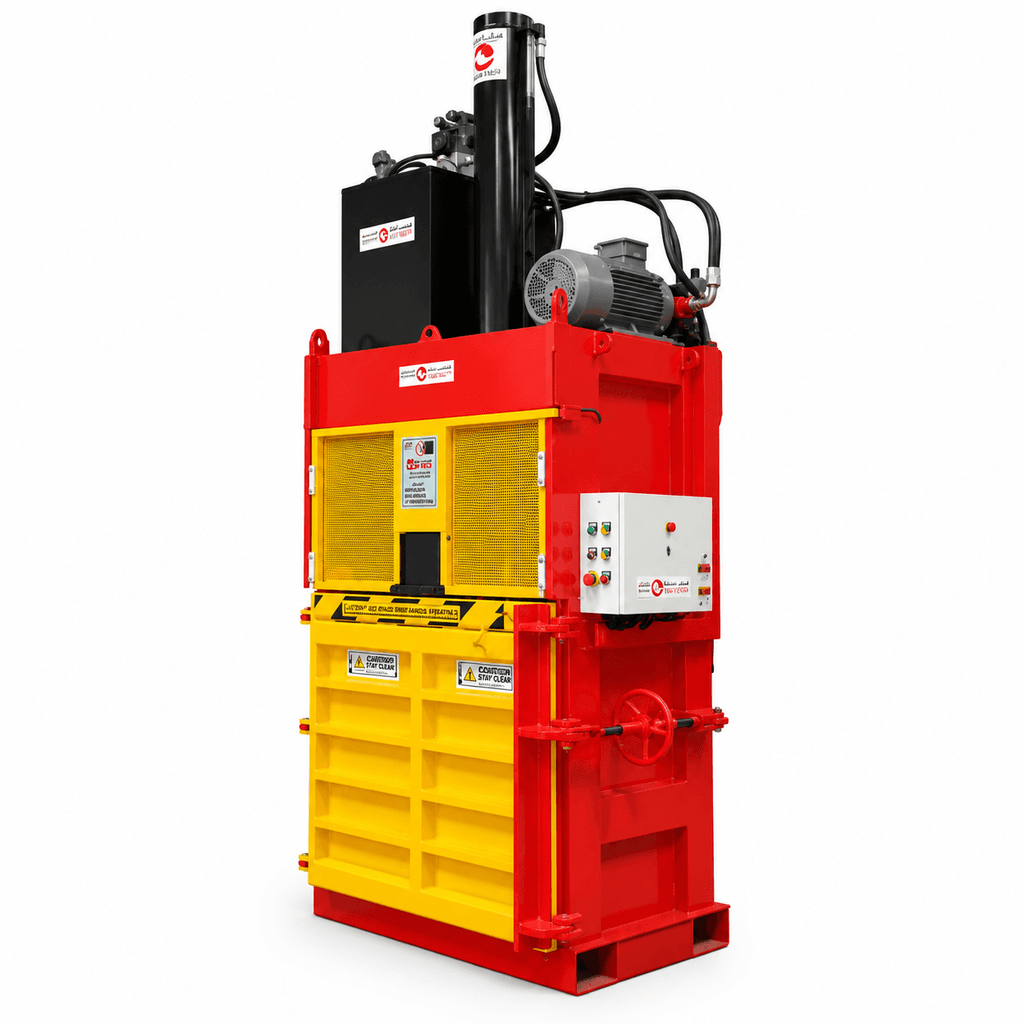
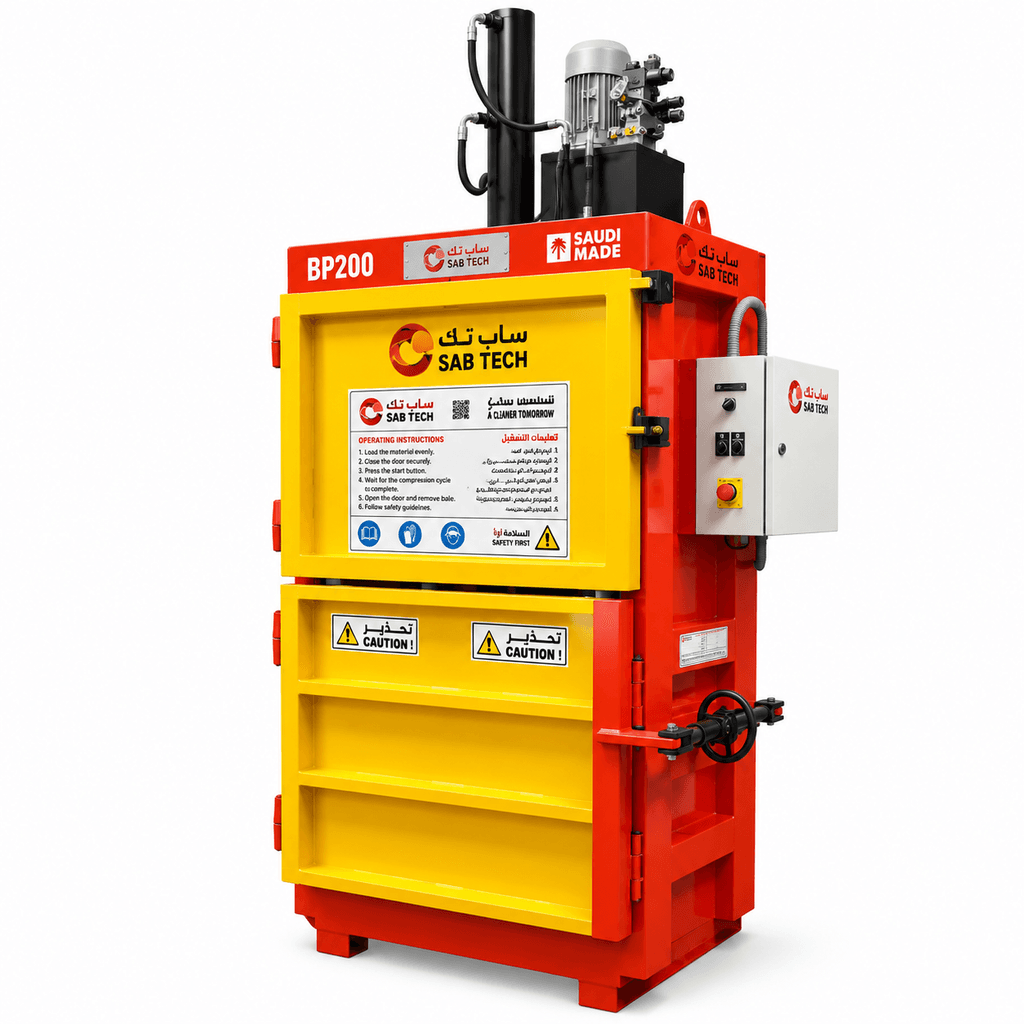
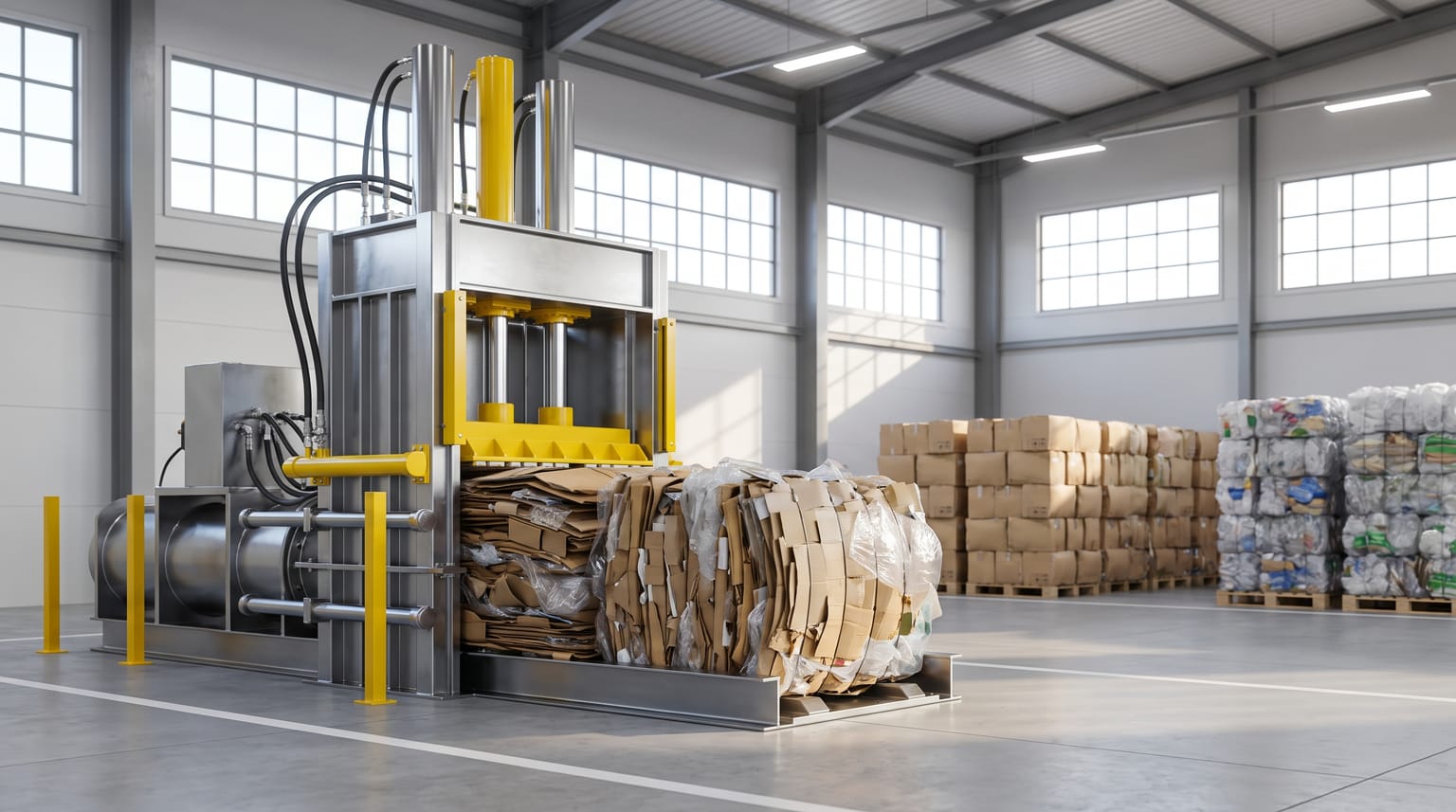
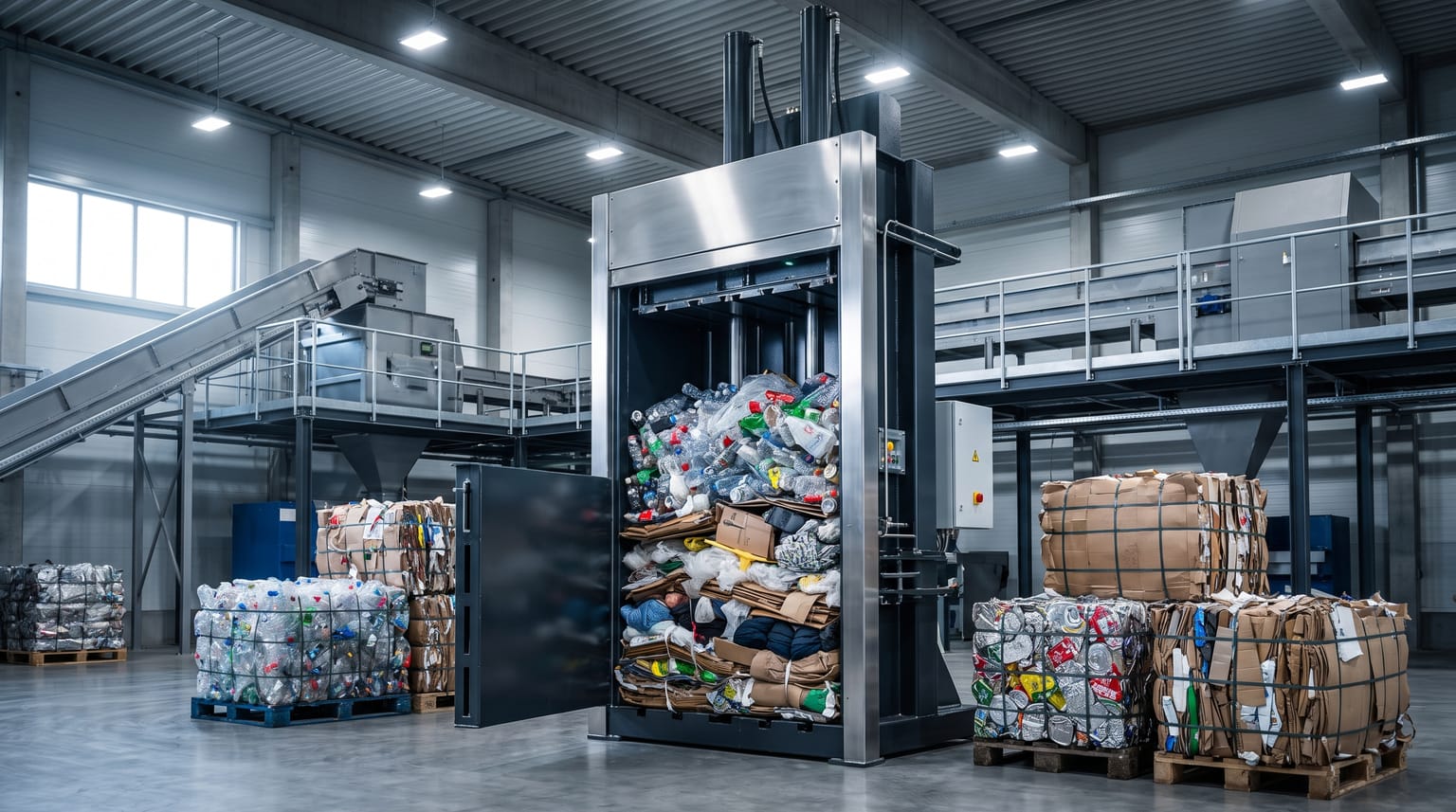
The 80-ton vertical cardboard and plastic baler provides a practical solution by compressing suitable recyclable materials into denser and more organized bales.
With a pressing force of up to 80 tons, the machine is designed to support operations that require reliable compression of substantial quantities of recyclable materials.
80 Tons of Pressing Force for Demanding Applications
Pressing force is one of the most important factors when selecting a baler for large-volume recycling operations.
The 80-ton vertical baler provides a pressing force of up to 80 tons, allowing it to handle a broad range of recyclable materials and support applications where stronger compression is required.
High compression capacity can help reduce the volume occupied by loose materials and transform them into more compact bales.
This makes the resulting material easier to organize, store, handle, and transport.
The benefit is especially relevant to businesses that process significant quantities of recyclable materials on a regular basis.
Designed for Plastic Bottles and PET Containers
One of the key applications of this baler is the compression of plastic bottles and containers, including polyethylene terephthalate materials.
Plastic bottles are widely used throughout the beverage industry, retail sector, distribution networks, and many other commercial environments.
After use, empty bottles can occupy a considerable amount of space if they are simply collected and stored without compression.
By processing suitable plastic bottles through a powerful baling system, businesses can reduce their volume and convert them into more compact, organized bales.
This can improve the efficiency of collection, storage, handling, and transportation while supporting downstream recycling operations.
Efficient Compression of Cans
The machine can also be used for suitable recyclable cans.
Cans are commonly generated in large quantities in beverage-related businesses, retail environments, distribution facilities, and recycling operations.
When collected in loose form, cans can quickly accumulate and require significant storage space.
Compressing them into organized bales can make them easier to store, move, and transport.
This creates a more structured approach to managing recyclable materials and reduces the amount of space required for loose cans.
Processing Cardboard and Corrugated Paperboard
The application of the baler extends beyond bottles and cans.
Cardboard and corrugated paperboard are among the most common recyclable materials generated by supermarkets, warehouses, factories, distribution centers, logistics companies, and retail businesses.
Deliveries and packaging operations can produce substantial quantities of cardboard every day.
Without compression, cardboard can quickly fill storage and collection areas.
A high-capacity vertical baler helps transform loose cardboard and corrugated paperboard into compact bales, allowing businesses to use their available storage space more efficiently.
Plastic, Office Waste, and Other Recyclable Materials
The machine can also be used for suitable plastic materials and recyclable office waste.
Large commercial facilities may generate paper, cardboard, plastic packaging, and other recyclable materials as part of their daily operations.
Instead of allowing these materials to accumulate in loose form, businesses can establish a more organized collection and baling process.
After appropriate sorting, suitable materials can be compressed and prepared for storage, transportation, or further recycling.
Multiple Materials in One Baling Solution
A major advantage of a versatile baling system is the ability to support different recyclable material streams.
Suitable materials may include:
Plastic bottles.
PET containers.
Cans.
Cardboard.
Corrugated paperboard.
Plastic.
Textiles.
Suitable office waste.
Other suitable compressible recyclable materials.
This versatility makes the baler useful for businesses that handle multiple types of recyclable materials instead of relying on a single material stream.
Reducing the Volume of Loose Materials
One of the most important benefits of baling is volume reduction.
Loose cardboard, plastic bottles, cans, and other recyclable materials can occupy a large amount of space.
As the quantity of recyclable material increases, the amount of storage space required can also increase significantly.
Compressing these materials into bales allows businesses to use their available space more efficiently.
This can be particularly valuable in factories, warehouses, distribution centers, recycling facilities, retail stores, and other locations where floor space is an important operational resource.
Improving Storage Efficiency
Storage becomes easier when recyclable materials are organized into compact bales rather than left scattered or loosely accumulated.
Bales can be arranged in designated storage areas, helping create a more structured recycling environment.
This can also make it easier for employees to identify, handle, and prepare recyclable materials for transportation.
For businesses with high material volumes, improving the organization of recycling areas can contribute to better overall workflow and facility management.
Supporting More Efficient Transportation
Transportation is another area where baling can provide significant operational advantages.
Loose recyclable materials can occupy a large amount of vehicle space, sometimes reaching the available volume limit before the available weight capacity is fully utilized.
By compressing materials into denser bales, businesses can organize recyclable loads more efficiently.
This may help reduce the number of transportation trips required for a given volume of material, depending on the material type, vehicle capacity, distance, and overall logistics process.
As a result, baling can contribute to better transportation efficiency and potentially lower transportation costs.
Getting More Value from Recyclable Materials
The purpose of a baler is not simply to reduce waste volume.
For businesses that generate valuable recyclable materials, proper collection, sorting, and baling can help turn recyclable waste into a more manageable resource.
Once materials have been compressed into organized bales, they can be easier to handle and transport to recycling facilities or other appropriate buyers.
This can create an opportunity for businesses to recover additional value from materials that might otherwise be treated simply as waste.
Producing well-organized bales can therefore become part of a broader strategy for recovering value from recyclable materials.
A Good Fit for the Beverage Industry
The beverage industry is one of the sectors that can benefit significantly from high-capacity baling.
Beverage production and distribution can generate large quantities of plastic bottles, cans, cardboard packaging, and other recyclable materials.
Managing these materials efficiently requires an organized collection and compression system.
An 80-ton vertical baler can help beverage-related operations process suitable recyclable materials and convert them into compact bales.
This can improve the organization of recycling areas while making storage and transportation more manageable.
Suitable for Large-Scale Recycling Operations
Small recycling operations may require relatively simple equipment, but larger operations often need higher-capacity machinery capable of handling substantial material volumes.
The 80-ton baler is designed for applications where the amount of recyclable material requires a stronger and more capable compression solution.
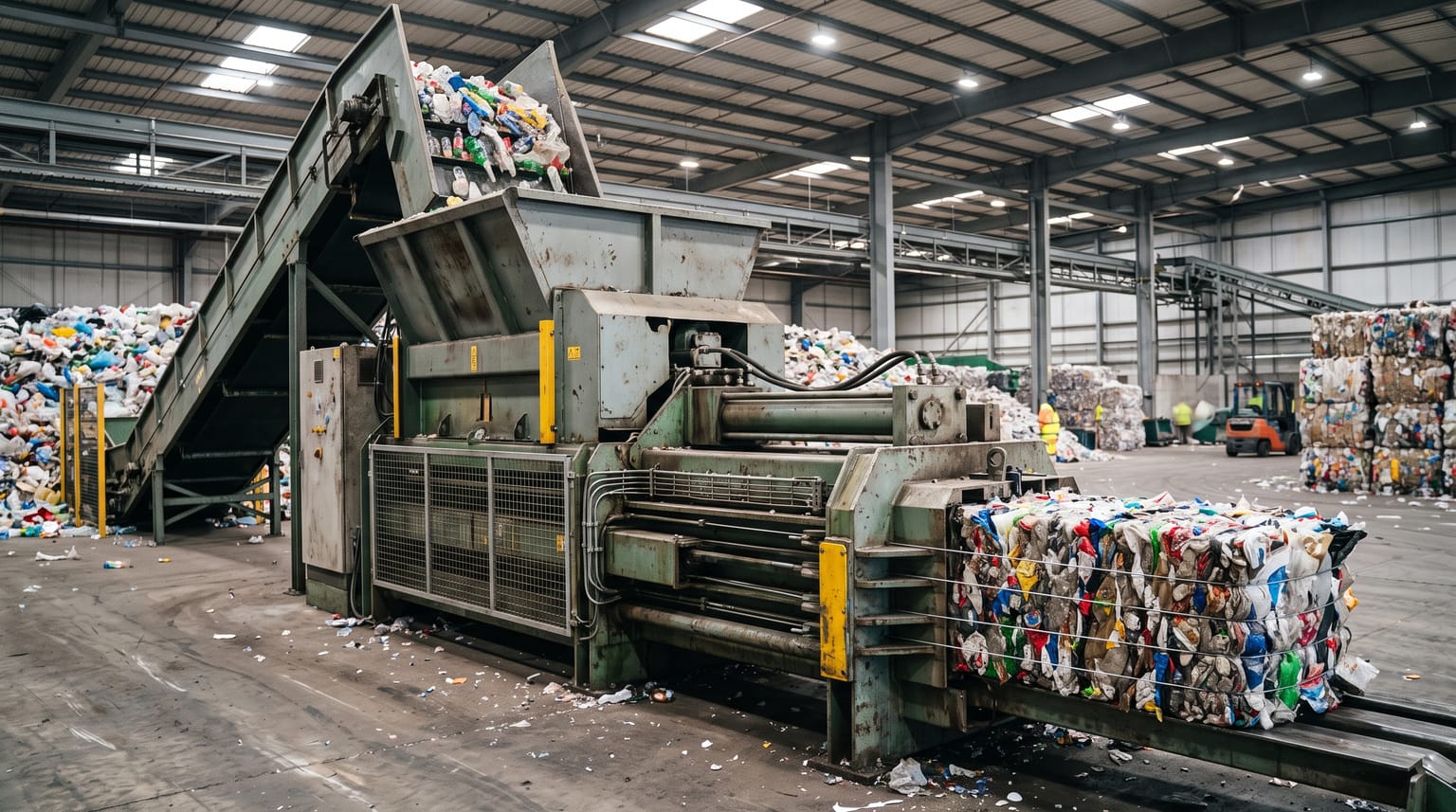
It can form part of a larger recycling workflow that includes collection, sorting, preparation, baling, storage, transportation, and further recycling.
This makes it a practical option for businesses looking to establish a more structured approach to large-volume recyclable material management.
Supporting the Retail Sector
Retail businesses and supermarkets can generate substantial amounts of cardboard, plastic packaging, bottles, cans, and other recyclable materials.
These materials can accumulate quickly as products are received, unpacked, stocked, and distributed.
A baler installed as part of the recycling process can help businesses deal with suitable materials continuously rather than allowing them to accumulate in storage areas.
Compressing recyclable materials can help improve the organization of back-of-house areas and reduce the amount of space occupied by loose packaging waste.
Applications in Warehouses and Distribution Centers
Warehouses and distribution centers regularly handle large quantities of products and packaging materials.
Receiving, storing, picking, packing, and shipping goods can generate substantial volumes of cardboard and plastic.
A high-capacity vertical baler can be incorporated into the site's waste-management system to process suitable recyclable materials.
The result is a more organized recycling area and a more efficient way to prepare materials for storage and transportation.
Applications in Manufacturing Facilities
Manufacturing facilities can also benefit from high-capacity baling equipment.
Production, packaging, and material-handling processes can generate cardboard, plastic, packaging materials, and other recyclable waste.
By establishing a designated collection and baling process, factories can reduce loose material accumulation and improve the management of recyclable resources.
The 80-ton pressing capacity makes the machine suitable for operations that require stronger compression and handle significant volumes of recyclable material.
Textiles as a Suitable Material
In addition to plastic, cardboard, and cans, textiles can also be among the suitable materials for compression.
Textile waste can occupy considerable storage space, especially when collected in large quantities.
Compressing suitable textiles into bales can make storage and transportation easier and more organized.
This expands the potential applications of the machine beyond traditional cardboard and plastic recycling.
Building a More Efficient Recycling Workflow
A successful recycling operation requires more than simply collecting recyclable materials.
The entire process should be organized so that materials can move efficiently from collection to sorting, compression, storage, transportation, and recycling.
A baler can play an important role in this workflow.
A typical process can be organized as:
Collection → Sorting → Baling → Storage → Transportation → Recycling
This approach can help businesses manage recyclable materials more systematically and improve the efficiency of their recycling operations.
Operational and Economic Benefits
The 80-ton vertical baler can provide several potential operational and economic advantages for businesses handling large quantities of recyclable materials.
Volume reduction:
Compressing materials reduces the space occupied by loose recyclable waste.
Better storage utilization:
Compact bales can be organized more efficiently than loose materials.
Simplified handling:
Bales are easier to move and organize than large quantities of loose material.
Improved transportation efficiency:
More compact loads can make better use of available vehicle space.
Potential transportation savings:
Reducing material volume may help reduce the number of trips required, depending on the specific logistics operation.
Better material preparation:
Baling prepares recyclable materials for easier storage and movement through the recycling chain.
Potential economic value:
Organized recyclable bales may provide opportunities for resale or transfer to appropriate recycling facilities.
Specifications: the 80-ton baler next to the 20-ton baler
From the SAB TECH catalogue approved by Bestolex, here is the 80-ton vertical baler next to the 20-ton vertical baler:
| Specification | 20-ton vertical baler | 80-ton vertical baler |
|---|---|---|
| Feed opening | 420 × 970 mm | 550 × 1200 mm |
| Bale size | 700 × 700 × 1100 mm | 1200 × 800 mm, third dimension variable 300 – 1200 mm |
| Maximum bale weight | Up to 200 kg depending on material | Up to 380 kg depending on material (PET) |
| Machine dimensions | 3000 H × 900 × 1550 mm | 3900 H × 1200 × 1700 mm |
| Motor power | 5.5 kW | 15 kW |
Source: Bestolex approved product catalogue.
The 80-ton baler is built mainly for large volumes of bottles and cans (PET) and makes a bale almost twice as heavy as the 20-ton machine. The catalogue also lists automatic bale ejection, a bale-height adjustment switch and a sliding door. A site baling moderate amounts of cardboard may be well served by the 20-ton or 50-ton baler; the daily volume settles it.
The 80-ton vertical baler in Qatar
In Qatar, water and beverage plants, distribution centres and shopping malls collect large amounts of bottles and cardboard every day, and the more of it is baled, the fewer containers and trips are needed to haul it. The site survey settles the baler position, the power connection and the forklift route for the bales.
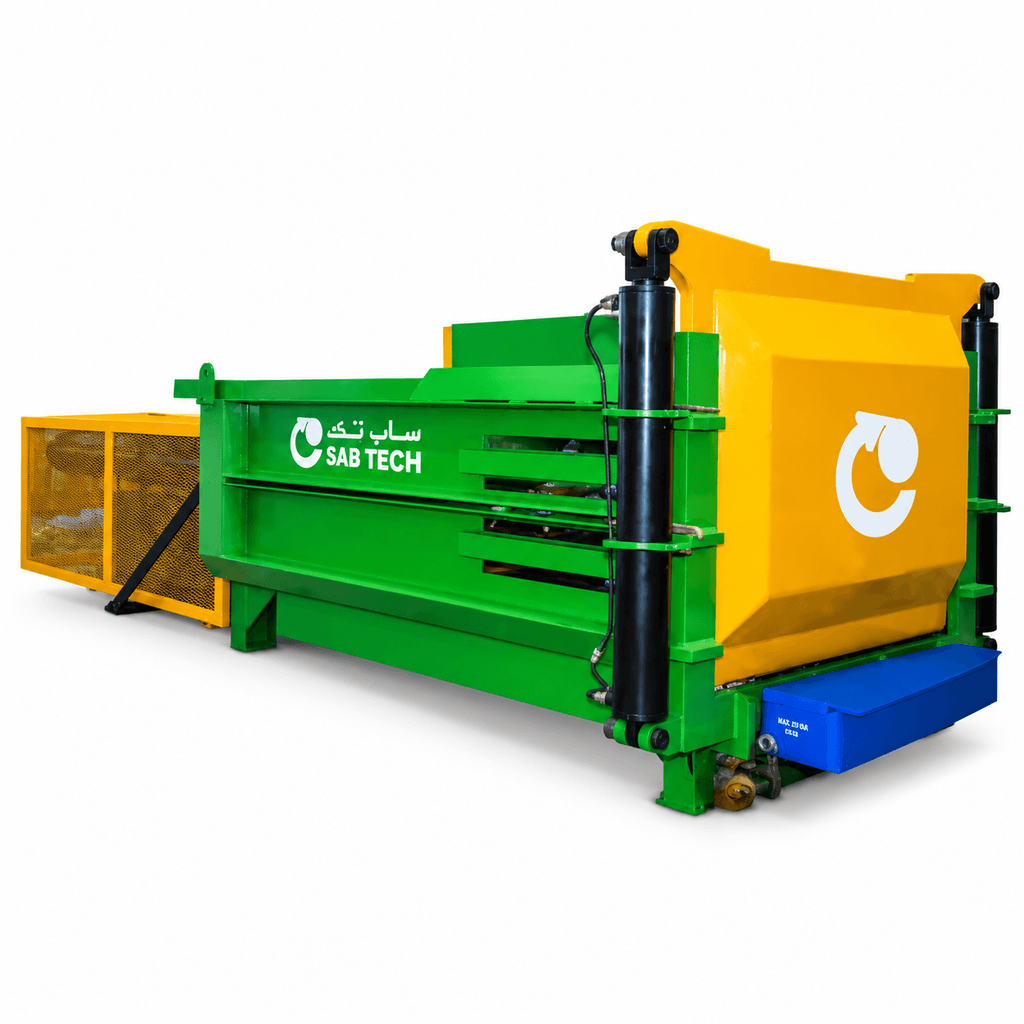
Bestolex is the exclusive SAB TECH agent in Qatar and supplies, installs and commissions the baler, trains operators and provides maintenance and spare parts. For larger cardboard and plastic volumes see the horizontal baling press 70T, and the other balers under Waste & Recycling.
Want help sizing the baler for your site? Request a site survey or a quotation, or message us on WhatsApp at +974 51505014.
Conclusion
The 80-ton vertical cardboard and plastic baler is a practical solution for businesses that handle significant volumes of recyclable materials.
Its 80-ton pressing force makes it suitable for applications involving plastic bottles, PET containers, cans, cardboard, corrugated paperboard, plastic, textiles, suitable office waste, and other compressible recyclable materials.
Beyond simple material compression, the baler can help businesses improve storage utilization, organize recycling areas, simplify material handling, improve transportation efficiency, and help recover value from recyclable materials.
For beverage manufacturers, recycling companies, retailers, warehouses, factories, distribution centers, and other high-volume operations, a high-capacity vertical baler can become an important part of a more efficient and organized recycling strategy.