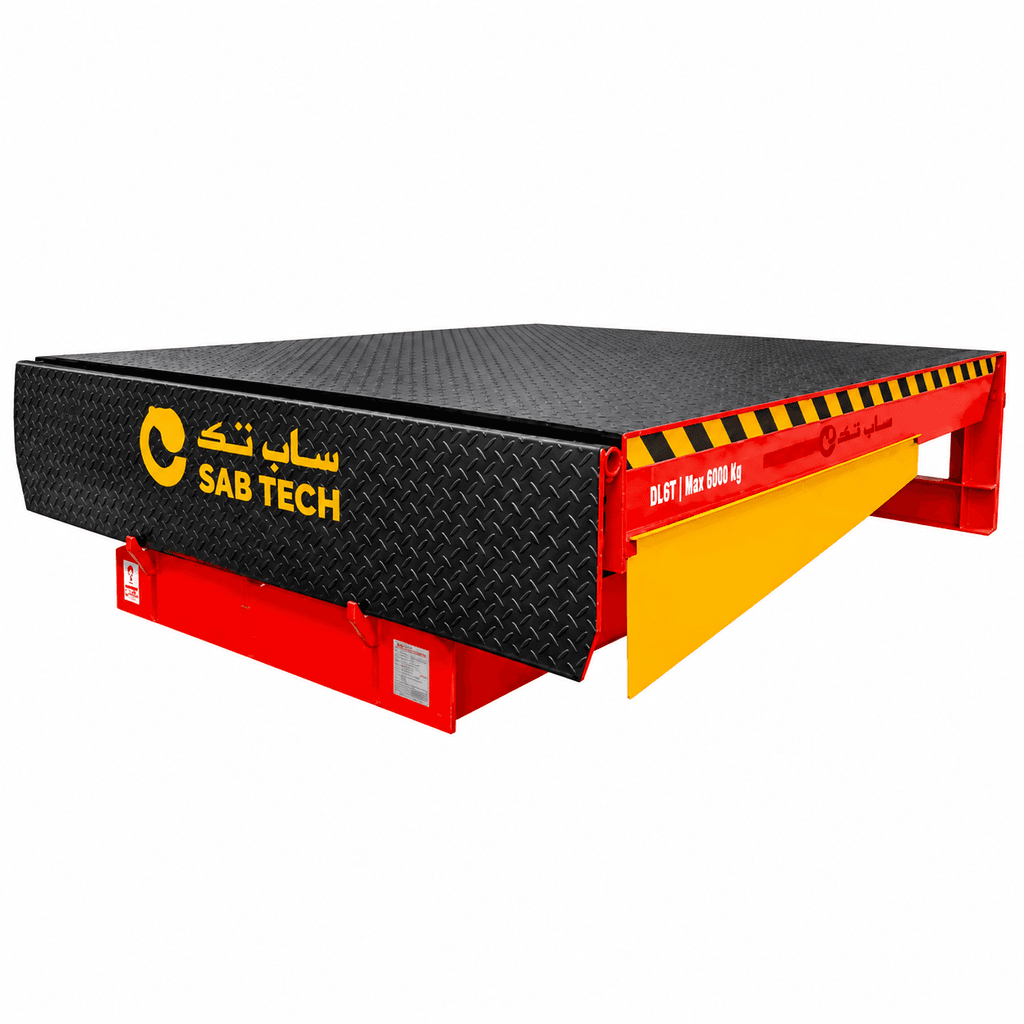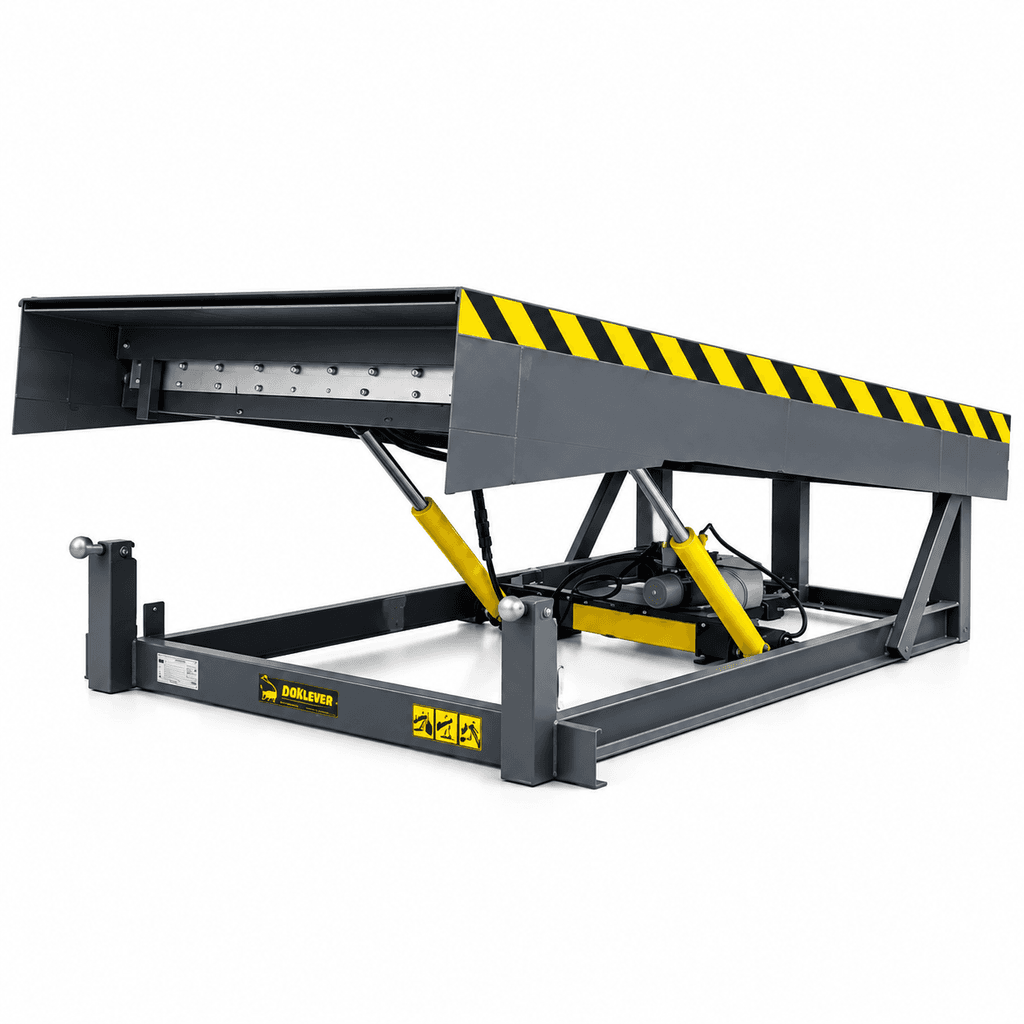
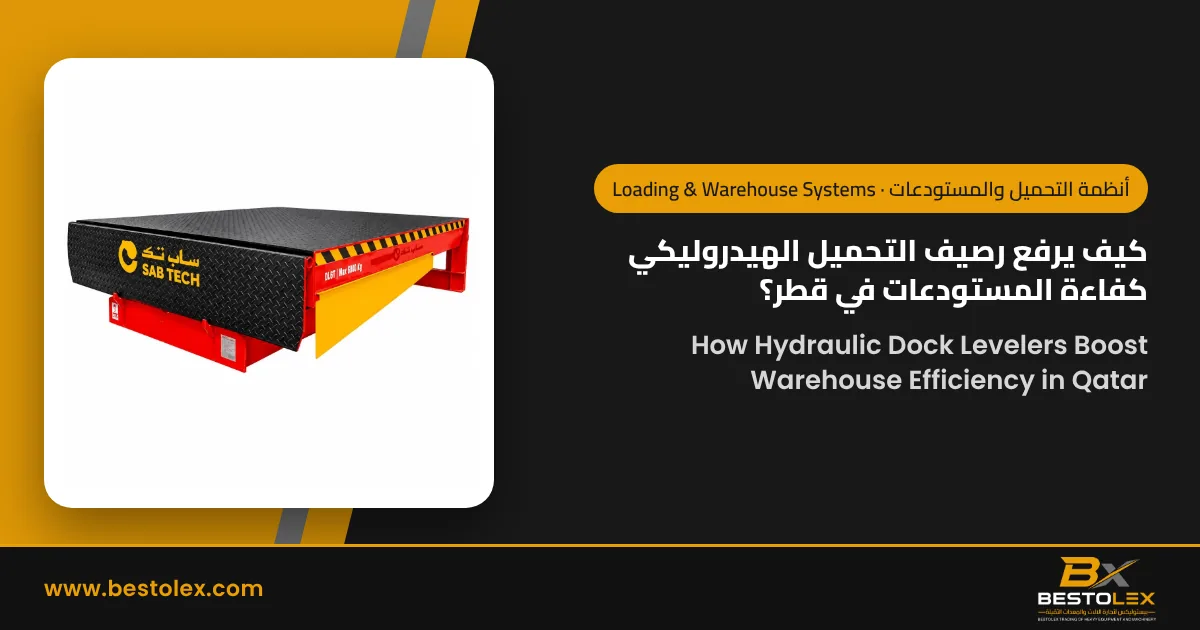
In any warehouse that loads or unloads trucks, productivity is measured at the loading door: how many minutes a truck takes, how many people it needs, and whether a forklift can cross safely between the warehouse floor and the truck bed. That is the job of a hydraulic dock leveler: a steel platform set at the edge of the warehouse that rises and lowers to bridge the height difference and the gap between the two floors. This guide explains how it works, how it speeds up loading, and how to choose the right size and capacity for a warehouse in Qatar.
- A dock leveler bridges the height difference between the warehouse floor and the truck bed, so forklifts drive straight in and out safely.
- The SAB TECH hydraulic dock leveler works from 600 mm above to 300 mm below warehouse level, with a 6–8 ton standard capacity customisable up to 45 tons.
- Automatic free-fall protection stops a sudden drop if the truck moves during loading.
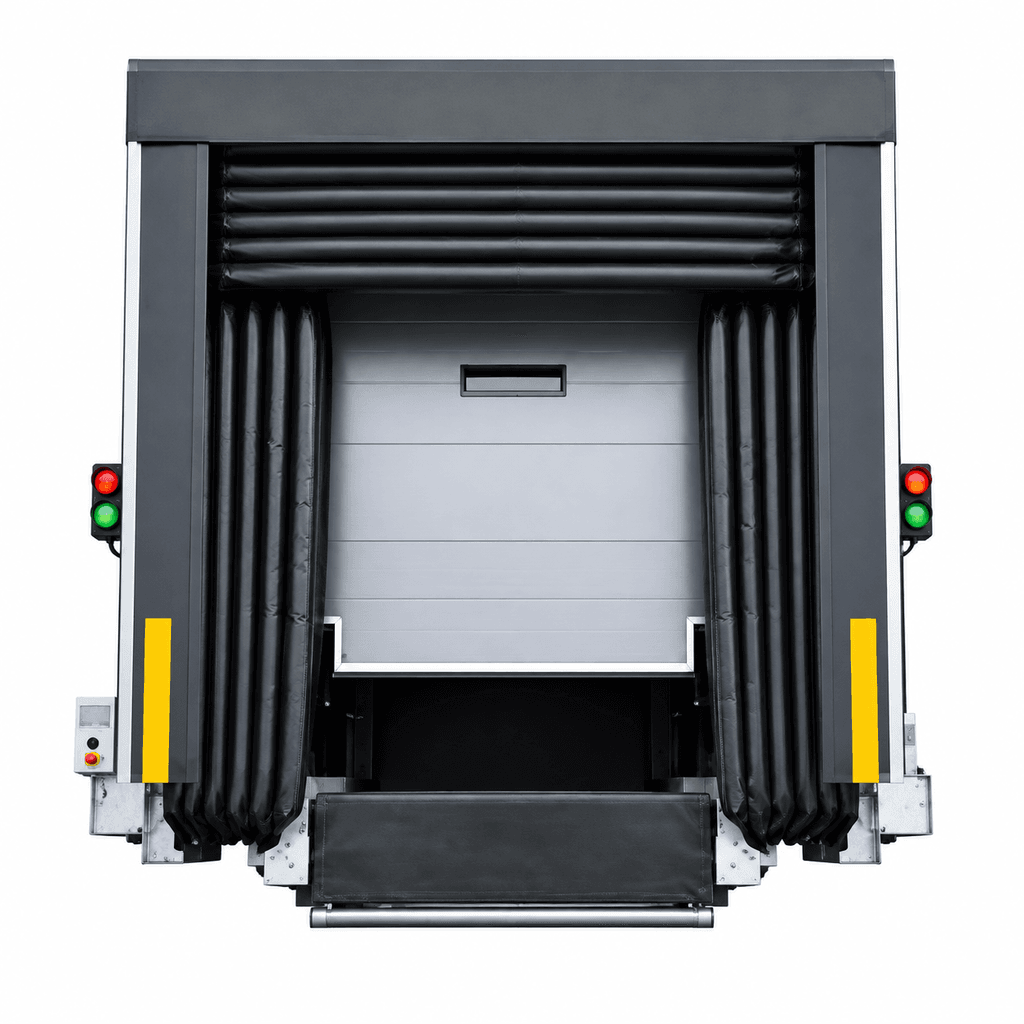
- A dock shelter around the truck completes the leveler and keeps heat and dust out, which matters in cold stores.
How does a hydraulic dock leveler work?
When the truck backs up to the door, the operator presses a button. The hydraulic system raises the deck, the front lip extends and rests on the truck bed, and the deck lowers until it sits on it. Forklifts or pallet trucks then drive straight across. When loading is finished, the leveler returns to its level position flush with the warehouse floor.
Truck bed heights vary, and a truck rises or sinks slightly as it is loaded or unloaded. A hydraulic leveler follows that movement and keeps a continuous surface throughout the job.
How a dock leveler improves warehouse efficiency
1. Faster loading with fewer people
Without a leveler, much of the cargo is moved by hand or over temporary plates and ramps. With one, forklifts carry full pallets in and out, trucks spend less time at the door and staff are freed for other work.
2. Safer for people and goods
The gap and step between floors are a trip and load-drop hazard at loading doors. A leveler closes them with a solid steel surface, and the SAB TECH leveler adds automatic free-fall protection against a sudden drop if the truck pulls away.
3. Less shock for forklifts and cargo
Crossing a level, continuous surface reduces impact on forklift wheels and on sensitive goods such as appliances and packed food.
4. Energy savings in cold stores
Combined with an inflatable dock shelter, the truck body is sealed tightly, so less cold air escapes and less heat and dust get in.
Dock leveler specifications in the Bestolex catalogue
| Specification | Hydraulic dock leveler (SAB TECH) | Inkema dock leveler RH1 |
|---|---|---|
| Platform size | 1830 × 2730 to 2000 × 2500 mm | 2000 × 2500 mm |
| Working range above warehouse level | 600 mm | Up to 600 mm |
| Working range below warehouse level | 300 mm | Up to 300 mm |
| Motor power | 0.75 kW (1 HP) | 0.75 kW |
| Capacity | 6–8 tons standard, up to 45 tons custom | Various capacities |
Source: Bestolex approved product catalogue.
How to choose the right dock leveler
- Truck types: record the highest and lowest truck bed heights arriving at your warehouse and check they fall within the leveler's working range.
- Capacity: size it for the forklift carrying your heaviest pallet, not the cargo alone. Standard capacity is 6–8 tons, with higher capacities for heavy applications.
- Platform width and length: width governs how easily forklifts get in and out; length governs the slope at large height differences.
- Door integration: the SAB TECH leveler's electrical panel can be integrated with industrial sectional doors and vehicle restraints.
- Dust and corrosion: optional brush seals around and beneath the platform keep dust out, and a three-layer epoxy finish protects against corrosion.
What if the warehouse has no fixed dock?
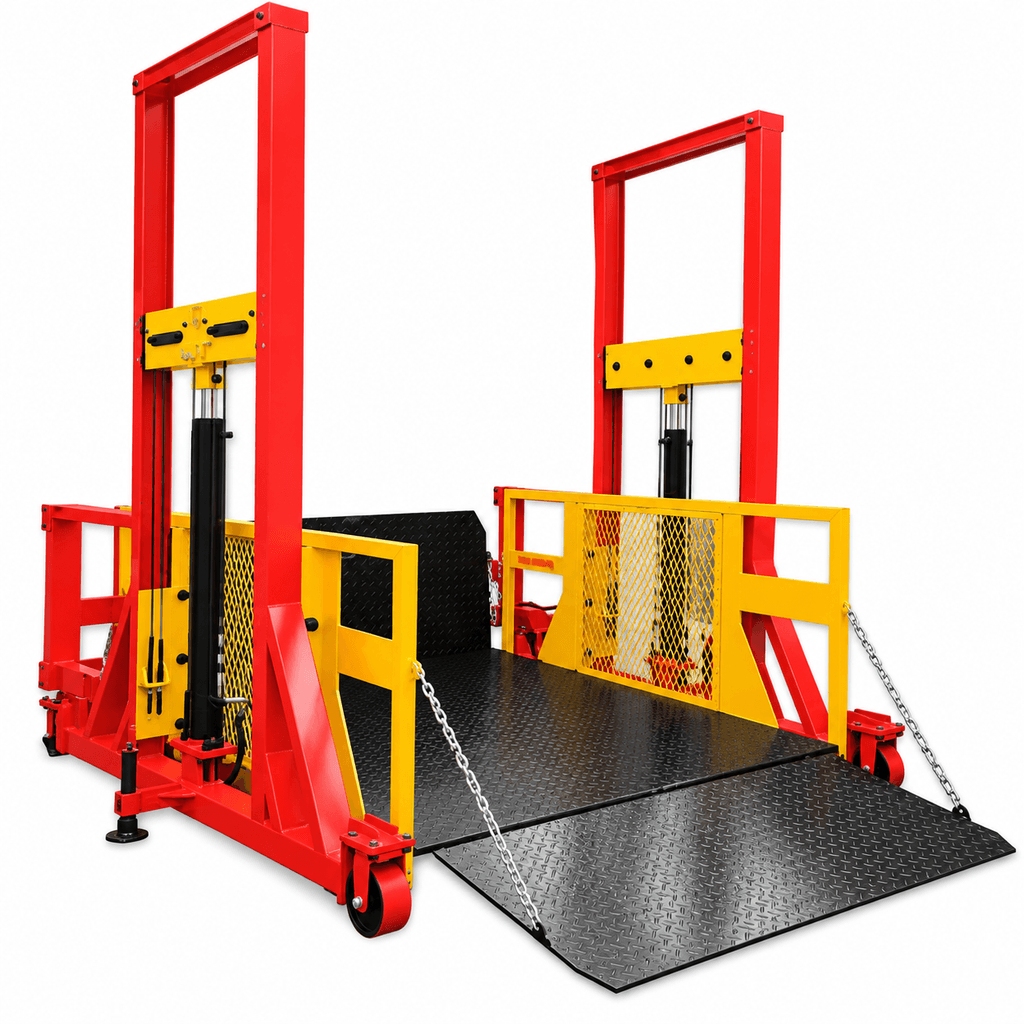
If the building has no loading pit or loading points move around, use a mobile loading dock, which lifts up to 1600 mm with a 2-ton capacity, or a scissor lift table to move goods between two levels. All options are under loading systems.
Routine dock leveler maintenance
A dock leveler may cycle dozens of times a day under heavy loads, so simple routine checks protect it, alongside the manufacturer's manual:
- Daily: confirm it returns to level and clear gravel and broken pallet wood from the deck and lip.
- Monthly: check hydraulic oil level and leaks around cylinders and hoses, and test the free-fall protection.
- Every six months: inspect hinges, grease points and rubber bumpers, and the coating where it wears.
Any creeping of the deck during loading or slow movement calls for a technical check before it becomes a breakdown that closes the door.
Dock levelers in Qatar warehouses
Cold stores for food and pharmaceuticals in Qatar run all year, and outdoor summer temperatures are high, so every minute a loading door stands open without a seal costs energy. That is why the loading point is planned as one unit: the leveler, the shelter around the truck, the door and the bumpers. The inflatable dock shelter in the catalogue is rated for operating temperatures up to +70 °C.
Bestolex is the exclusive SAB TECH agent in Qatar and handles the site survey and door measurements, then supply, installation, commissioning, operator training, preventive maintenance and spare parts, with a one-year warranty as listed in the catalogue.
Planning new loading doors or upgrading old ones? See the hydraulic dock leveler, then request a site survey or a quotation, or message us on WhatsApp at +974 51505014.