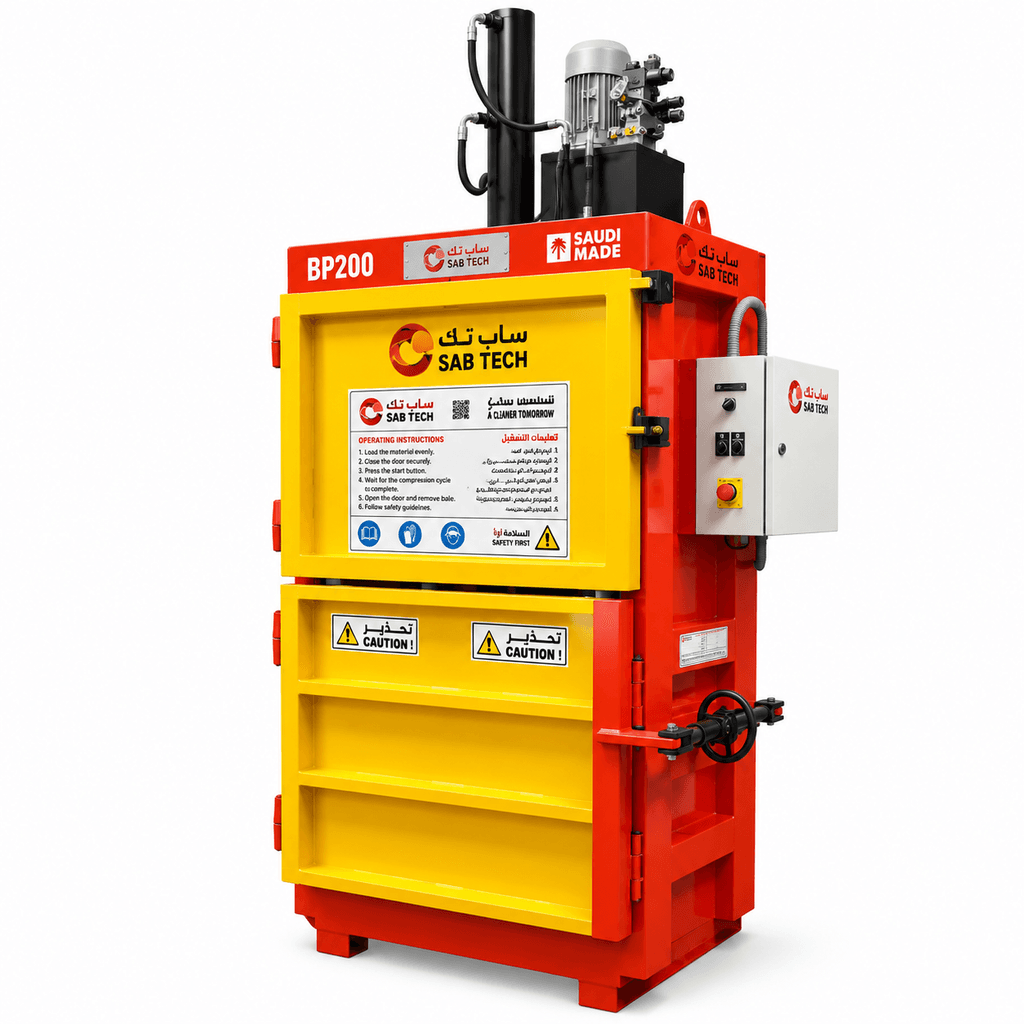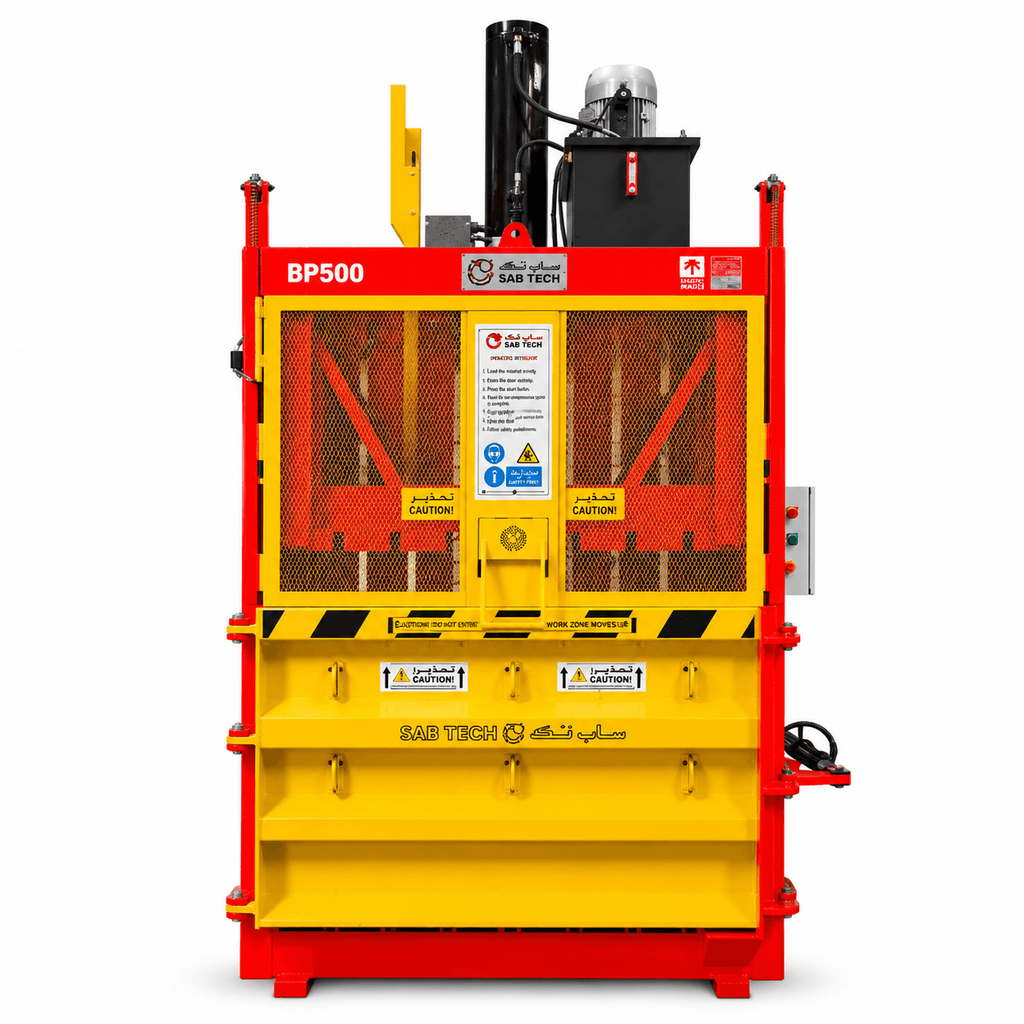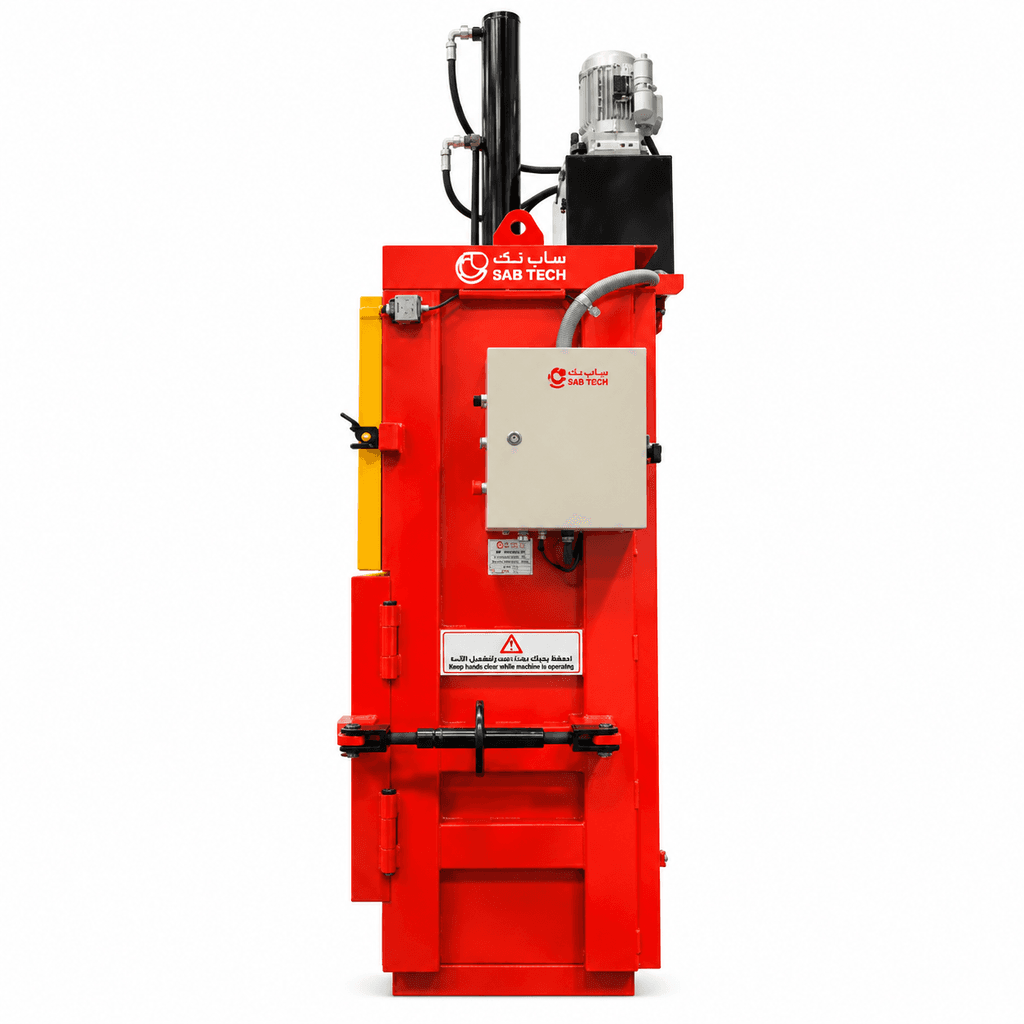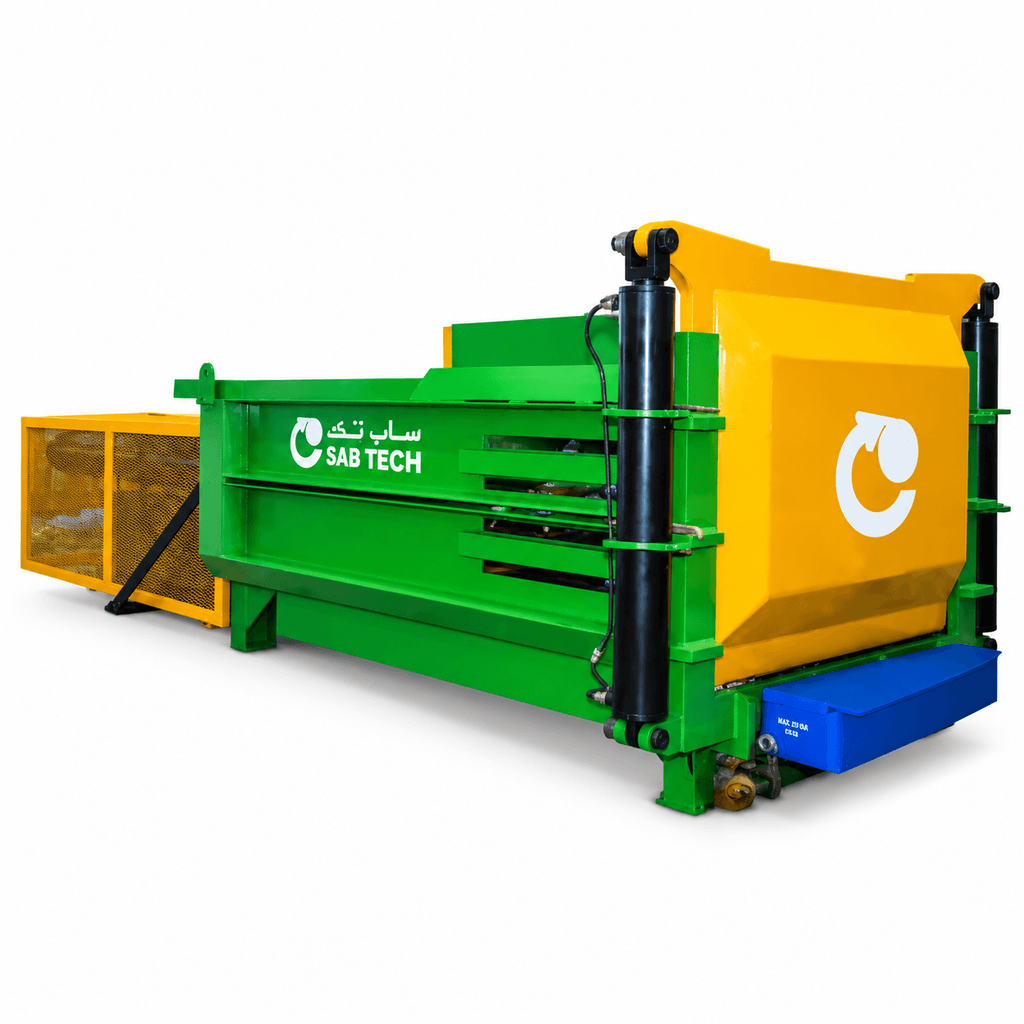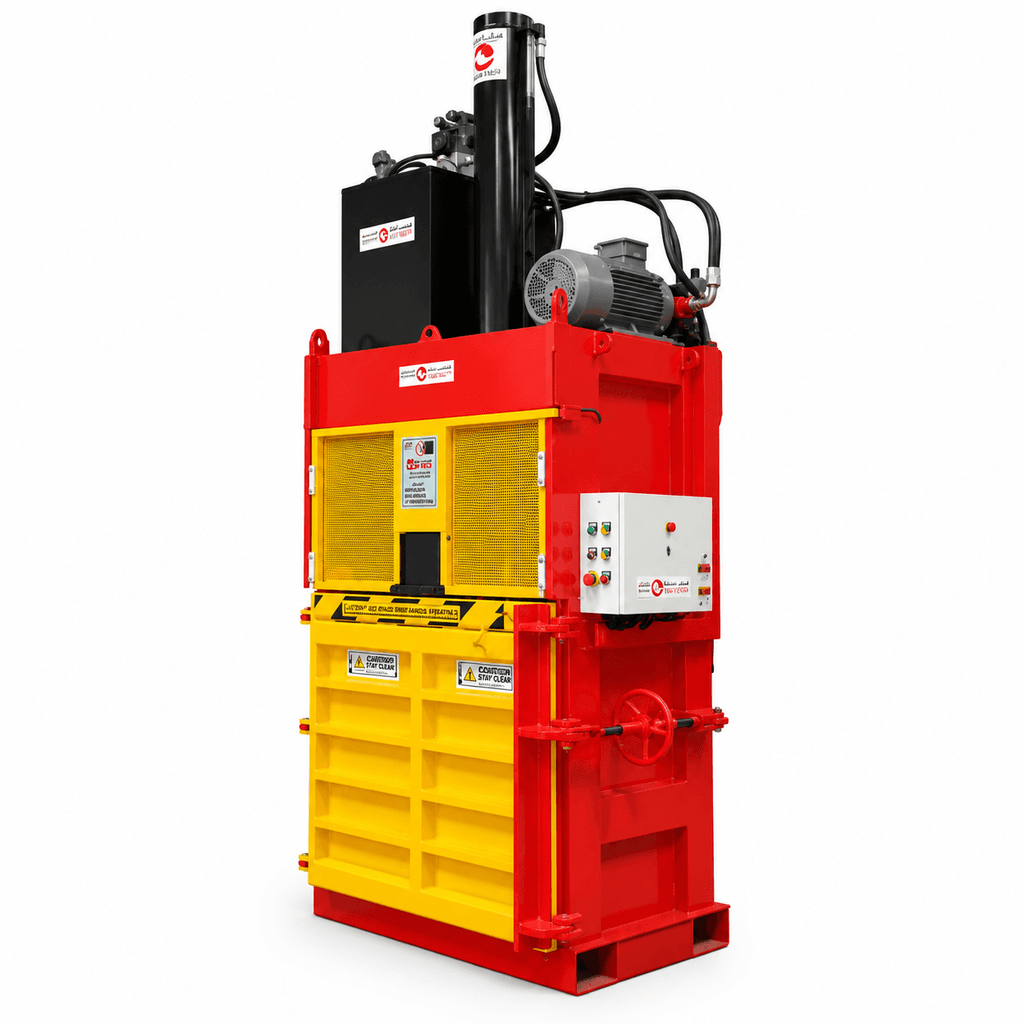

Shops, supermarkets, warehouses and factories produce large amounts of cardboard and plastic wrap every day. The material is light but bulky: it fills containers quickly, adds haulage trips and takes up space that could be used for storage. A cardboard and plastic baler solves this by pressing the material into dense, tied bales that are easy to store, haul and sell to recyclers. This guide explains how a baler cuts waste management costs and how to choose the right size for a site in Qatar.
- A baler presses cardboard and plastic into bales, cutting haulage trips and floor space and making the material saleable.
- Vertical balers in the SAB TECH catalogue run from 10 to 80 tons, with bales from 100 kg up to 500 kg depending on model and material.
- Your daily volume and available space decide the model, not pressing force alone.
- For large, continuous volumes a horizontal baler fits better than a vertical one.
How a baler cuts waste management costs
1. Fewer haulage trips
A container full of loose cardboard carries more air than material. Once baled, one truck carries far more, so containers are emptied less often and haulage fees fall.
2. More warehouse space
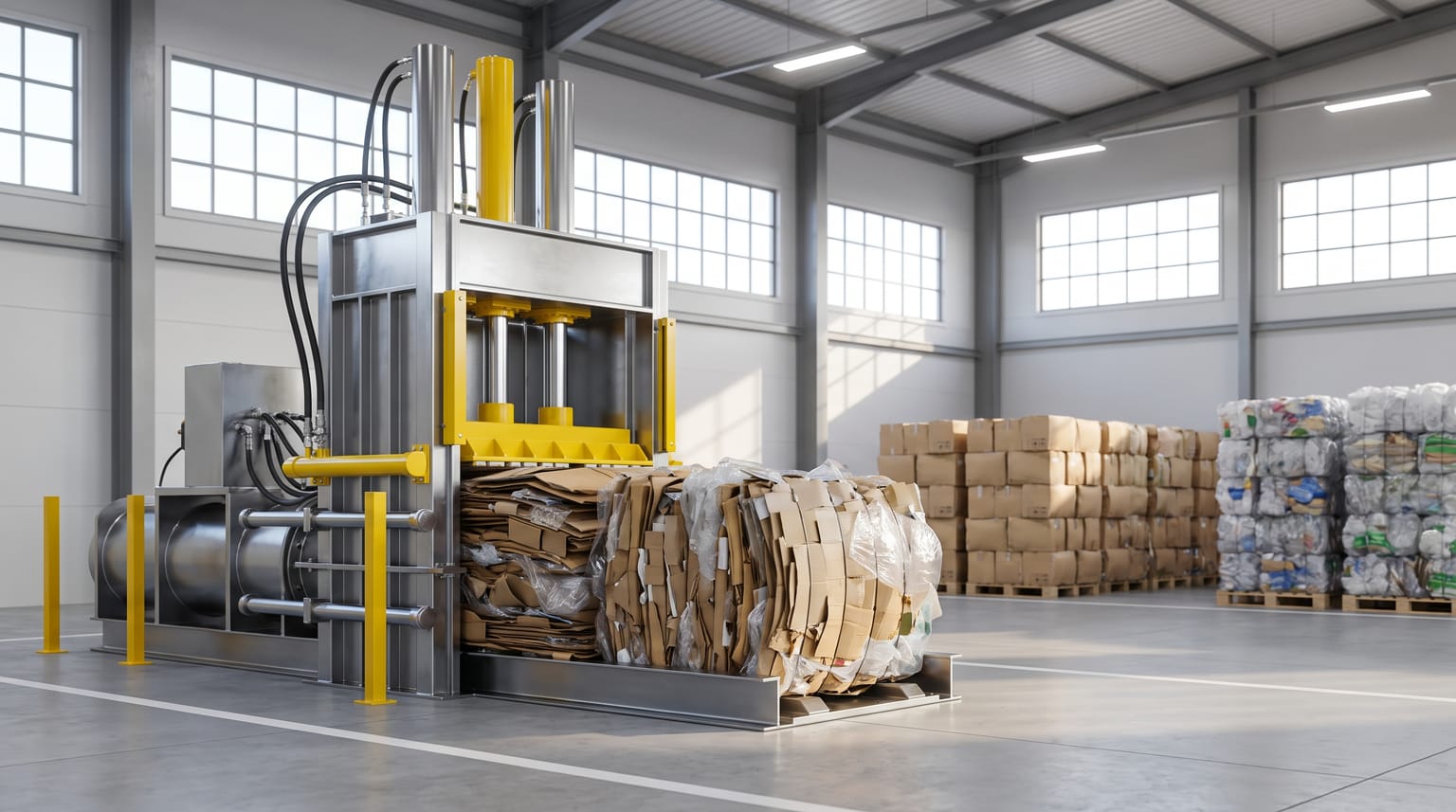
Tied bales are regular in shape and can be stacked by forklift in one corner instead of loose piles of cardboard around doors and aisles.
3. Income from recyclables
Clean baled cardboard and plastic are raw material for collectors and recycling plants, so a disposal cost becomes income, or at least a smaller cost. Sorted, clean material fetches a better price.
4. A cleaner, safer site
Less loose cardboard means lower fire, trip and pest risk and tidier service areas in malls and hotels.
Vertical balers in the Bestolex catalogue compared
| Model | Bale weight | Bale size (mm) | Motor power | Suits |
|---|---|---|---|---|
| 10-ton vertical baler | Up to 100 kg | 700 × 500 × 700 | 1.5 kW | Restaurants, shops, service stations |
| 20-ton vertical baler | Up to 200 kg | 700 × 700 × 1100 | 5.5 kW | Supermarkets, mid-size warehouses |
| 50-ton vertical baler | Up to 500 kg | 1100 × 735 × 1580 | 7.5 kW | Distribution centres, factories |
| 80-ton vertical baler | Up to 380 kg (PET) | 1200 × 800 × (300 – 1200) | 15.0 kW | Bottles and cans in large volumes |
Source: Bestolex approved product catalogue. Bale weight varies with the material. The "Suits" column is general guidance confirmed once volumes are estimated.
The catalogue lists a 10:1 volume reduction for the 20-ton and 50-ton balers.
How to choose the right cardboard baler
- Daily volume: estimate it from how many containers are emptied each week and their size. Small volumes do not need a big baler; large ones need heavier bales and faster cycles.
- Material: cardboard, plastic film, or bottles and cans. The 80-ton baler is designed mainly for bottles and cans.
- Space and height: vertical balers have a small footprint, but the larger models stand 3000–3900 mm tall, so check the ceiling height.
- The buyer: ask your collector which bale size and weight they accept before choosing a model.
- Service: make sure spare parts and maintenance are available locally and that staff are trained to operate it safely.
How a vertical baler works, step by step
- The operator opens the feed door and loads cardboard or plastic into the chamber.
- The door is closed and the start button pressed; the hydraulic press plate comes down, compresses the load and returns.
- Loading and pressing repeat until the chamber is full of compressed material.
- Tying wires are threaded through the binding slots (3 on the 20-ton baler, 6 on the 50-ton) and the bale is tied.
- The discharge door opens and the bale comes out; the catalogue lists automatic bale ejection on the 10-ton and 80-ton balers.
Operating a baler safely
A baler is a powerful machine, so only trained staff should run it, and only with the feed door closed. Never load hazardous materials, pressurised cans or flammable liquids, and isolate and lock off the power before any cleaning or maintenance inside the chamber. Routine checks of the hydraulic oil, hoses and wires reduce breakdowns and unplanned stops.
Vertical or horizontal baler?
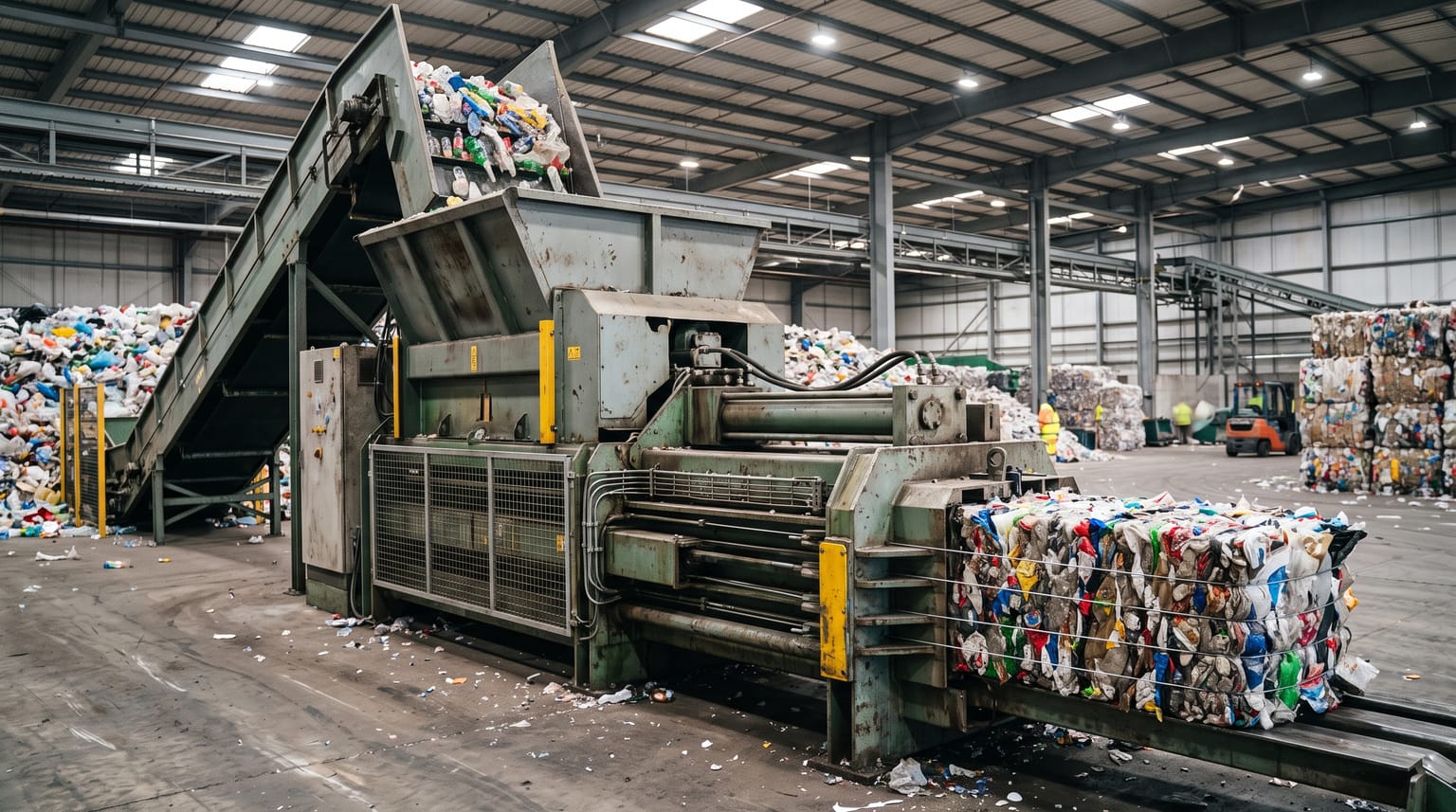
A vertical baler suits most shops and warehouses because it is compact and simple to run. If volumes are large and continuous through the day, a horizontal baler fits better: the horizontal baling press 70T with manual tying, or the horizontal auto baler, which ties bales automatically.
Balers and recycling in Qatar
According to Qatar News Agency, Qatar's national environment and climate strategy aims to close and rehabilitate unsanitary landfills and reach a 15% material recycling rate for municipal waste. Baling cardboard and plastic on commercial and industrial sites makes it easier to keep them out of general waste and hand them to recyclers.
Bestolex is the exclusive SAB TECH agent in Qatar and handles volume estimates and the site survey, then supply, installation, operator training, maintenance and spare parts, with a one-year warranty as listed in the catalogue. All balers are under waste & recycling.
Want to know which baler suits your volumes? Request a site survey or a quotation, or message us on WhatsApp at +974 51505014.