
Why Hydraulic Leaks Require Prompt Attention
A small hydraulic leak may initially appear to be a minor maintenance issue, but it can gradually affect system performance and increase oil consumption. Accumulated hydraulic fluid can also create slip hazards and may introduce additional risks in areas exposed to heat or ignition sources.
- Common leak sources include seals, hoses and fittings, and vibration can loosen connections over time; the fix starts with finding the cause, not just cleaning up the oil.
- Never search for a leak by hand on a pressurized circuit: oil under pressure can penetrate the skin, so isolate the energy and release the pressure before work.
- Regular inspection, together with components and oil that suit the system, reduces the risk of leaks; see our guide to selecting hydraulic oil.
For this reason, leak monitoring should be part of routine preventive maintenance.
Common Causes of Hydraulic Leaks
Several conditions can result in hydraulic oil leakage.
Damaged Seals and O-Rings
O-Rings and oil seals are exposed to pressure, temperature, and repeated operation. Over time, they can lose elasticity, crack, or become damaged, allowing oil to escape from sealing points.
Hose and Fitting Problems
Improperly tightened connections can leak, while excessive tightening torque can damage certain fittings, threads, or sealing surfaces.
High-pressure hoses are also exposed to continuous mechanical stress and should be inspected for cracking, swelling, abrasion, and other signs of deterioration.
Mechanical Vibration
Continuous vibration can gradually loosen fittings, pipe connections, and hose supports. This is particularly relevant in equipment operating for long periods or under demanding mechanical conditions.
A Practical Approach to Leak Detection
Identifying the exact source of a hydraulic leak can sometimes be difficult because oil may travel from the original leak point to nearby components.
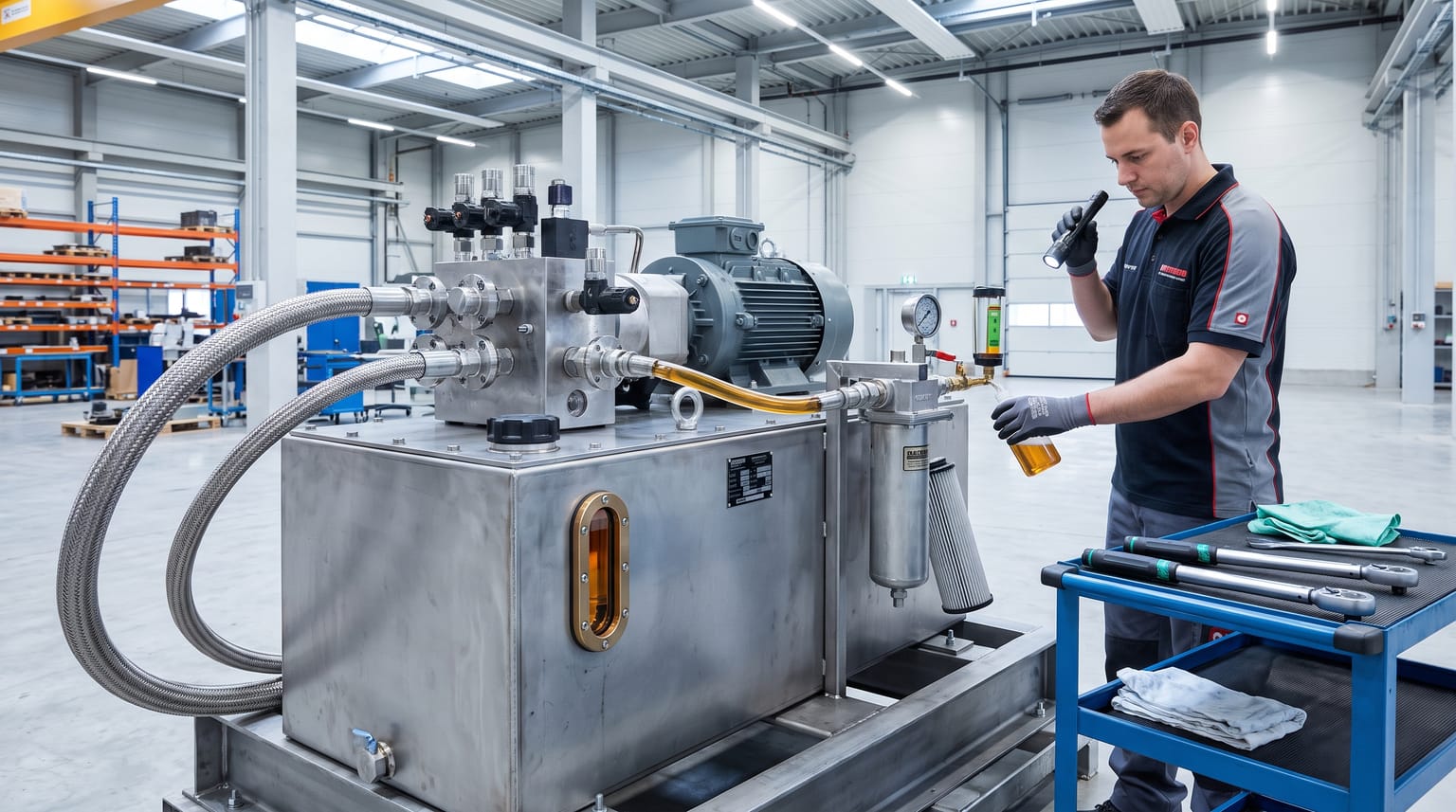
A practical inspection begins by cleaning the area around the actuator, valve, fittings, and nearby components. After following the appropriate safety procedures, the area can be monitored during operation to help identify the point where oil begins to appear.
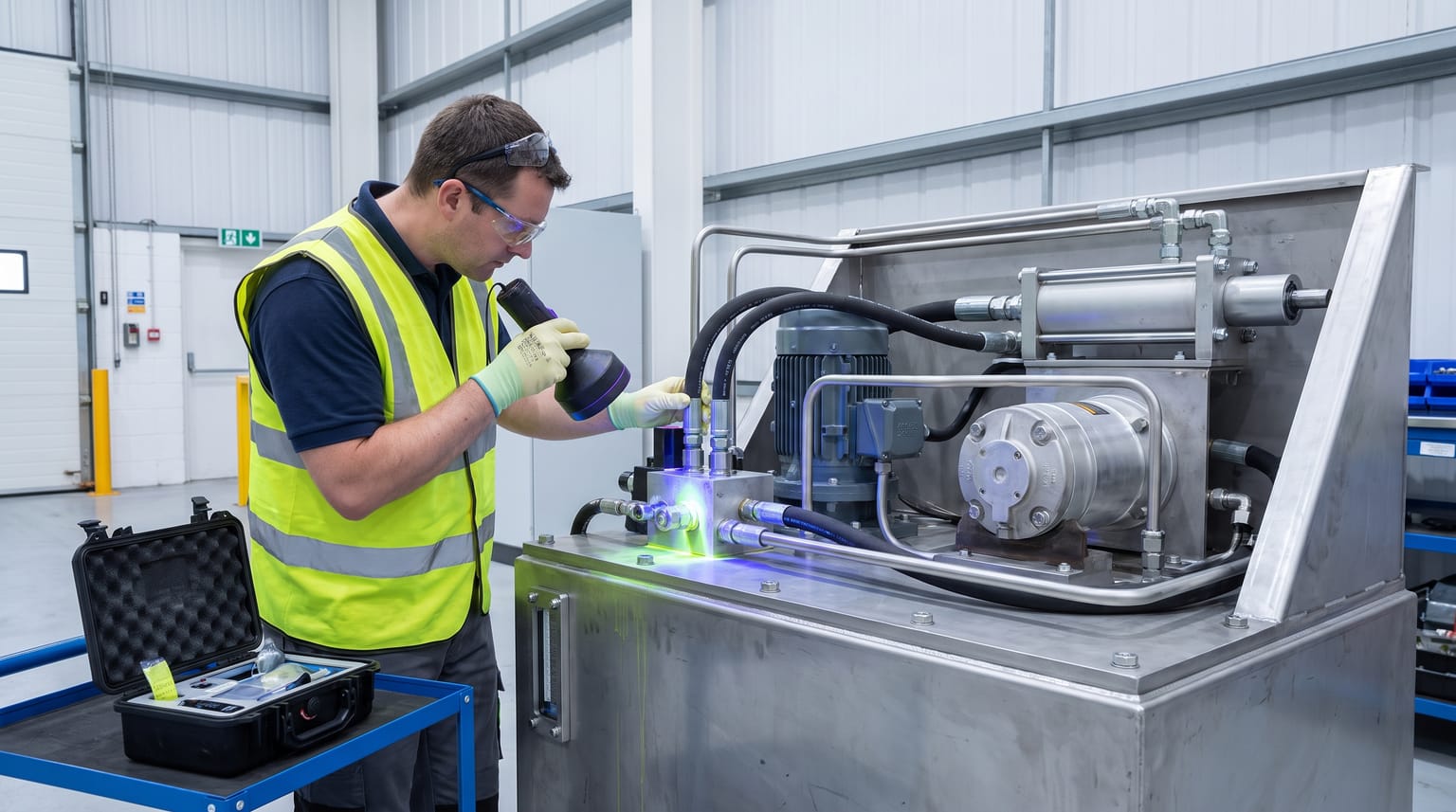
For complex systems, specialized tracing methods such as UV-detectable leak dyes may be used when they are compatible with the hydraulic oil and system components.
Inspecting High-Pressure Hoses
Hydraulic hoses require regular inspection because visible deterioration can indicate a condition requiring replacement. Important warning signs include:
- Cracks or cuts in the outer cover.
- Unusual swelling.
- Abrasion caused by contact or friction.
- Oil leakage around fittings.
- Changes in hose shape.
- Damage near connection points.
Damaged high-pressure hoses should not be treated with temporary repairs when replacement is required by the manufacturer or applicable maintenance procedures.
Preventive Maintenance Helps Reduce Leakage
Regular maintenance helps identify developing problems before they become operational failures. Inspection should include hoses, fittings, seals, oil levels, valves, actuators, and reservoirs. For checks by equipment type, see our preventive maintenance guide for loading, baling and perimeter equipment.
Hose replacement intervals should not be treated as a universal fixed period for every hydraulic system. Manufacturer recommendations should be followed while also considering operating conditions, hose age, and its actual condition.
All replacement fittings and components should also be compatible with the system's pressure, hydraulic fluid, and operating temperature.
Safety During Hydraulic Leak Inspection
Hydraulic leaks require particular caution, especially in high-pressure circuits. Pressurized fluid can penetrate the skin, making direct contact with a suspected leak extremely dangerous.
Appropriate energy-isolation and pressure-release procedures should be followed before maintenance work begins. A leak should never be located by placing a hand near a suspected high-pressure leak point.
Because the type and cleanliness of the oil affect seals and components, see also our guide to selecting hydraulic oil and maintaining system performance.
Conclusion
Effective hydraulic leak management starts with identifying the underlying cause rather than simply cleaning spilled oil. Regular inspection of seals, hoses, fittings, and hydraulic components, combined with preventive maintenance and compatible replacement parts, can help maintain system pressure, reduce oil loss, and improve operating safety.
Hydraulic leaks in equipment supplied in Qatar
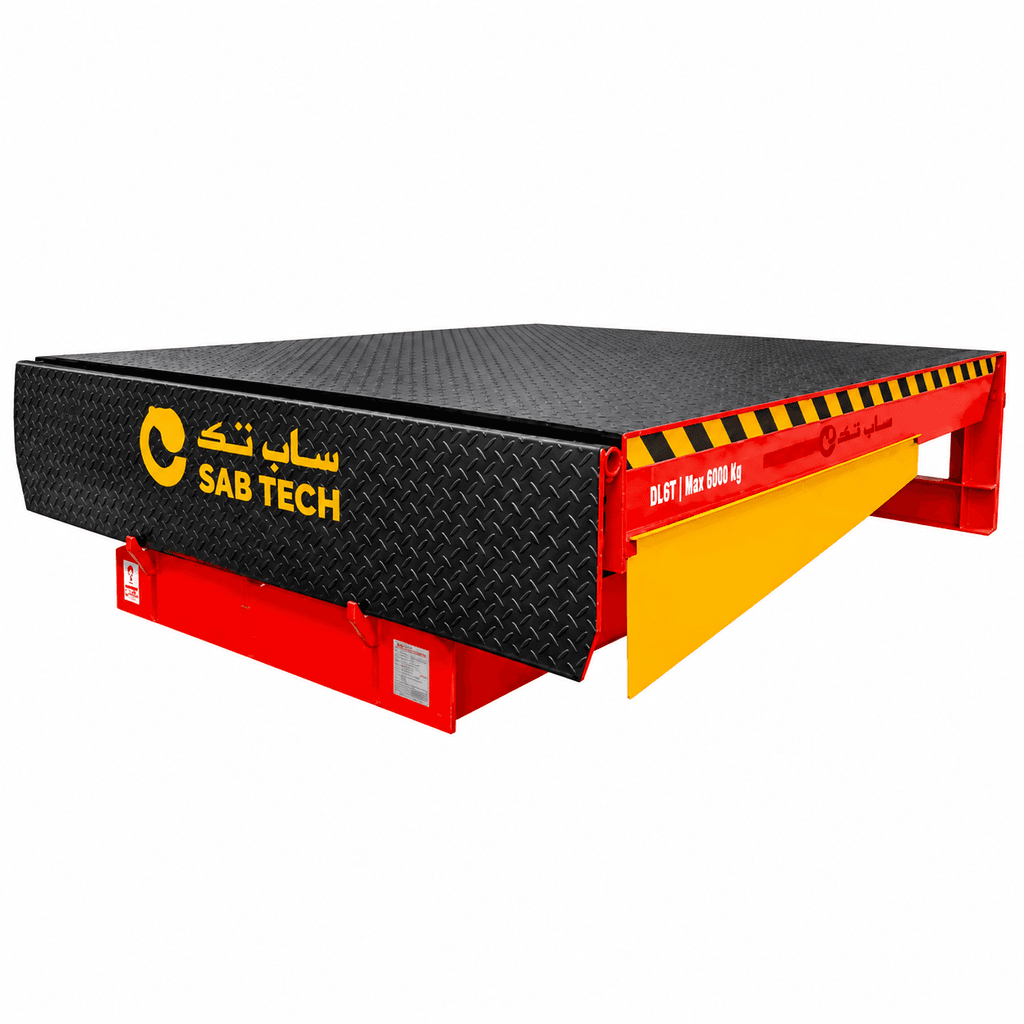
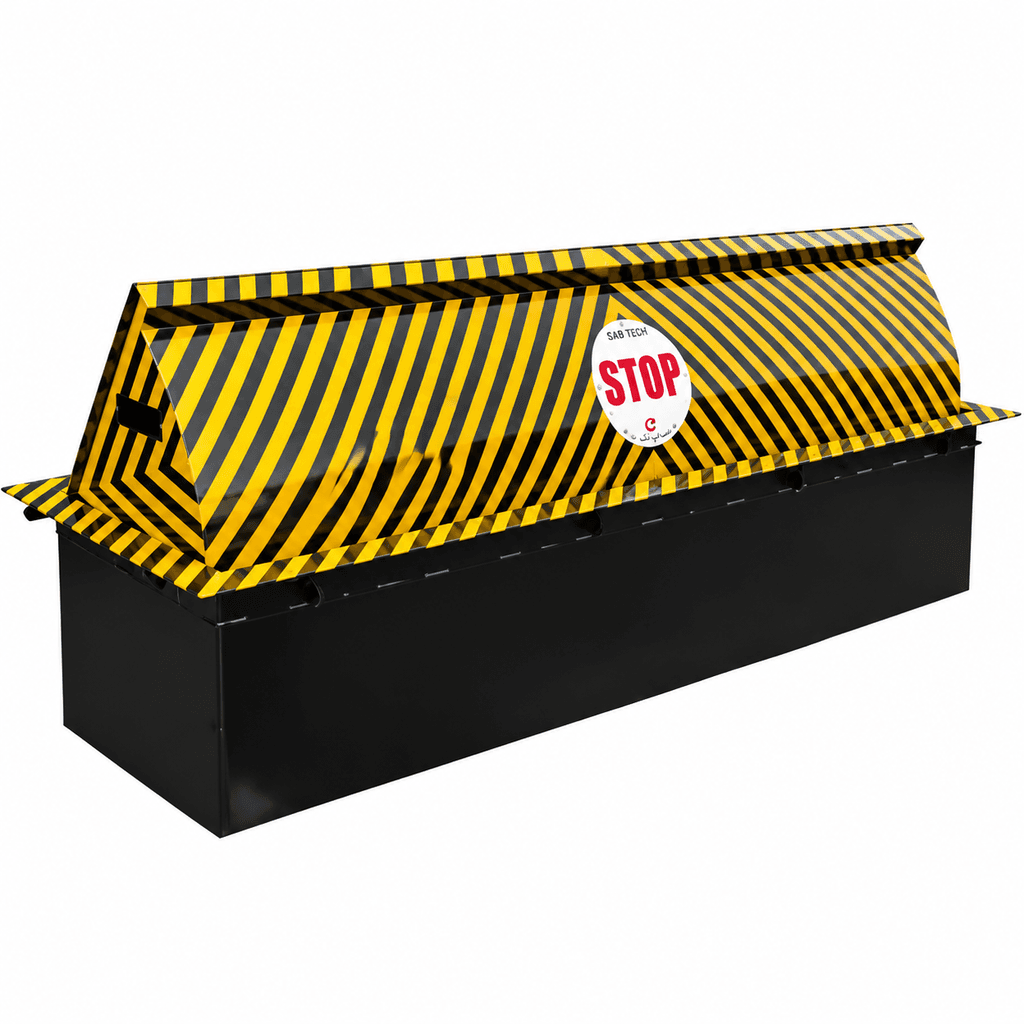
Much of the equipment Bestolex supplies in Qatar runs on hydraulics, including hydraulic dock levelers, hydraulic road blockers, balers and lifts, and regular inspection of hoses and fittings is part of its preventive maintenance.
What to prepare before booking a visit
- The machine type and model
- Where the leak is, with photos
- The oil in use
- When the leak started and whether it is getting worse
Bestolex provides hydraulic inspection and maintenance on request through a technical partner. To arrange a visit, request a site survey or a quotation, or message us on WhatsApp at +974 51505014.